Finding clothing bales suppliers in Johannesburg is easy; deciding which offer is suitable for your resale business is harder. A local seller may offer immediate pickup from a sealed 45 kg bale, another warehouse may let you select jackets by weight, and an overseas exporter may quote category-specific bales for a larger shipment. Those are different products with different risks, so their headline prices should not be compared as if they were identical.
The practical starting point is to choose a supplier model, confirm what is inside the offer, and calculate the cost of the pieces you can actually sell. If you are considering a direct import, confirm South African import eligibility before you pay a deposit or book freight.
Quick Answer: Where Can You Buy Clothing Bales in Johannesburg?
Johannesburg resellers generally have three sourcing routes. You can buy sealed bales from a local bale warehouse, choose category stock by weight from a local used-clothing distributor, or work with an overseas sorting exporter for a larger order. The best route depends on your starting capital, whether you need immediate stock, how much variation you can accept and whether the proposed goods can legally enter South Africa. The broader South Africa bulk-clothing sourcing guide explains how these routes fit different business scales.
For a first test, local stock is usually easier to inspect, collect and resell quickly. For a mature wholesale operation, an exporter may offer more control over category, grade, bale weight and packing, but only after the importer has confirmed the applicable ITAC and customs requirements. A low factory quote is not a saving if the shipment is not legally eligible or the specification is too vague to enforce.
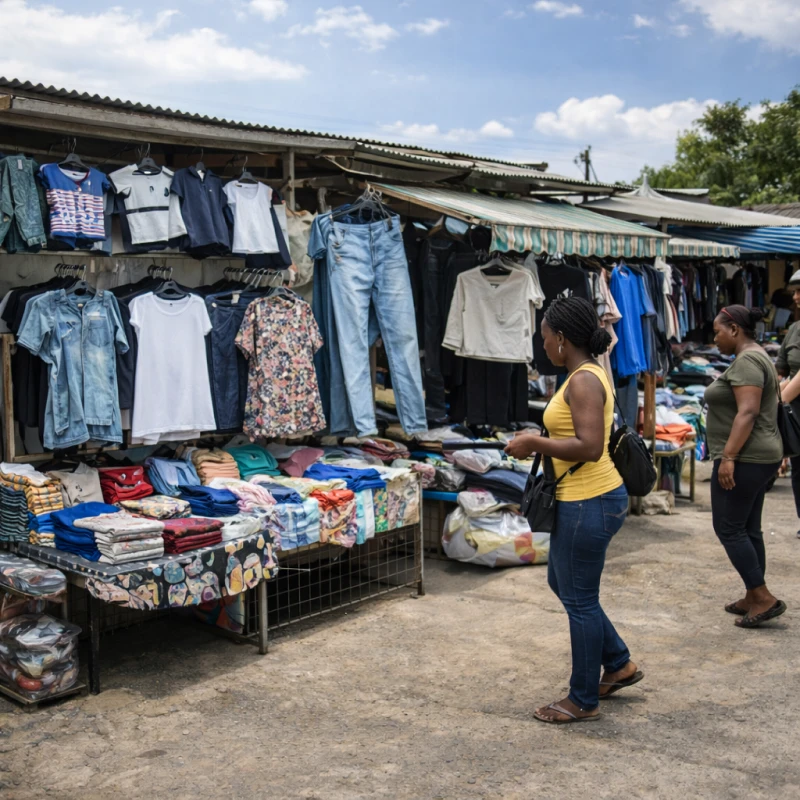
Local supply can reduce freight and permit exposure, but buyers still need to compare category, weight and claim terms.
Clothing Bales Suppliers and Clothing Wholesalers in Johannesburg
Below is a practical supplier list for buyers comparing clothing bales and second-hand clothing wholesalers in Johannesburg. It includes local bale warehouses, Johannesburg and Benoni category specialists, a nationwide-delivery supplier, and Indetexx as an overseas option for legally eligible commercial orders.
The suppliers are not ranked only by price. Each entry is assessed by location, product format, inspection access, delivery route and the information buyers should verify before payment. Current options include Bulk Buy Clothing, Clothing Bales SA, Bales Wholesaler, National Clothing Distributors, The Overcoat Importer, Pick & Choose Wholesale and Indetexx.
The shortlist below restores the supplier-list purpose of this page. It is not a paid ranking or a promise that every seller has stock today. Some businesses sell sealed second-hand clothes bales, some let buyers choose clothing by weight, and others deliver into Johannesburg from elsewhere in South Africa. Confirm the current address, product format, collection or delivery rules and payment details directly before travelling or transferring money.
| Supplier | Current route into the Johannesburg market | Product format to confirm | Best starting question |
|---|---|---|---|
| Bulk Buy Clothing | Kya Sands, Johannesburg | Full or half sealed clothing bales | Which category, packed weight and claim terms apply today? |
| Clothing Bales SA | Johannesburg seller with a public social profile | Grade-labelled clothing bales, including seasonal categories | Is there a physical collection point and a current written invoice? |
| Bales Wholesaler | Johannesburg CBD seller shown in current search results | Clothing bales and delivery-based orders | Can I verify the shop, bale label and payment account before paying? |
| National Clothing Distributors | Johannesburg/Alberton | Used jackets and coats, including pick-by-weight stock | Is the current offer a sealed bale or selectable stock by kilogram? |
| The Overcoat Importer | Benoni and other Gauteng locations | Used coats, jackets and coat bales | Which branch has bale stock and what can be inspected before purchase? |
| Pick & Choose Wholesale | Nationwide delivery from the Western Cape | Handpicked sacks and clothing bales | What is included in the delivered price to Johannesburg? |
| Indetexx | Overseas exporter for legally eligible commercial orders | Mixed or category-specific bales and container planning | Can the requested category legally enter South Africa, and what is confirmed in the written specification? |
This table should be used as a contact checklist, not as proof that two offers are equivalent. A local 45 kg sealed bale, a rail of jackets sold by weight and a container quotation solve different inventory problems. The detailed profiles below explain that difference before the article moves into quote comparison and inspection.
Bulk Buy Clothing: Local Sealed Bales
Bulk Buy Clothing's current first-party pages describe a Kya Sands, Johannesburg operation selling second-hand clothing bales. Its FAQ states that a standard full bale is generally 45 kg, while its published terms explain that the contents are variable and may not provide a specific size, colour, style, brand or piece count. Its return policy also says sales are final and that sealed bales cannot be opened for individual-item inspection before purchase.
That format can suit a reseller who wants local access and a known bale weight without arranging an international shipment. The trade-off is assortment risk. Before paying, confirm the category name, packed weight, whether the listing is a full or half bale, delivery or collection method, and the claim process if the wrong category arrives. Save a copy of the listing and terms that applied on the order date.
Clothing Bales SA: Social-First Johannesburg Seller
Clothing Bales SA appears in current Johannesburg search results through its public @buybale Facebook profile, which describes Grade A clothing bales and seasonal jacket or coat stock. Because the main discoverable source is a social profile rather than a detailed product website, buyers should treat availability, grade wording, address and payment instructions as fields that still need to be verified for the present order.
Ask for a current bale photo showing the category label, a written packed weight, the collection address and an invoice carrying the same business or account details used for payment. If the seller offers delivery only, request a live video call or another current proof that connects the quoted bale to the seller. A follower count, old product post or WhatsApp catalogue is useful for discovery but does not replace order-specific evidence.
Bales Wholesaler: Johannesburg CBD Access
Bales Wholesaler also appears in current local results with a Johannesburg CBD shop reference and nationwide delivery messaging. This can be convenient for buyers searching for bales of clothes for sale without arranging an overseas shipment, but the practical decision still depends on whether the current offer is a sealed bale, a category bale or a looser bundle.
Before visiting, confirm the exact shop unit, trading hours and whether the advertised category is physically available. Before a remote payment, match the invoice, account holder, telephone number and delivery terms. If the seller cannot state whether the quoted weight is gross packed weight or net garment weight, do not compare its price per kilogram with a more detailed quotation.
National Clothing Distributors: Category-Specific Pick-by-Weight Stock
National Clothing Distributors' official website describes wholesale and retail sales of imported used jackets and coats from its Johannesburg/Alberton location. This is a more category-specific model than a general mixed-clothing bale. Its published pricing page also describes a pick-by-weight option for jackets and coats, although every buyer should confirm the current rate and stock before visiting.
Pick-by-weight stock can reduce the surprise associated with a sealed mixed bale because you can see the category and, depending on the seller's current rules, select individual pieces. However, it is not automatically cheaper. Your labour, transport, selection time and the weight of heavier coats all affect the cost per piece. This route is strongest when your customers already buy outerwear and you can judge condition and sizes in person.
The Overcoat Importer: Benoni and Gauteng Coat Bales
For buyers searching for Benoni bales, The Overcoat Importer is a more relevant category specialist than a general mixed-clothing wholesaler. Its current first-party website presents lightly used overcoats and jackets, individual shopping and coat-bale purchasing through Gauteng locations that include Benoni. That makes it most suitable for a reseller with proven demand for winter outerwear, not a buyer who needs a broad year-round mixed bale.
Call the selected branch before travelling because bale availability can differ from retail rack stock. Ask whether the quoted bale is coats only or includes lighter jackets, whether buyers may inspect a representative portion, how weight is recorded and what happens if the delivered category is wrong. Heavy outerwear produces fewer pieces per kilogram, so compare likely selling price and seasonal timing rather than assuming a low number of pieces is poor value.
Pick & Choose Wholesale: Nationwide Delivery Alternative
Pick & Choose Wholesale is not a Johannesburg walk-in supplier; its first-party site places the business in the Western Cape and advertises nationwide delivery. It belongs in this shortlist only as a delivered alternative for Johannesburg resellers comparing handpicked sacks with compressed clothing bales. The delivery model may expand category choice, but it removes the convenience of inspecting or collecting locally.
Request the delivered total to your Johannesburg postcode, the sack or bale weight, the category description, the returns or claim procedure and current dispatch evidence. Do not compare the product price alone with a local pickup quote. Courier cost, packaging, claim logistics and the difference between handpicked stock and a sealed mixed bale can reverse the apparent saving.
Indetexx: Overseas Category and Container Planning
Indetexx is not presented as a Johannesburg walk-in warehouse. It is an overseas used-clothing exporter that can discuss mixed or category-specific bales, Grade A/B/C definitions, bale and packing requirements, and commercial 20ft or 40ft shipment planning. That makes it a different option from a local sealed-bale shop.
If you request a quotation, begin with a written specification: destination, permitted product category, grade exclusions, bale weight, packing, required evidence and intended order scale. The used clothing bale specification-sheet guide shows how to turn those requirements into inspectable fields. The company's 20,000 m² self-owned factory supports order-specific sorting discussions, but factory scale does not guarantee the sellable percentage, category ratio, profit or legal admissibility of a particular shipment. Those points still need to be stated or tested for the current order.
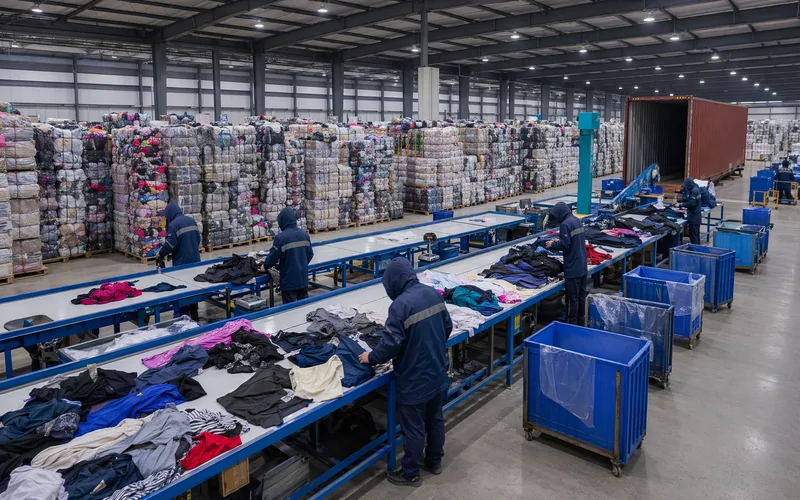
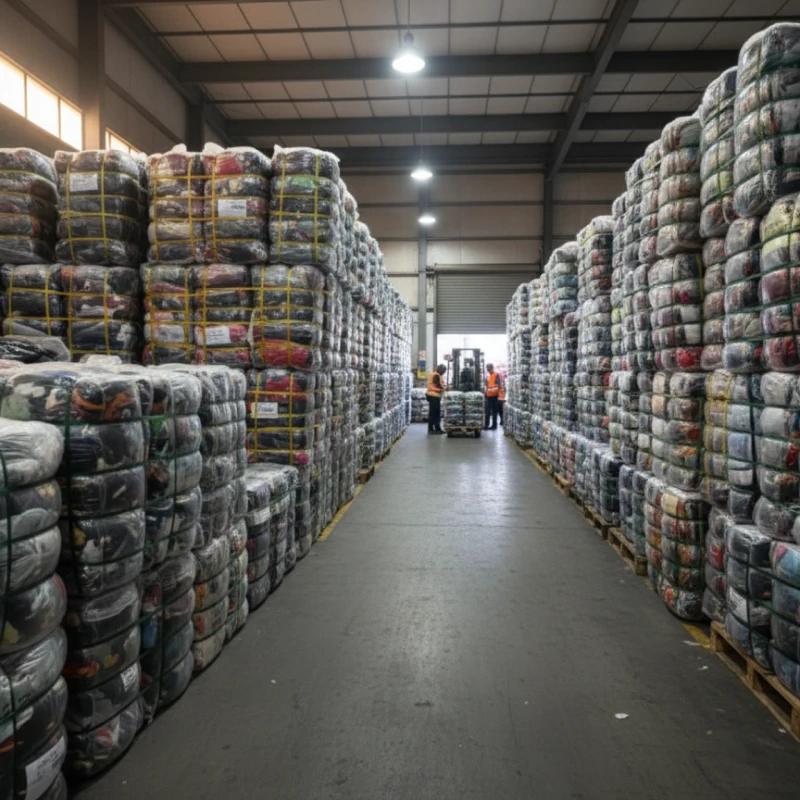
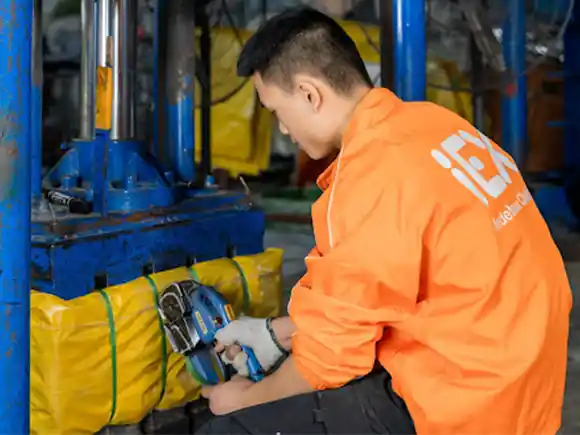
Real facility media shows the product format; the buyer's written specification still defines the current order.
What About SA Bulk Bales?
SA Bulk Bales is one of the queries for which this page already appears in South African search results. However, the current live search does not provide a sufficiently clear first-party website with stable Johannesburg contact, product and order-policy information. For that reason, this article does not present SA Bulk Bales as a verified recommendation or invent an address, price or product range simply to retain the keyword.
If you are evaluating a seller using that name, request current company or trader details, a physical collection point, an invoice, an account-holder match and order-linked bale evidence. Search visibility and third-party trade records can help identify a business, but they do not prove that the person requesting payment controls the business or holds the advertised stock. This verification note preserves the buyer's question without turning an uncertain listing into an endorsement.
Other Johannesburg Sellers: Verify the Product Format First
Search results also show local wholesalers, thrift warehouses and delivery-focused bale sellers. Some sell new liquidation clothing rather than used clothing. Some sell individual garments, curated rails or category packs instead of compressed bales. Others operate mainly through social media and may change addresses or stock formats frequently.
Do not add a name to your shortlist merely because a page calls it a “bulk clothing supplier.” Ask whether the current goods are new, returns, used, credential, sorted or graded; whether they are sold per item, kilogram, bundle or sealed bale; and whether the seller has a physical collection address. These questions quickly remove results that do not match your business model.
Local Bale, Pick by Weight or Direct Import?
The three routes solve different problems. Use the table to choose a purchasing method before you compare sellers.
| Sourcing route | Best fit | Main advantage | Main limitation | Evidence to request |
|---|---|---|---|---|
| Local sealed bale | Small reseller testing a category | Fast access and no international freight arrangement | Limited visibility into sizes, styles and exact piece count | Listing, bale category, weight, seal, payment receipt and claim terms |
| Local pick by weight | Buyer specialising in coats, jackets or another visible category | More control over individual condition and market fit | Selection takes time; heavy pieces reduce count per kilogram | Current price basis, scale reading, VAT treatment and collection receipt |
| Local distributor/wholesaler | Reseller needing repeat local replenishment | Easier communication and shorter replenishment cycle | Availability and grade can vary between deliveries | Current stock list, written condition standard and repeat-order terms |
| Overseas sorting exporter | Established buyer seeking category, packing or container planning | More room to define order-specific specifications | Import legality, freight, customs and larger working-capital exposure | Import eligibility, quotation, specification, inspection evidence and shipment terms |
A local bale can have a higher cost per kilogram and still be the safer first purchase. You avoid container-scale exposure and can start selling sooner. Direct sourcing becomes worth evaluating only when your sales records show which categories move, your cash flow can tolerate the lead time, and the import route is lawful.
Check South African Import Rules Before Comparing Overseas Prices
South Africa treats used-clothing imports as a controlled matter. An ITAC report states that the Commission generally does not grant import permits for second-hand goods, particularly clothing, except for specific and narrowly defined purposes. SARS tariff material also describes a permit-linked provision for certain defined used overcoats and related outerwear. That limited category should not be interpreted as permission to import a general mixed used-clothing bale.
Before sending money to any overseas supplier, provide the intended product description and classification to a qualified South African customs broker and confirm whether an ITAC permit is required and realistically available. Obtain the answer in writing. Do not ask a supplier to change the product description, route the goods through another border or use an inaccurate HS code to avoid the restriction.
This legal gate changes the supplier decision. If the intended bale cannot be imported, buy legally available stock from a local seller instead. If a specific category and use are eligible, place the permit conditions into the purchase specification before production or packing begins. An overseas exporter can discuss a quotation for an eligible destination and category, but it cannot replace the buyer's South African permit decision.
Compare Clothing-Bale Quotes on the Same Basis
Ask every shortlisted supplier to answer the same fields. A quote that omits several fields is not necessarily fraudulent, but it is not ready for comparison.
| Quote field | What you need in writing | Why it matters |
|---|---|---|
| Product status | New, returns, credential, sorted used or graded used | Prevents comparison of fundamentally different goods |
| Category | Mixed clothing or named categories and exclusions | Determines market fit and average piece weight |
| Grade definition | Observable condition rules, not only “Grade A” | Grade labels are not standardized globally |
| Weight basis | Gross packed weight, packaging tare and net garment weight | Stops packaging weight from inflating the product comparison |
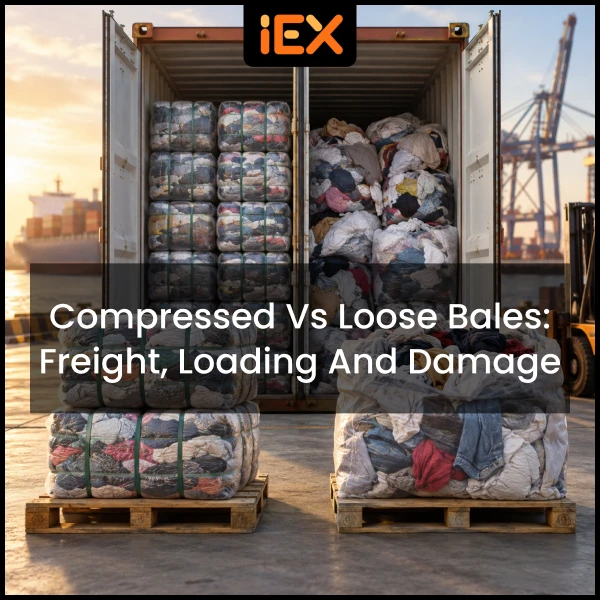
| Bale format | Full/half bale, straps, liner, label and seal | Affects handling, storage and claim evidence |
| Piece count | Measured count or explicitly stated estimate method | Weight does not guarantee a fixed number of garments |
| Price basis | Currency, VAT status and quotation validity | Prevents old or tax-exclusive prices from looking cheaper |
| Delivery term | Collection address, local delivery or named Incoterm/place | Shows which transport costs are included |
| Inspection and claims | What can be inspected, claim deadline and required evidence | Determines what happens when category or quantity is wrong |
For a remote export quotation, the same table becomes an order brief. A buyer can request a named category, written exclusions, current packing options and the evidence available for the lot. This is more useful than asking for the “best Grade A bale,” because the request can be checked against the goods. It still does not turn the quotation into a guaranteed resale outcome.
Net garment weight, packaging tare and bale identification should be recorded separately in a comparable quotation.
Do Not Treat “Grade A” as a Complete Specification
Two clothing bales suppliers in Johannesburg may both use the term Grade A while excluding different defects. One may accept light fading and minor pilling; another may apply a stricter presentation standard. Neither label tells you whether the sizes, season or styles fit your customers.
Replace the grade label with an exclusion list. For example, state whether the bale may include holes, structural tears, broken main zippers, heavy stains, active moisture, mildew, strong odour, uniforms, sleepwear or categories that do not sell in your channel. If the seller will not customize a pre-packed bale, ask for its existing exclusion rules and decide whether you can absorb the variation.
For a local sealed bale, the listing and return policy may be the only practical specification. For an exporter order, the exclusion list can be attached to the quotation or purchase order. Indetexx uses an order-specific Grade A/B/C warehouse classification framework, so buyers should identify the category and defects that matter to their market rather than infer a universal yield from the grade name.
Inspect the Offer and Understand the Claim Window
Inspection rights differ by supplier model. A pick-by-weight warehouse may let you examine each selected piece. A sealed bale seller may let you inspect the outside label and bale category but not open the goods before payment. An exporter may offer sample or order-linked video evidence depending on the current quotation.
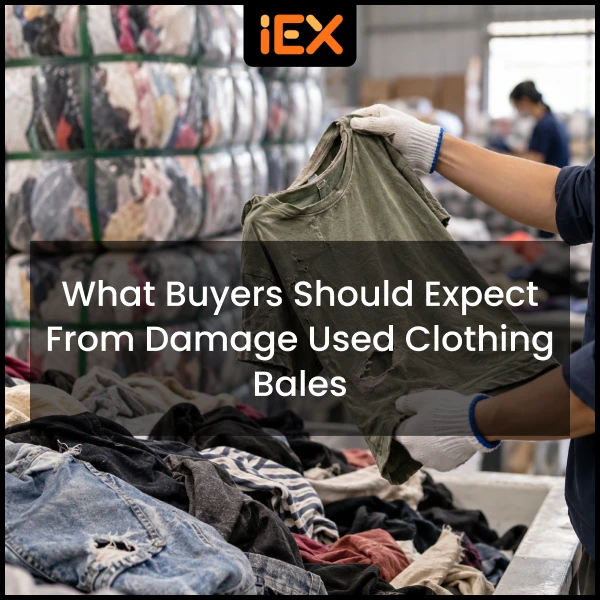
Before buying a sealed bale, photograph the label, seal and external condition. Record the weight if the seller provides a scale. When opening it, keep the bale identity visible and sort the garments into first-pass sellable, cleaning or minor repair, markdown/alternate channel and reject. This receiving record gives you a real basis for deciding whether to reorder.
Read the claim terms before opening. Some local sellers state that an incorrect category must be reported quickly while the bale remains sealed. If you open it first, you may lose the only available remedy. For remote orders, agree in advance on the evidence, claim deadline and remedy; “contact us if there is a problem” is not a claim procedure.
Calculate Cost per Sellable Item, Not Only Price per Bale
The lowest bale price can produce the highest resale cost if too many garments need repair, belong to the wrong season or do not fit your channel. Use this formula after a test purchase:
Cost per first-pass sellable item = total acquisition and processing cost ÷ first-pass sellable item count
For a local purchase, total acquisition cost can include the bale, VAT if applicable, local delivery or pickup fuel, washing, minor repairs and sorting labour. For a legally eligible import, add freight, insurance, applicable customs charges, brokerage, port handling, inland delivery and inspection. Use current documents rather than a generic online percentage.
For example, suppose two locally available bales have different prices. Bale A is cheaper but produces fewer items that can go straight onto your rack. Bale B costs more but contains a category that turns faster and needs less cleaning. The correct decision comes from the cost per sellable item and likely selling window, not from kilograms alone. The detailed clothing-bale sellable-percentage guide explains how to define these receiving buckets without inventing a universal yield.
Match the Bale to Your Johannesburg Sales Channel
A category that sells in a curated online store may perform differently at a market stall, township shop or workwear outlet. Before you buy, write down the customer, price band, season and display method for the stock. This makes the supplier conversation specific.
If you sell low-ticket everyday clothing, you may value piece count and quick replenishment more than recognizable labels. If you specialise in winter outerwear, category-specific coats can justify a heavier average garment weight. If you sell through social media, presentation, measurements and individual style matter more, and a random mixed bale may create too much photography and listing work.
Start with a small test that matches the intended channel. Record category, sizes, condition, time to first sale, markdowns and unsold stock. Use those results to create the next order specification. This is the bridge between a supplier list and a repeatable sourcing system. Buyers who want a local-first sequence can also use the Johannesburg bulk second-hand clothing guide as a supporting checklist.
Questions to Ask Before You Pay
Use these questions in a message or quotation request:
- Are the goods new, returns, credential, sorted or graded used clothing?
- Is this a sealed bale, a pick-by-weight offer or a hand-selected lot?
- What is the named category, and which categories are excluded?
- What does the stated grade exclude?
- Is the bale weight gross or net, and what packaging is included?
- Is the piece count measured, estimated or not specified?
- Can I inspect the bale or a current representative sample?
- What is the claim deadline for an incorrect category or weight?
- Is VAT included, and what delivery or collection costs are excluded?
- For overseas supply, what written evidence confirms that the import is legally eligible?
If you are comparing an exporter with local stock, send the same category and grade brief to both. Ask about the current category, bale, packing and container options only after the destination and legal route are clear. Request a current specification rather than relying on an old product photo or a previous buyer's shipment.
Frequently Asked Questions
Where can I buy clothing bales in Johannesburg?
You can compare local sealed-bale sellers, category-specific used-clothing warehouses and broader wholesale distributors. Current options in and around Johannesburg include Bulk Buy Clothing, Clothing Bales SA, Bales Wholesaler, National Clothing Distributors and The Overcoat Importer, while delivered and overseas routes serve different order sizes. Confirm the latest stock, address, weight, inspection and return terms directly before travelling or paying.
Are there clothing-bale suppliers in Benoni?
The Overcoat Importer currently presents Benoni as one of its Gauteng locations and offers used coats, jackets and coat-bale purchasing. This is a category-specific option rather than a general mixed-clothing bale. Confirm bale stock with the branch before travelling because retail inventory and wholesale bale availability are not the same.
Is SA Bulk Bales a verified Johannesburg supplier?
This page ranks for the SA Bulk Bales query, but the current live search did not expose a sufficiently complete first-party website to verify a stable address, current stock and order policies. Ask the seller for current trader details, an invoice, a physical collection point and account-holder verification before payment. Do not treat a search result or social profile alone as proof of stock.
Is it legal to import used clothing into South Africa?
Used-clothing imports are tightly controlled. ITAC states that it generally does not issue permits for second-hand clothing except for narrowly defined purposes, while specific provisions may apply to certain overcoat categories. Confirm the exact goods and intended use with ITAC and a qualified customs broker before ordering.
How many pieces are in a 45 kg clothing bale?
There is no category-independent answer. Lightweight tops produce more pieces per kilogram than denim, jackets or coats. Ask whether the seller measured the count, or estimate it from a representative sample's average garment weight. Do not treat a marketing estimate as a guarantee.
Is a local clothing bale better than a direct import?
Local stock is usually better for a small test because it reduces shipping complexity and working-capital exposure. Direct export sourcing offers more specification and scale options only when the buyer has proven demand, can manage the shipment and has confirmed a lawful import route.
Can I return an opened clothing bale?
That depends on the seller's written terms, and many bale sales are final. Some suppliers only consider a wrong-category claim while the seal remains intact. Read the policy before opening and document the bale label, seal and condition immediately on receipt.
What should I send to a clothing-bale supplier?
Send your destination, sales channel, category, season, grade exclusions, preferred bale weight, order scale, packing requirements and evidence request. Ask the supplier to identify every unconfirmed field rather than filling gaps with assumptions.
Compare a Current Clothing-Bale Specification
If you have confirmed a lawful destination and product category, share your market, grade exclusions, bale weight, packing requirements and order scale with Indetexx. The current quotation can identify which fields are confirmed for that order.