Introduction: Why Choosing the Right Used Clothing Exporter Matters
In the global second-hand clothing trade, your wholesale used clothing exporter is your foundation. Prices can look similar on paper, but differences in sorting depth, raw material quality, loading efficiency, and consistency determine whether your business grows—or struggles with dead stock and complaints.
Top wholesale used clothing exporters are not simply collectors. They are industrial-scale processors with stable raw material supply, standardized grading systems, export experience, and the ability to customize products by market. Importers who work with these exporters reduce risk, protect margins, and scale faster.
This guide ranks and explains top wholesale used clothing exporters by region, outlines their strengths, and shows how professional buyers evaluate them before long-term cooperation.
What Defines a “Top” Wholesale Used Clothing Exporter?
A top wholesale used clothing exporter is not defined by size alone, but by repeatable performance. Buyers who import month after month look for suppliers that behave like manufacturers, not traders.
Leading exporters share several characteristics: large-scale factories, fine sorting capabilities, transparent grading, and proven export records across multiple markets. Most importantly, they can deliver the same quality today and six months from now.
Many buyers make the mistake of choosing exporters based only on price. Low prices often hide inconsistent sorting, unstable raw materials, or poor container loading, which increases landed cost in the long run.
Core criteria professional buyers use:
- Large, self-operated sorting facilities
- Clear grading standards (Cream / A / Brand / B)
- Stable monthly processing capacity
- Export experience across multiple regions
- Customizable product ratios by market
Indetexx (China)
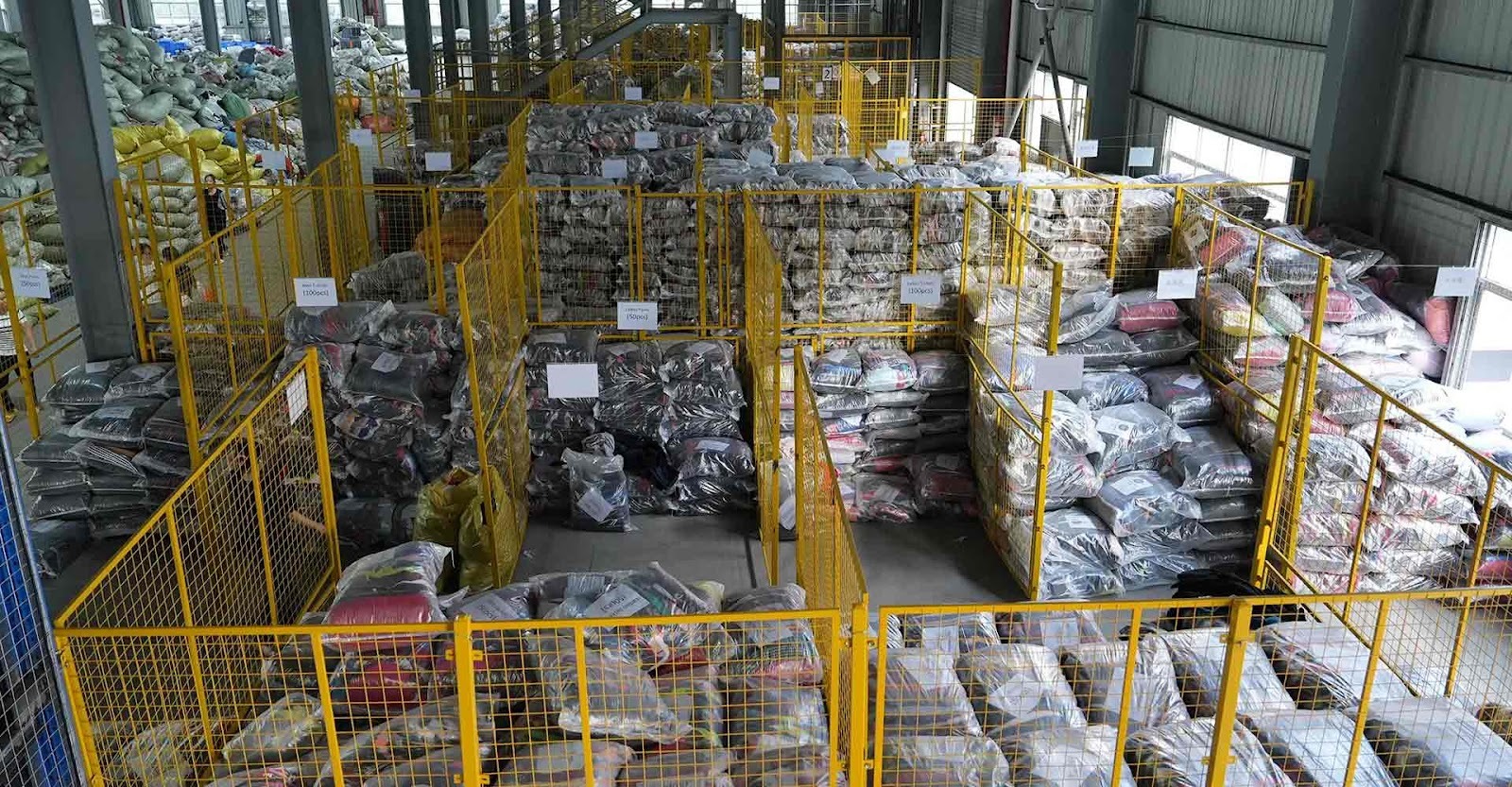
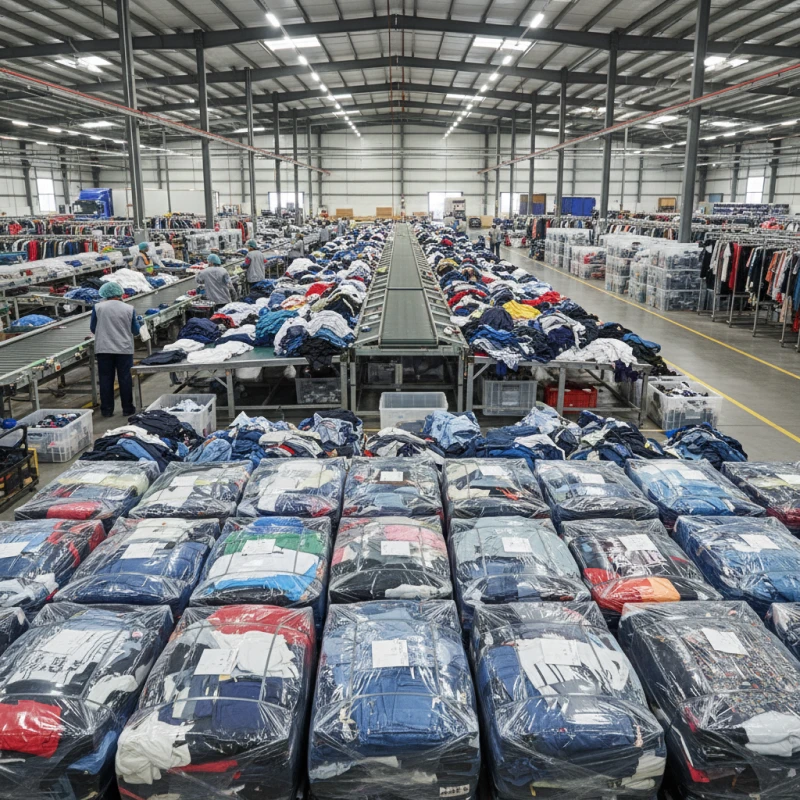
Indetexx is widely recognized as one of Asia’s top wholesale used clothing exporters, serving importers, wholesalers, and distributors in over 110 countries. Unlike trading companies, Indetexx operates a 20,000㎡ self-owned factory with a monthly sorting capacity of 6,000 tons, ensuring long-term stability even for high-volume buyers.
One of Indetexx’s strongest advantages is its raw material control. With a standing inventory of 3,000 tons sourced from first-tier Chinese cities, the company maintains consistent quality, modern styles, and better size distribution. This makes Indetexx especially competitive in mixed clothing, branded clothing, and market-specific customization.
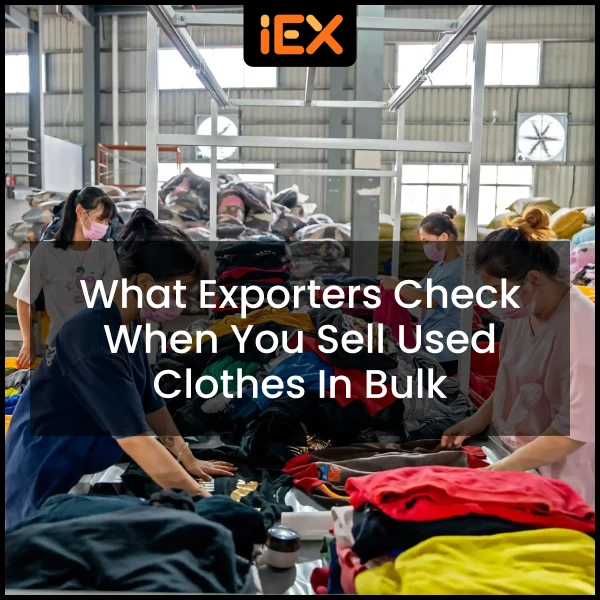
Indetexx is also known for fine sorting (120–200 categories), high container loading rates, and professional export support. For buyers scaling beyond trial containers, this operational depth significantly reduces risk.
Key strengths of Indetexx:
- 20,000㎡ large-scale sorting factory
- 6,000 tons monthly processing capacity
- Exporting to 110+ countries
- Strong customization by grade, category, and market
- High loading efficiency = lower landed cost
Texaid (Switzerland / Europe)
Texaid is one of Europe’s most established textile recycling and used clothing exporters. With collection networks across Switzerland and neighboring countries, Texaid focuses heavily on European-origin used clothing, which is often associated with higher brand presence and better fabric quality.
European wholesale used clothing exporters like Texaid are popular among buyers targeting boutique resale, vintage shops, and EU/US online platforms. However, pricing is generally higher, and minimum volumes may be less flexible compared to Asian exporters.
Texaid’s strength lies in compliance, traceability, and long-term institutional partnerships rather than aggressive price competitiveness.
Best suited for:
- EU/US boutique buyers
- Vintage and branded clothing resellers
- Buyers prioritizing traceability and compliance
Soex (Germany)
Soex is a major German textile recycler and exporter with a strong focus on sustainability and circular economy models. The company supplies used clothing to Africa, Eastern Europe, and Asia, often working with NGOs and municipal collection systems.
While Soex offers reliable European supply, its product structure is often less customizable for specific commercial resale strategies. Buyers typically choose Soex for stable supply and ethical positioning, rather than aggressive margin optimization.
Key characteristics:
- Strong ESG and sustainability profile
- Large European collection network
- Stable but standardized product output
Salvation Army Trading Company (United Kingdom)
Operating as the commercial arm of The Salvation Army in the UK, this exporter supplies used clothing collected through donation bins and charity shops. Its exports are well-suited for African and South Asian markets, particularly for mixed clothing categories.
While pricing is competitive, buyers should expect less fine sorting compared to industrial exporters. This makes it more suitable for buyers with local re-sorting capacity or lower-grade market focus.
Ideal for:
- African wholesalers
- Buyers prioritizing volume over fine categorization
- Re-sorting factories
Trans-Americas Recycling (United States)
Trans-Americas Recycling is one of the largest textile recyclers in North America, exporting used clothing and shoes globally. U.S.-origin clothing is known for larger sizing and strong sportswear presence, making it attractive for African and Middle Eastern markets.
However, shipping costs from the U.S. are higher, and lead times can be longer. Buyers often balance these factors against the value of U.S.-style garments.
Strengths:
- Strong sportswear and casual categories
- Large-size distribution
- Reliable bulk supply
How to Compare Wholesale Used Clothing Exporters (Buyer Checklist)
Choosing the right exporter requires structured evaluation. Experienced buyers never rely on one conversation or one container to decide.
Instead, they compare exporters across five critical dimensions, ensuring alignment with their market and growth plans.
Exporter comparison checklist:
- Factory size and ownership (trader vs processor)
- Monthly sorting capacity and raw material stock
- Grading transparency and sample consistency
- Export history to your target market
- Customization and after-sales support
Common Mistakes Buyers Make When Choosing Exporters
Many buyers lose money not because the exporter is fraudulent, but because expectations were unclear. Common mistakes include chasing the lowest price, ignoring grading definitions, and underestimating the importance of container loading efficiency.
Another frequent error is switching suppliers too often. Long-term cooperation with a capable exporter usually results in better consistency, priority access to stock, and improved pricing over time.
Mistakes to avoid:
- Buying without sample or inspection
- Accepting vague quality descriptions
- Ignoring supplier capacity limits
- Overloading containers with low-value fillers
FAQ: Wholesale Used Clothing Exporters
Q1: Which country has the best used clothing exporters?
China and Europe dominate, with China offering better customization and Europe offering higher brand density.
Q2: Are large exporters better than small ones?
For long-term business, yes. Large exporters offer consistency and scalability.
Q3: Can exporters customize by market?
Top exporters can adjust grade, category, and ratio by destination.
Q4: How many containers should I start with?
Most buyers start with one test container, then scale gradually.
Q5: How do I verify an exporter’s reliability?
Check factory size, export records, sample consistency, and client markets.
Conclusion: Choose Exporters Built for the Long Game
The best wholesale used clothing exporters are not defined by marketing claims, but by systems, scale, and consistency. Importers who partner with industrial-grade exporters reduce risk, stabilize margins, and grow faster across multiple markets.
Whether you prioritize customization, price efficiency, or brand quality, choosing a wholesale used clothing exporter with proven capacity—like Indetexx—turns used clothing from a speculative trade into a scalable global business.
Ready to Source Your First Shoe Container?
Indetexx ships Grade A and Grade B used shoe bales to 110+ countries. Every bale ships with documented composition reports, pre-shipment photos, and size distribution data so you can verify grade accuracy before the container sails.
Our 20,000㎡ sorting factory processes 6,000 tons of footwear monthly, ensuring consistent supply for buyers across Africa, Southeast Asia, and Latin America.