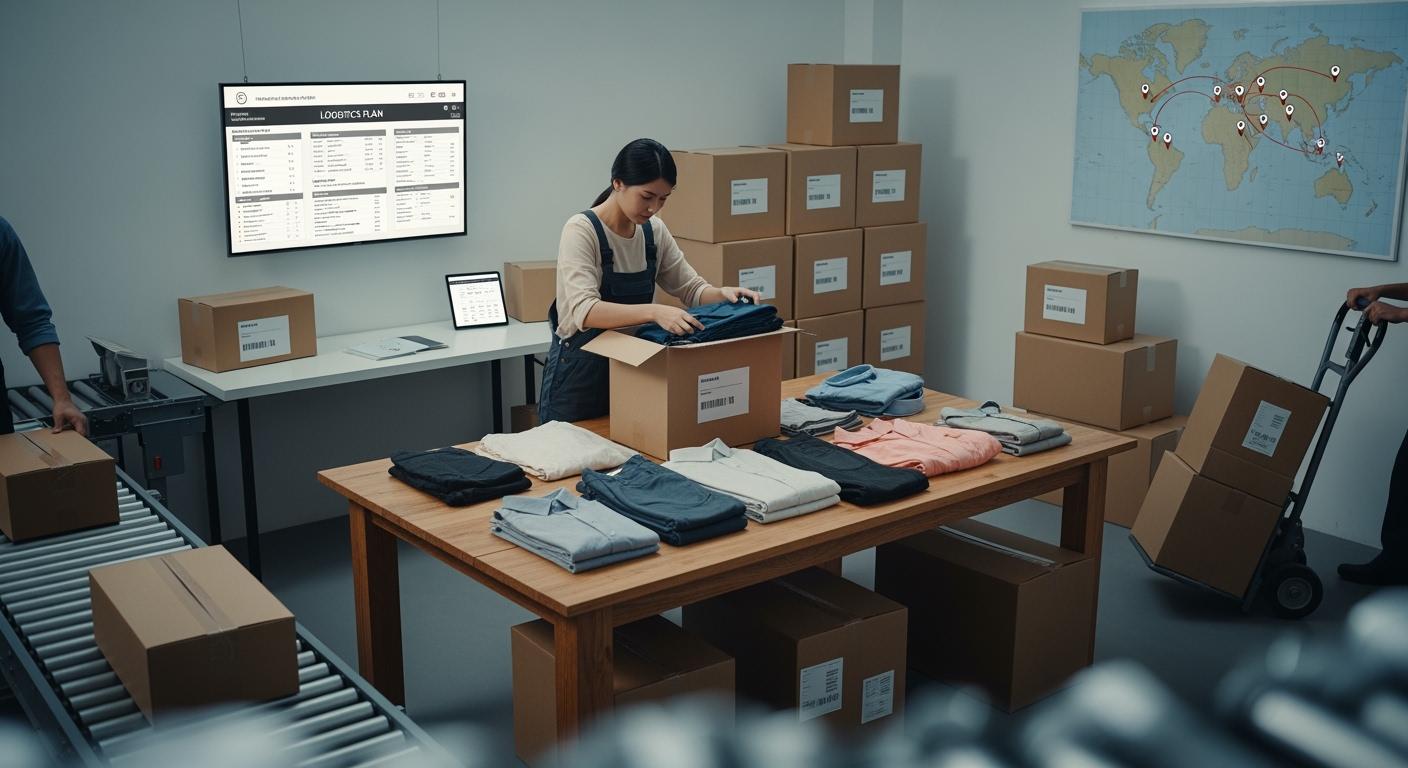
You have a tough job in apparel ecommerce with mixed clothing shipment. Many SKUs and lots of returns make logistics hard. Smart storage setups and automatic order systems help you work faster in apparel fulfillment. If you make logistics simple, you spend less money and keep track of inventory better. Quick delivery and correct orders make customers happy in apparel ecommerce. Real-time tracking and easy returns help people trust your apparel brand. Being efficient with mixed clothing shipment gives better experiences to you and your customers.
Mixed clothing shipment needs you to be fast, correct, and save money.
Better logistics help apparel ecommerce brands grow and keep loyal customers.
Key Takeaways
Make logistics better to save money and manage inventory well. This helps deliver orders faster and makes customers happy.
Use lean logistics ideas to stop waste and make work easier. Pay attention to what customers want and track items in real time.
Pick the best shipping way for each order size. Use FTL for big shipments and LTL for small ones to save money.
Make last-mile delivery better with smart routes and local storage. This lowers costs and makes deliveries faster.
Use eco-friendly packaging and work with green carriers. This helps the earth and makes your brand look good.
Mixed Clothing Shipment Challenges
Inventory Complexity
Handling mixed clothing shipment is tough in apparel ecommerce. You get more SKUs when you add new styles, colors, and sizes. This makes keeping track of inventory harder. You need to watch each variant closely to stop mistakes. Fashion trends change fast, so you must use quick strategies to meet demand. Different sizes cause lots of returns, which makes inventory work harder. You must plan carefully for seasons and new collections. The table below shows common inventory complexity problems:
Issue | Description |
|---|---|
High SKU Complexity | Apparel items have many variations, so managing them is hard. |
Variant-Level Tracking is Essential | You need to track each variant to manage inventory well. |
Fast-Moving Trends and Short Lifecycles | Trends change fast, so you need quick inventory strategies. |
Sizing Inconsistencies and Returns | Different sizes cause lots of returns and make workflows harder. |
Seasonality and Launch Cycles | Demand changes with seasons, so you must plan for new collections. |
More SKUs make picking items for orders take longer. Slow-moving SKUs can take up good space. Forecasting is harder with lots of low-volume SKUs. You pay more to keep inventory and make more mistakes like picking the wrong item or labeling it wrong.
Fulfillment Accuracy
You must be accurate in every step of fulfillment. Mistakes during receiving cause problems later. Bad storage makes picking slow and items get lost. System integration problems during order processing make it hard to see what is happening. Most mistakes happen during picking, like choosing the wrong item or wrong amount. Bad packaging can hurt clothes during shipping. Picking the right carrier helps deliver fast and keeps customers happy. Mistakes in returns processing hurt your money and trust.
Receiving mistakes cause more problems later.
Bad storage makes picking slow.
System integration problems make it hard to see orders.
Picking mistakes mean wrong items or wrong amounts.
Bad packaging can hurt clothes during shipping.
Choosing the right carrier helps deliver fast.
Mistakes in returns processing hurt money and trust.
Cost Pressures
Cost pressures affect your logistics choices in apparel ecommerce. You try to save money, which changes how you pick suppliers and source products. Labor and energy costs in some countries make supply chains cost more. Delivering on time matters for near-shoring choices. Many fashion leaders say sourcing costs are rising. Tariffs make sourcing more expensive, so managing costs is harder. You must change prices based on what customers and competitors do to keep profits.
Saving money changes how you pick suppliers.
Labor and energy costs make supply chains cost more.
Delivering on time matters for near-shoring.
Sourcing costs are rising for many brands.
Tariffs make sourcing more expensive.
Changing prices helps keep profits.
Mixed clothing shipment challenges mean you must find real solutions. You need to make logistics, fulfillment, and shipping better to stay ahead in apparel ecommerce. The next sections will show you how to fix these problems and make your orders work best.
Logistics Optimization Strategies
You can make apparel fulfillment faster and more correct with smart strategies. These steps help you save money and waste less. They also help you deliver orders on time. Using the right methods makes your business better. It also keeps customers happy.
Lean Logistics Principles
Lean logistics helps you remove waste and make things better. You focus on what is important and cut out slow steps. Here are some lean ideas for apparel fulfillment:
Cut waste by having less extra inventory and fewer shipping steps.
Use demand-driven inventory to match stock with real orders.
Make sure everyone follows the same steps every time.
Work with suppliers to react fast to order changes.
Use real-time tracking and automation to see inventory better.
Check how you are doing often to find ways to improve.
You can also set up your warehouse for faster picking and packing. Try these tips:
Put fast-selling products where you can reach them easily.
Label each item clearly so you do not make mistakes.
Make storage zones for different types of apparel.
Lean logistics helps you spend less and work better. You can use just-in-time shipping to lower storage costs and deliver orders fast. Continuous improvement means you always look for ways to get better. Flexible supply chains help you handle changes in demand without spending more.
Tip: Use automation tools to track inventory and orders as they happen. This makes your fulfillment more correct and helps you find problems early.
LTL and FTL Solutions
Picking the right shipping method is important for apparel fulfillment. You can choose LTL or FTL based on your order size and needs. Here is a quick comparison:
Aspect | FTL (Full Truckload) | LTL (Less Than Truckload) |
|---|---|---|
Load Size | Large cargo (24-26 pallets or 20,000+ lbs) | Smaller loads that do not fill the trailer |
Cost Structure | Pay for the whole truck | Pay for the space you use |
Transit Time | Direct delivery, fewer delays | Multiple stops, longer delivery time |
Handling and Risk | Less handling, lower risk of damage | More handling, higher risk of damage |
Flexibility | Better control over schedule and delivery | More frequent departures, flexible routes |
Use FTL for big and urgent apparel shipments. LTL is good for smaller orders that can share space. Picking the right shipping method helps you avoid extra costs. It also keeps your fulfillment working well. Automation can help you pick the best option by checking size, weight, and delivery time.
Note: Automation tools can compare shipping choices and pick the best one for each order. This saves money and lowers mistakes in your fulfillment.
Route and Carrier Selection
Route and carrier choice affects how fast, cheap, and reliable your fulfillment is. You need to look at many things to make the best choice. Here is a table to help you:
Factor | Description |
|---|---|
Cost Optimization | Pick carriers with good prices and service. |
Size and Weight of Package | Check carrier limits to avoid extra shipping costs. |
Destination | Choose carriers with strong networks in your delivery areas. |
Customs Regulations | Make sure carriers handle paperwork and clear customs fast. |
Connectivity | Use carriers with good transport links for faster, more reliable fulfillment. |
Eco-friendly carrier choices matter too. You can save money and help the planet by:
Using regional hubs to cut delivery times and emissions.
Picking right-sized, recyclable packaging to make less waste.
Choosing carriers with green programs to support the environment.
Using automation to track carrier performance and find ways to improve.
Custom packaging can make your brand special and keep shipping costs low. When you use automation to manage routes and carriers, you get faster and more reliable fulfillment. This makes customers happy and helps your apparel ecommerce business grow.
Tip: Check your carrier choices often. Use automation to track delivery times, costs, and customer feedback so you can keep getting better.
Ecommerce Fulfillment and Last-Mile Delivery
You want your apparel brand to be special online. Fast order handling and correct delivery help you reach this goal. Using good technology and smart plans makes last-mile delivery easier. This keeps customers happy. This section shows ways to make fulfillment quicker, orders more accurate, and last-mile delivery better for apparel shipping.
Batch Picking and Packing
Batch picking and packing can change how you fill orders. You group orders together and pick items for all at once. This saves time and lowers mistakes. Workers do not walk back and forth for each order. They collect items for many orders in one trip. This works well for apparel because you ship many sizes, colors, and styles together.
Here is how batch picking and packing help your apparel fulfillment:
Benefit | Description |
|---|---|
Enhancing Productivity | Workers gather items for several orders at the same time. This cuts repeated trips and boosts efficiency. |
Reducing Travel Time | Picking for many orders lowers walking distance. Orders finish faster. |
Lowering Labor Costs | Fewer workers are needed. Employees handle more orders, so overtime and stress go down. |
Improving Accuracy | Organized picking and barcode scanning lower mistakes. Customers get the right items. |
Reducing Worker Fatigue | Less walking means less tired workers. Morale and productivity go up. |
Maximizing Resource Utilization | Storage and equipment are used better. No wasted trips or idle tools. |
Cutting Costs | Working smarter lowers expenses. You give great service with fewer resources. |
You also get these benefits:
Batch picking lets workers pick many orders in one trip. This makes work faster.
Less walking means workers feel less tired and make fewer mistakes.
Picking in groups leads to quicker order filling. Workers spend more time picking and less time walking.
Technology like Warehouse Management Systems and Pick-to-Light systems show workers the best paths. This helps them pick items correctly.
Batch picking and packing make logistics more efficient. You get better order accuracy and speed. This means customers get their orders faster.
Real-Time Tracking
Real-time tracking is very helpful for apparel ecommerce. You can see where every shipment is right now. This helps you manage orders and keeps customers updated. Technology makes this possible. You can use RFID platforms, Warehouse Management Systems, and IoT sensor networks to track inventory and shipments.
Here are some important tracking technologies for apparel fulfillment:
RFID platforms track items quickly and automatically. This makes inventory more accurate.
Warehouse Management Systems keep real-time records for all inventory moves. This helps work go smoothly.
IoT sensor networks watch inventory conditions. This matters for sensitive apparel shipments.
GPS tracking shows transport paths and gives real-time shipment status.
Mobile inventory apps let you check inventory and shipment tracking anywhere.
AI apps automate supply chain steps and find the best routes using real-time data.
Cloud-based management systems let logistics teams share real-time data with customers. This improves visibility.
Real-time tracking helps you fix problems fast. If a shipment is late, you get alerts right away. You can send another truck if needed. This keeps delivery on time and avoids extra costs. Customers trust your brand more when they can track their orders. They worry less and do not need to call customer service. Quick updates build loyalty and make your brand look good.
You also save money. Real-time tracking systems find the best routes and manage inventory well. This lowers costs and uses resources better. Being open builds trust and keeps customers coming back.
Tip: Use real-time tracking to give customers updates about their delivery. This makes delivery better and makes customers happier.
Last-Mile Delivery Optimization
Last-mile delivery is the last step to get apparel orders to customers. This step is often the most costly and hardest part of logistics. You need to focus on last-mile optimization to save money and deliver faster.
Here are some good last-mile delivery strategies for apparel ecommerce brands:
Localized storage: Keep inventory in local warehouses or dark stores. This shortens delivery and lowers costs.
Crowdsourced delivery: Use flexible delivery options during busy times. This helps you handle more orders.
Dynamic route optimization: Use AI to find the best delivery routes in real time. This makes delivery faster and cheaper.
Automated notifications: Send customers updates about their delivery. This lowers failed deliveries and makes the experience better.
Balance costs and expectations: Offer clear service levels. Meet customer needs for fast delivery and manage costs.
Improving last-mile delivery makes a big difference. When you pick better routes, delivery is faster and costs go down. Giving estimated delivery dates at checkout helps customers plan and lowers cart abandonment. Clear service levels help you manage costs and meet delivery speed needs.
Remember, last-mile delivery is the most expensive part of shipping. Each order needs special care, which raises costs. By making your delivery network better, you can cut costs and work more efficiently.
Note: Last-mile management is important for apparel ecommerce. Use technology and smart plans to make last-mile delivery easier and give customers the best experience.
When you focus on better last-mile delivery, your logistics get stronger. You deliver orders faster, save money, and build customer loyalty. Technology helps you track, manage, and improve every step. Your apparel brand will stand out online with better fulfillment and last-mile delivery.
Sustainability and Reverse Logistics
Eco-Friendly Packaging
You can help your apparel brand be greener by picking eco-friendly packaging. Many packaging types keep clothes safe during shipping and help the earth. The table below lists some good choices for mixed clothing shipments:
Packaging Type | Benefits |
|---|---|
Mailer Boxes | Light, auto-locking, protects clothes, makes unboxing fun. |
One-Panel Folder | Fits tight, stops wrinkling, uses less material. |
Tray-and-Cover Format | Strong, steady, good for fancy clothes. |
Full Overlap Container | Strong for heavy things, lowers crushing risk. |
Half-Slotted Container | Easy to open, good for stores, tough and stacks well. |
Switching to paper packaging helps the planet and cuts shipping costs. Most plastic bags used for shipping clothes end up in landfills or oceans. These bags take a very long time to break down. Using eco-friendly packaging lowers your impact on the earth and makes logistics work better. Many people think cardboard and paper packaging looks nicer, so your brand stands out.
Tip: Eco-friendly packaging helps the earth and makes your brand look special.
Green Carrier Initiatives
You can pick green carriers to make shipping better for the planet. Companies like Patagonia use recycled materials and plan routes to cut pollution. IKEA uses trains and clean fuels for shipping. These green carrier ideas help you lower pollution and work faster. Many big clothing brands ask carriers to use cleaner trucks and smarter routes. This saves fuel and lowers greenhouse gases.
Green carriers use electric trucks or offset carbon.
They plan routes to drive fewer miles.
They help you reach your green goals and make your supply chain better.
Picking green carriers for shipping shows you care about the planet.
Streamlined Returns
You need strong reverse logistics to handle returns in apparel ecommerce. Clear return rules and free shipping for returns build trust with customers. Good inventory systems help you track returns and manage stock. Fast refunds make customers happy and loyal. Accurate product details, like size charts and videos, can lower returns.
Best Practice | Description |
|---|---|
Clear Return Policies | Simple rules build trust. |
Free Return Shipping | Makes customers happier and boosts sales. |
Effective Inventory Management Systems | Tracks returns and stock well. |
Prompt Refunds | Quick refunds build trust. |
Accurate Product Listings | Helps customers pick the right clothes and lowers returns. |
You can make returns easier by offering drop-off spots and lockers. This cuts travel and lowers pollution. Real-time tracking and data help you find problems and fix your returns process. When you check, fix, and resell returned clothes, you cut waste and get value back. Better reverse logistics can cut travel miles by up to 30%. Working with green carriers for returns also lowers your carbon footprint. Tracking your impact through reverse logistics helps you reach your green goals.
Streamlined reverse logistics saves money, works better, and helps the planet.
Conclusion
You can make your apparel logistics much better by using the right strategies. When you focus on lean logistics, smart shipping choices, and strong last-mile delivery, you save money and work faster. You also help the planet with eco-friendly packaging and green carriers. Good reverse logistics make returns easy and keep customers happy.
Here are the main steps you can follow:
Use lean logistics to cut waste and improve your warehouse.
Pick the best shipping method for each order. LTL and FTL both have benefits.
Choose the right carrier and route to save time and money.
Batch pick and pack orders to work faster and make fewer mistakes.
Track shipments in real time so you and your customers always know where orders are.
Make last-mile delivery better with smart routes and local storage.
Switch to eco-friendly packaging and work with green carriers.
Streamline your returns to build trust and reduce waste.
When you use these steps, you get faster deliveries, lower costs, and happier customers. You also help the environment and make your brand stand out.
You do not need to do everything at once. Start with one or two changes that fit your business best. Watch how your logistics improve. If you want more help, talk to a logistics expert. They can give you advice for your brand.
Ready to make your apparel logistics better? Start today. Small changes can lead to big results. Your customers will notice the difference, and your business will grow. 🚀
You can make your apparel logistics better by using smart plans. Centralized fulfillment, just-in-time inventory, and real-time dashboards help you save money and deliver faster. When you pick good routes and use green carriers, you cut pollution and make customers happier. Experts can help you with special plans that save time and money.
Benefit | How You Achieve It |
|---|---|
Cost Savings | Less waste, smarter inventory, better spending |
Faster Delivery | Data-driven routes and schedules |
Improved Sustainability | Green logistics and emission tracking |
Better Experience | Right product, right time, right place |
Start now. Even small steps can help your brand grow and get noticed. 🚀
FAQ
What is the best way to reduce errors in mixed clothing shipments?
You should use barcode scanning and real-time inventory systems. These tools help you pick the right items for each order. They also let you track every order as it moves. If your team learns how to use these tools, they will make fewer mistakes.
How can you lower shipping costs for apparel orders?
You can send many orders together to save money. Use LTL for small shipments. Always check different carrier prices before you ship. Automation tools help you find the cheapest and fastest way for each order.
Why does real-time tracking matter for apparel brands?
Real-time tracking shows where every order is right now. You can tell customers about their orders quickly. This helps customers trust you. It also lets you fix delivery problems before they get worse.
What makes eco-friendly packaging important in apparel logistics?
Benefit | Impact on Your Brand |
|---|---|
Less Waste | You help the environment |
Better Image | Customers trust you more |
Lower Costs | You save on shipping |
Eco-friendly packaging keeps clothes safe and helps your green goals.
Ready to Source Your First Shoe Container?
Indetexx ships Grade A and Grade B used shoe bales to 110+ countries. Every bale ships with documented composition reports, pre-shipment photos, and size distribution data so you can verify grade accuracy before the container sails.
Our 20,000㎡ sorting factory processes 6,000 tons of footwear monthly, ensuring consistent supply for buyers across Africa, Southeast Asia, and Latin America.