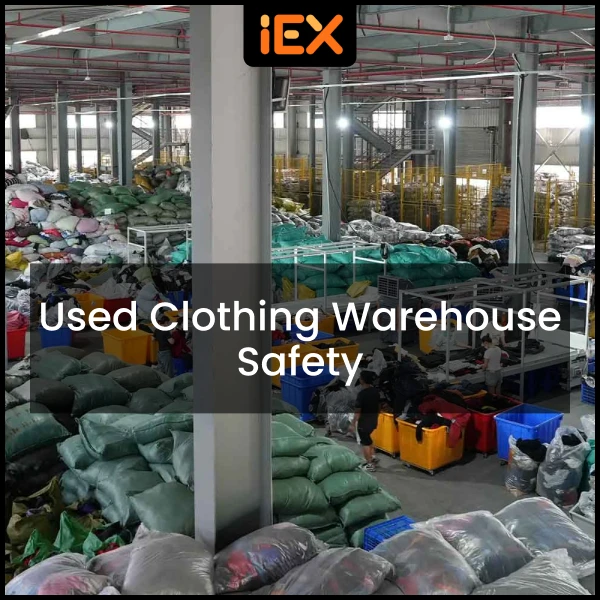
Used clothing warehouse safety starts with the actual bale, building and handling method—not a stack height copied from a generic warehouse chart. Before bales arrive, the warehouse needs to know what physical unit it will receive, how that unit will be moved and stored, and which local fire, building and occupational-safety requirements apply.
Compressed used-clothing bales can differ in shape, dimensions, nominal weight basis, density, wrapping and condition. Those differences affect stability, grip and equipment interaction. The safe question is therefore not “How many bales can we stack?” It is “What stack and handling method has a competent person approved for these bales in this site?”
Keep the ownership boundary clear. The used clothing warehouse guide covers commercial facility and supplier checks. This guide covers the buyer’s operational plan for storing and handling finished bales after they enter the site.
Quick Takeaways
- Build the method around the actual bale, floor or storage system, equipment and local requirements; do not copy a universal stack height.
- Keep stacks stable through stacking, stock rotation and de-stacking, and restrict access to any stack that has moved, leaned or been struck.
- Treat aisles, exits, fire safeguards and emergency access as protected space, not overflow storage.
- Find and correct indoor moisture sources, and decide in advance where wet packaging or suspect material will go.
- Separate pedestrians from moving equipment and confirm that the operator, equipment and load configuration fit the actual task.
Build a Used Clothing Warehouse Safety Plan Around the Actual Bale
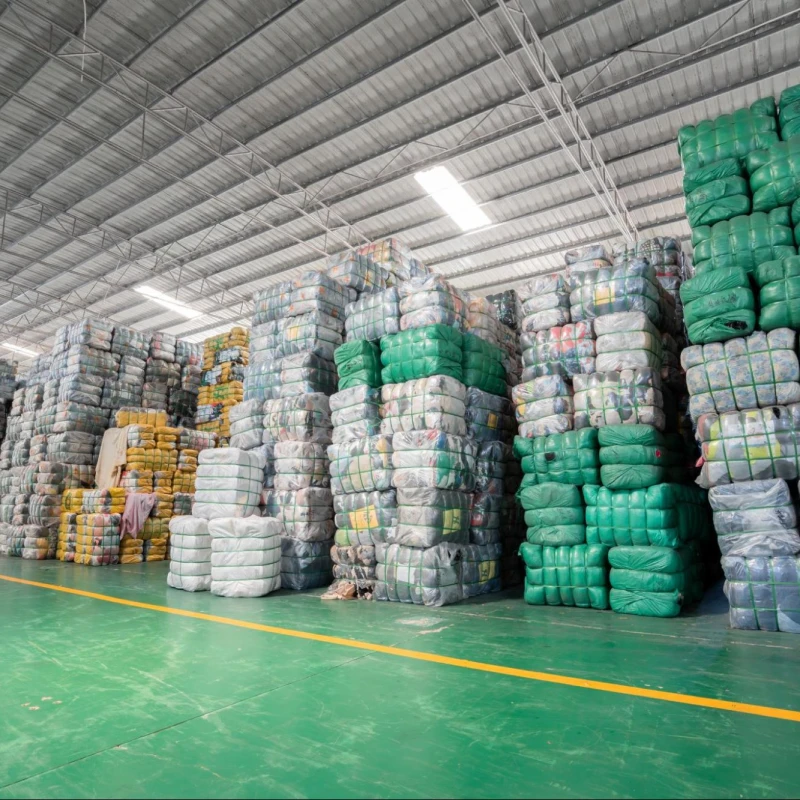
A warehouse cannot approve a method from the words “compressed clothing bales” alone. The UK’s Health and Safety Executive guidance on bales explains that shape, size, weight, density and wrapping affect stack stability. The storage area, surface, access route, stock-rotation method and lifting equipment also change the decision.
Start the warehouse review while the order is still being specified. This gives purchasing time to close missing physical-unit fields and gives the site team time to reject an unsuitable proposed arrangement before the first delivery is at the door.
Record the Physical Unit Before It Reaches the Door
Ask the supplier to state the current proposed bale format, dimensions where available, nominal weight and whether that basis is net or gross. Record the outer wrapping or strapping and whether the unit will arrive loose, palletized or in another handling arrangement. These are planning inputs, not a promise that naturally variable bales will be physically identical.
Put the fields in the order record rather than leaving them in chat messages. For an Indetexx order, use the used clothing bale specification sheet as the document handoff; the warehouse safety brief should use the current approved version. At receiving, a measured or observed result should remain separate from the supplier’s nominal pre-arrival description.
If a field is unknown, write “not confirmed.” Do not let a prior order, a catalogue photograph or an average from another supplier silently fill the gap. A missing input is a reason to pause the affected storage or handling decision.
Assign the Decisions to Competent Owners
Name the person responsible for the warehouse stack and de-stack method. Then identify who will confirm the fire layout, building or floor limits, powered-equipment configuration, traffic plan, manual-handling method and dampness response. Depending on the site and jurisdiction, those decisions may require local fire or building authorities, a fire-protection professional, an occupational-safety specialist, an equipment manufacturer or another qualified party.
The supplier’s role is narrower: provide the current order-specific bale and packing information it can confirm. A warehouse video or supplier statement may show a limited place and time, but it does not approve the buyer’s floor, stack, fire safeguards, truck attachment or operating procedure.
Keep Bale Stacks Stable Through Storage and De-Stacking
In the United States, OSHA’s general material-storage rule requires storage not to create a hazard and says tiered bundles must be stacked, blocked, interlocked and limited in height so that they remain stable against sliding or collapse. That rule does not supply one universal used-clothing bale height. The limit still has to come from the actual load, arrangement, site and applicable requirements.
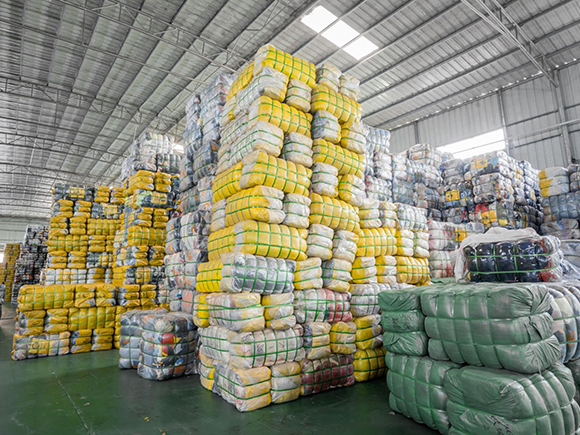
Stability is a lifecycle problem. A stack that appears stable when built can change when adjacent bales are added or removed, when wrapping slips, when the floor or material becomes wet, or when equipment contacts the stack. The plan must cover construction, routine inspection, stock rotation and de-stacking.
Approve a Site-Specific Stack and De-Stack Method
The responsible person should evaluate the bale shape, dimensions, mass, density and wrapping alongside the floor or storage system, available footprint, nearby traffic and handling equipment. The written method should state how the stack is built, inspected, accessed and taken down. It should also explain how older stock is reached without workers climbing on bales or improvising a removal path.
Do not copy an illustrated pyramid, interlock pattern or tier count without assessing the actual unit. Even an arrangement that is suitable for one bale can become unsuitable when the dimensions, wrapping friction, density, floor or de-stacking sequence changes. “It worked last time” is a record of one outcome, not approval for a different configuration.
Treat a Leaning, Damaged or Struck Stack as a Controlled Area
Define the stop condition before staff encounter it. Visible leaning, displacement, settling, damaged wrapping or strapping, water exposure, an unknown support condition or contact from a vehicle should trigger access control and review by the named responsible person.
The Irish Health and Safety Authority’s 2026 bale-stacking alert for the waste sector is not a clothing-bale design standard, but it gives a useful principle: protect stacks from vehicle contact, separate pedestrians from vehicle movement and control access around falling-bale danger areas. If a stack has been struck or destabilized, do not ask workers to steady, climb or pull it back into place without an approved recovery method.
Keep Fire Safeguards and Exit Routes Available
Compressed textile stock must be included in the site’s fire review. UK HSE textile fire guidance notes that textile-industry materials have some degree of flammability and emphasizes housekeeping and ignition control. The exact fire behavior and protection requirements still depend on the material, wrapping, pile arrangement, building and installed systems.
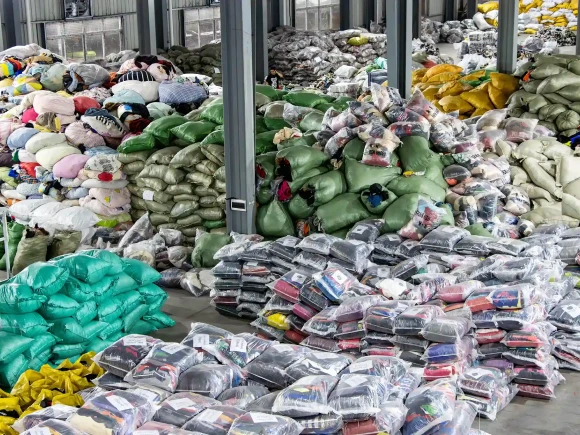
Capacity planning cannot treat exit routes, access to safeguards or emergency paths as spare storage space. In the United States, OSHA’s exit-route rule requires exit routes to remain unobstructed where it applies. Other jurisdictions have their own requirements, so the warehouse must use its current approved layout rather than transferring a number from this article.
Include Stored Textile Bales in the Fire Review
Give the competent fire reviewer a current description of the stored categories, bale wrapping and proposed arrangement. Include ordinary changes that can alter the fire plan: more stock, a different packing material, a temporary overflow area, a new charging location, hot work nearby or a change in waste and lint accumulation.
Housekeeping should have an owner and a record. Keep waste, loose material and other accumulations from building up around ignition sources, travel paths or protection equipment. Maintain electrical and mechanical equipment under the site’s program. Do not assume that a bale is low-risk because it is compressed or wrapped.
Verify the Layout With the Local Authority and Protection Specialists
The site plan should identify protected exits, aisles, alarm and suppression components, firefighting access and emergency response routes. Have the appropriate local authority, fire-protection professional and insurer review the actual building, stock, packing, pile arrangement and installed system when required.
There is deliberately no sprinkler-clearance, pile-area, aisle-width or extinguisher number in this guide. Those are design and compliance decisions that change with the building, jurisdiction and protection system. OSHA’s fire-prevention-plan guidance is a useful US example of assigning fuel-source and safeguard responsibilities, not a substitute for the site’s applicable plan.
Control Indoor Moisture Before It Becomes a Workplace Problem
Indoor moisture is not only a product-quality concern. A leak can affect floors, packaging, stack stability, air quality and the way staff handle the material. The warehouse plan should therefore treat the building source and the affected stock as two connected controls.
CDC/NIOSH explains in its workplace mold guidance that prolonged wetness and high relative humidity can create building dampness and allow indoor mold growth. It also says that finding and correcting sources of dampness is more effective for prevention than relying on routine mold air sampling. That does not create a universal humidity target or a visual “all clear” rule.
This section concerns indoor storage. Sea-container condensation, voyage controls and arrival-claim evidence are separate tasks and should not be folded into the warehouse method.
Inspect the Building and Correct the Moisture Source
Create a routine for checking likely water-entry and dampness locations: roof and wall penetrations, doors, plumbing, drainage, floor edges and any area with recurring condensation or staining. The record should identify the date, exact location, visible condition, material affected, temporary control and person responsible for correcting the source.
Do not make routine air sampling the only decision tool. A dry-looking surface at one moment does not explain a recurring leak, and an air result does not repair the roof or pipe. Track the source to closure, then inspect the surrounding building materials and stored units under the site’s professional guidance.
Isolate Wet or Suspect Material From Normal Stock Flow
Choose a controlled location and decision owner before an incident. When packaging is wet, a bale has an unexplained musty condition, or the surrounding building area is damp, keep the affected units from being mixed into normal stock until the responsible person has assessed the situation. Preserve the bale or lot references and record what was observed without diagnosing the cause or toxicity from appearance alone.
If water has affected stack stability, restrict the surrounding area as well as the material. Extensive building damage, widespread growth, worker health concerns or an uncertain remediation scope should be escalated to qualified local building, industrial-hygiene, health or remediation professionals as appropriate.
Plan Bale Handling Around the Actual Task
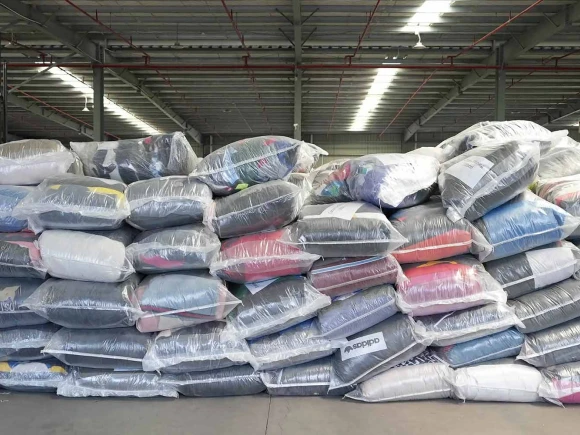
Mechanical transport does not eliminate manual handling. Workers may still rotate a bale, guide an attachment, remove restraints, reposition a unit or clear the route. Map those touches instead of writing “forklift used” as the whole control.
The baling-press guide covers the separate compression-equipment context. This guide begins with the finished bale. Press operation, guarding, maintenance and bale opening need their own machine-specific procedures.
Assess Manual Tasks by Mass, Grip, Posture, Frequency and Route
For every manual touch, record the actual bale mass or stated basis, dimensions, grip or wrapping condition, worker posture, frequency, travel distance, floor condition and team or mechanical assistance. UK HSE’s textile manual-handling guidance identifies heavy or awkward loads, poor grip, force, repetition and awkward posture as recurring concerns. Assess the task as performed, including difficult starts and stops—not only the easiest part of the movement.
Do not publish or borrow one “safe lifting weight.” A task can become unsuitable because of reach, posture, frequency, grip, route or individual capability even when a single number looks familiar. The responsible site professional should select the method and reduce avoidable manual handling.
Match Powered Equipment, Operators and Traffic Controls to the Load
Confirm the truck, attachment and actual load configuration with the equipment manufacturer or another qualified equipment party. Check the rated capacity in the intended configuration, the load center, attachment effects, visibility, floor and route. A familiar truck is not automatically suitable for a wrapped or deformable bale.
In the United States, OSHA’s powered-industrial-truck rule requires operator training and evaluation appropriate to the truck and workplace conditions. Use that as a jurisdiction-specific example of a wider principle: competent operation must match the actual equipment and site.
The traffic plan should separate pedestrians from truck travel, stacking and de-stacking zones. Mark who controls temporary access when stock blocks visibility or changes the route. Protect stacks from impact, and send any struck stack back through the stability review rather than continuing normal work.
Turn the Controls Into a Pre-Arrival Warehouse Brief
Put the decisions in one brief before delivery. The purpose is not to replace a local risk assessment, fire plan or equipment manual. It is to show whether purchasing, the warehouse and the relevant specialists are working from the same bale and site facts.
Use the table as a handoff, not a box-ticking exercise. Replace generic phrases with current facts, name the responsible person and attach the underlying assessment or approval where the site requires it. When the order, packing, layout, equipment or building changes, reopen the affected row. Leave an unknown visible rather than filling it with an optimistic assumption.
For an Indetexx order, the useful supplier handoff is practical and limited. Ask Indetexx to confirm the current proposed bale format, nominal net/gross weight basis and available packing or wrapping details in the quotation or specification. Transfer those inputs to the warehouse brief. Indetexx does not thereby set the stack limit, certify the building or fire system, approve equipment or guarantee that every bale has fixed physical properties.
Frequently Asked Questions
Is There a Universal Maximum Height for Used-Clothing Bale Stacks?
No. The limit depends on the actual bale shape, size, mass, density and wrapping; the floor or storage system; the stack and de-stack method; equipment and traffic; and applicable local requirements. A competent person should approve the site-specific method rather than copy a tier count from another warehouse.
Can a Standard Forklift Handle Any Compressed Clothing Bale?
No. Suitability depends on the truck, attachment, rated capacity in the intended configuration, load center, bale behavior, visibility, floor and route. Confirm the configuration with the manufacturer or another qualified equipment party and use competent operators for the actual workplace.
Does Plastic Wrapping Remove the Moisture and Mold Risk?
No. Wrapping can be damaged, and it does not correct a building leak or damp storage area. Inspect the building and packaging, correct the moisture source and assess affected material under the site’s procedure. Do not treat surface appearance as a universal clearance test.
Does a Supplier or Warehouse Video Prove the Storage Operation Is Safe?
No. A video records a limited scene at a particular time. It does not establish current stack stability, floor limits, fire safeguards, equipment compatibility, training or written procedures. Use it as context, then verify the current site and method through the responsible people.
Approve the Site Plan Before the Bales Arrive
Close every material unknown in the pre-arrival brief before the affected operation begins. The warehouse owner should know which stack method is approved, which access and fire-protection areas remain protected, where wet or suspect material will go, how pedestrians are separated, and which equipment configuration is accepted. If a required fact or approval is missing, pause that part of the plan instead of inventing a default.