The recycling and trading of used clothes is a rapidly growing global industry. As businesses seek sustainable solutions and profitable opportunities, efficiently handling used clothes bales becomes a critical step. One of the most important aspects of this process is container loading—a task that requires precision, organization, and safety. Properly loading bales of used clothes not only maximizes container space but also protects the garments during transit, reduces shipping costs, and ensures compliance with international shipping regulations.
This guide provides a detailed, step-by-step approach for businesses looking to streamline the loading of used clothes bales into containers, from preparation to final checks.
Why Proper Container Loading Matters
Efficient container loading goes beyond simply fitting more bales into a container. It offers multiple benefits:
- Protection of goods: Well-packed bales are stable and less likely to shift, reducing damage during transport.
- Cost efficiency: By maximizing container space, businesses can ship more items per container, lowering logistics costs.
- Compliance and safety: Correct loading ensures weight distribution is balanced and avoids overweight fines or hazards during shipping.
Understanding these advantages is essential for businesses that import or export used clothes bales on a large scale, ensuring smooth operations and satisfied clients.
Processing & Grading
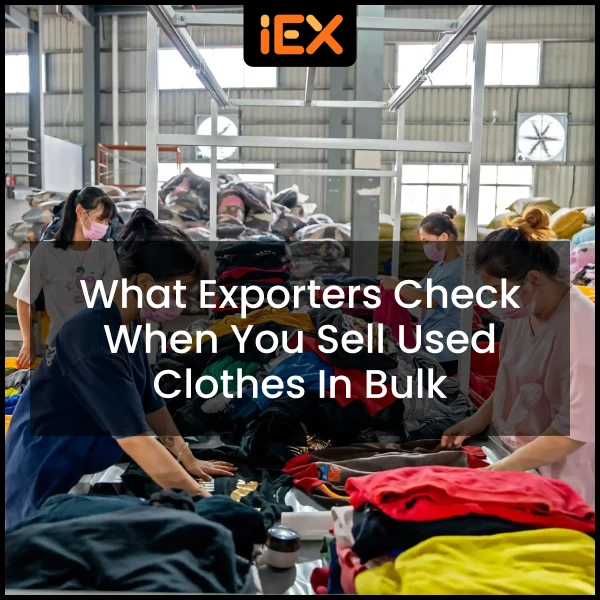
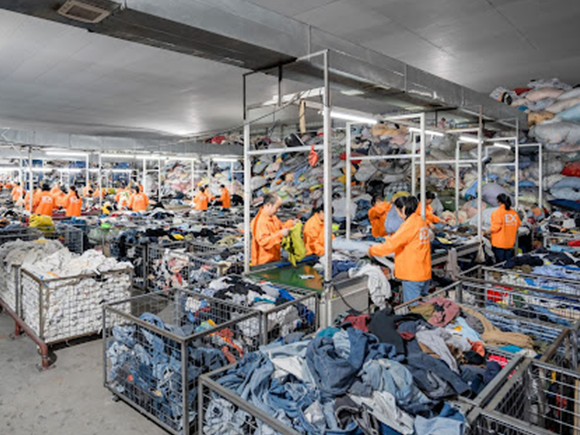
Before preparing bales for shipping, used clothes must go through a processing and grading stage to ensure quality and proper categorization. This step is essential to maintain the value of the garments and to meet customer requirements.
- Initial Classification
All incoming clothes are first sorted into broad categories, such as tops, bottoms, jackets, dresses, and other garment types. This helps streamline the subsequent grading process and ensures that similar items are grouped together for easier handling. - Quality Grading
Each garment is then assessed according to Indetexx’s quality standards. Clothes are graded based on condition, wear, and suitability for resale or export. This step ensures that damaged or excessively worn items are removed, and only appropriate clothes are included in bales. - Placement in Designated Sorted Piles
After sorting and grading, clothes are placed into designated sorted piles to prevent mixing with unsorted items. Proper segregation ensures accuracy in the next stage of baling and helps maintain organized workflow.
By carefully processing and grading clothes before weighing and baling, Indetexx guarantees that each shipment is consistent, high-quality, and ready for efficient container loading.
Preparing Bales for Shipping
Proper preparation of used clothes bales is essential to maintain their quality, integrity, and value. At Indetexx, we follow a structured process to ensure every shipment meets client specifications:
1. Sorting by Customer Item List
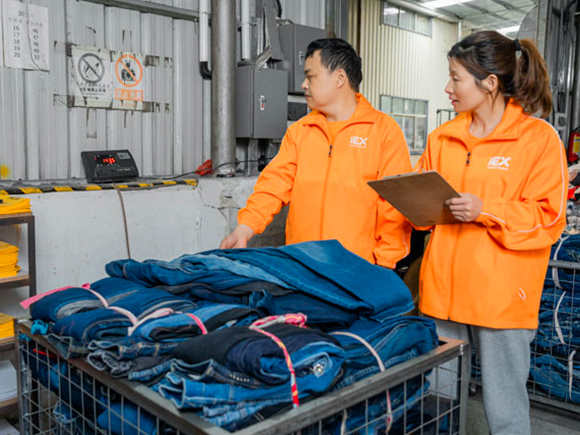
Before baling, clothes are carefully sorted according to the customer’s item list. This step ensures that each bale contains the exact types of clothing requested, whether by category, material, or condition.
2. Weighing the Bales
After sorting, each bale is weighed to match target shipment weights. Our standard bale weights include:
- 45 kg
- 50 kg
- 85 kg
- 90–100 kg
Accurate weighing guarantees compliance with customer requirements and optimizes container loading, helping to maximize the number of bales per shipment.
3. Baling Process
Once weighed, trained staff load the clothes into the baling machine:
- Packaging: Each bale is wrapped in protective plastic to prevent contamination or damage during transit.
- Strapping: Secure straps hold the bale tightly, maintaining its shape and making it easy to handle.
- Labeling: Essential information, including weight, material type, and customer details, is clearly marked on the outer packaging for easy identification, inventory management, and customs clearance.
By carefully sorting, weighing, and baling, shipments are prepared for safe transport, minimizing risk and ensuring the highest quality for clients.
Step-by-Step Container Loading Process
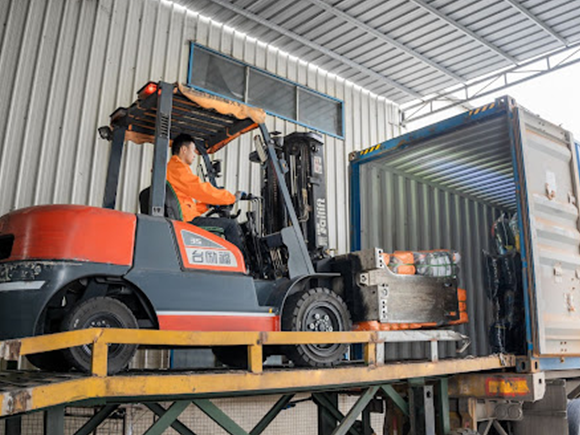
Efficiently loading used clothes bales into a container requires planning, precision, and teamwork. Follow these steps to ensure safe, organized, and space-efficient shipments:
Step 1: Prepare the Container
- Placement: Position the container on a flat, stable surface to prevent tipping or shifting during loading. Uneven surfaces can make stacking difficult and increase the risk of accidents.
- Inspection: Carefully inspect the interior for any damage, rust, leaks, or debris that could compromise the bales. Remove any objects or residues that may affect cleanliness or safety.
- Door check: Ensure that the container doors open, close, and lock properly. Confirm that hinges, seals, and locking mechanisms are fully functional to avoid problems after loading.
Step 2: Load the Heaviest Bales First
- Foundation: Place the heaviest bales directly on the container floor. These bales form a stable base for lighter bales on top and reduce the risk of shifting.
- Weight distribution: Distribute weight evenly across the container’s floor, both lengthwise and widthwise. Avoid concentrating too much weight in one area, which could damage the container or affect transport stability.
- Stability check: Ensure the bales sit flat and stable, providing a solid foundation for stacking additional bales.
Step 3: Stack Bales Efficiently
- Tight arrangement: Place bales close together to minimize gaps, which can cause shifting or movement during transit.
- Orientation: Alternate the direction of bales when possible. This method improves space utilization and creates a more stable stack.
- Stack height: Avoid stacking bales too high. Excessive height increases the risk of toppling and makes unloading difficult. Consider the container’s height limitations and weight distribution.
Step 4: Secure the Load
- Strapping and restraints: Use straps, nets, or ropes to hold bales firmly in place. Ensure that all bales are tightly secured against each other and the container walls.
- Prevent movement: Properly secured bales reduce shifting during transit, minimizing damage and safety hazards. Double-check that straps are tight and knots are secure.
Step 5: Perform Final Checks
- Weight balance: Confirm that weight is evenly distributed throughout the container to prevent tipping or uneven stress on the container floor.
- Stability: Walk through the container and check for any loose or unstable bales. Adjust or reinforce as needed.
- Door operation: Ensure the container doors close and lock smoothly without forcing. This prevents security or safety issues during transport.
Step 6: Storage Before Shipping
- Temporary storage: If the container will not depart immediately, place it in a dry, protected area away from rain, direct sunlight, or pests.
- Protection measures: Proper storage prevents moisture absorption, mold growth, or pest infestation, preserving the quality of the bales before shipment.
- Monitoring: Check periodically to ensure no damage occurs during storage and that the container remains secure.
Safety and Best Practices
Safety is a top priority at every stage of container loading:
- Operator training: Ensure all personnel handling heavy bales are trained properly.
- Proper lifting techniques: Reduce the risk of injury with correct lifting methods or mechanical assistance.
- Equipment inspection: Regularly check forklifts, pallet jacks, and other tools for wear and damage.
- Team communication: Maintain clear communication to prevent accidents and ensure smooth operations.
Maximizing Container Space and Efficiency
Optimizing space not only reduces shipping costs but also protects your goods:
- Standardize bale sizes: Uniform bales simplify stacking and improve space utilization.
- Compress tightly: Denser bales allow more to fit in each container.
- Plan layout in advance: Mapping bale placement reduces wasted space and avoids unnecessary adjustments.
- Avoid overloading: Respect container weight limits to comply with shipping regulations and ensure safety.
Benefits of Efficient Loading
Properly loaded containers provide both economic and environmental advantages:
- Lower shipping costs: Maximizing container capacity reduces the number of shipments required.
- Reduced risk of damage: Securely stacked bales are less likely to shift or get damaged.
- Smoother customs inspections: Organized, clearly labeled loads streamline inspections and handling.
- Support for sustainable practices: Efficient loading optimizes transport, reduces carbon footprint, and promotes responsible recycling and trade of used clothes.
Conclusion
Loading used clothes bales into a container requires preparation, strategy, and meticulous execution. By sorting, weighing, baling, labeling, stacking strategically, and securing the load, businesses can ensure shipments are safe, efficient, and cost-effective.
At Indetexx, we provide high-quality used clothes bales and expert guidance on handling, packing, and shipping. Our experience guarantees that every bale reaches its destination in excellent condition, helping businesses worldwide succeed in the second-hand clothing market while supporting sustainable and profitable recycling practices.