You can optimize used clothing to make more money by making smart choices with data. When you optimize your used clothing business, you earn more by spending less and selling more. If you want to check how much money you make from used clothing, you must watch data as it happens. This helps you avoid buying too many clothes, losing sales, or wasting resources. You can enhance your used clothing exports by examining every cost and step. Look at what you do now and set clear goals to achieve better results in your used clothing business.
Good demand forecasting helps you optimize used clothing by preventing excess inventory and waste.
Monitoring data in real-time makes your work easier and supports your efforts to earn more.
Underestimating demand means you may run out of clothes and miss out on sales.
Key Takeaways
Use up-to-date data to guess what people will buy. This helps you not buy too much clothing. It also helps you make more money.
Find ways to buy used clothing for less money. Make sure the clothing is still good quality. This helps you spend less.
Check the clothing carefully to keep it grade A. Good quality makes buyers trust you. Buyers will want to buy again.
Use software to watch how much clothing you have. This helps you order more when you need it. It stops you from running out.
Learn about export rules and paperwork often. This helps you ship clothing without problems. You will not get fined or delayed.
Maximize Profit Margins in Used Clothing Export
Low-Cost Sourcing Strategies
You can make more money by using smart ways to get clothes for export. Getting surplus clothing from online shops lets you buy grade a used clothes at low prices. You should get clothes from many places to keep your business safe from problems. Working with trusted suppliers helps you keep good quality and avoid supply chain issues. Many exporters buy raw materials from other countries but make products locally. Some work with partners in other countries for things like dyeing or stitching. You need to watch shipping and check quality to keep costs low and quality high. Tariffs can make getting clothes more expensive, so you must check prices often. Even small price changes for each kilogram of grade a used clothes can change your profits. Caring for the planet is important too. Pick eco-friendly materials and lower carbon emissions to meet global export rules.
Getting surplus clothing from online shops gives you more grade a used clothes.
Getting clothes from many places keeps your export business safe.
Caring for the planet when getting clothes helps you earn more and makes buyers happy.
Grade A Quality and Consistency
Quality is very important for export. Grade a used clothes must be in great shape, clean, and ready to sell. You should sort clothes by type, season, material, and who will buy them. Checking quality means looking at every item for problems and making sure it fits what buyers want. Keeping quality the same helps buyers trust you and buy again. If you skip checking quality, you can hurt your business and lose buyers online. Indetexx uses skilled workers and six steps to make sure grade a used clothes are good enough for export. You can do this too by making your own quality checks. Always try for grade a used clothes to earn more and meet global export rules.
Characteristic | Description |
|---|---|
Condition | Great shape, clean, no big problems |
Readiness for resale | Ready to sell right away |
Original tags | Sometimes has original tags |
Ideal for | Premium vintage shops, top retailers |
Inventory Management for Profitability
Managing inventory helps you earn more and make more money from exports. You should check inventory all the time to avoid mistakes. Using software for inventory makes work easier and stops errors. Guessing how much you will sell helps you keep enough grade a used clothes in stock. You should sort inventory by season, style, and what people want. Make a system to order more so you never run out of grade a used clothes. Checking stock often makes sure your inventory numbers are right. Connect inventory for all online shops so you do not sell too much. Use sales or deals to sell slow-moving grade a used clothes. The best turnover rate for fashion is 6.0–12.0, so keep inventory for 30–60 days. Good inventory management helps you keep quality and reach export goals for surplus clothing from online shops.
Tip: Use inventory software to check grade a used clothes and make your export business better.
Industry | Recommended Turnover Ratio | Days in Inventory |
|---|---|---|
Fashion & Apparel | 6.0–12.0 | 30–60 |
Export Efficiency in Logistics

Streamlined Transportation and Shipping
You can make exports better by picking good transport. Ocean freight is best for big shipments. It costs less than air freight. Air shipping costs a lot, from $5 to $65 per kilogram. Use air shipping only for small or urgent loads. Check package weight to avoid extra fees. Make sure you have the right export license. Compare prices from different freight forwarders. This helps you get the best deal. Streamlining shipping lowers costs. It makes your export process faster and more reliable. You also improve how your clothes compete in the market.
Strategy | Impact on Logistics Costs | Impact on Profit Margins |
|---|---|---|
Lean Practices | Cuts waste and costs | Raises profits |
Optimize Inventory Management | Lowers storage costs | Improves profit margins |
Enhance Supply Chain Visibility | Makes work smoother | Raises profits |
Consolidate Shipments | Cuts shipping costs | Raises margins |
Leverage Technology | Speeds up processes | Raises profits |
Tip: Growing your export business lets you make more clothes. You can spread fixed costs and raise profit margins. Bad logistics can lower profit margins by 10-15%. Try not to use old ways that add extra costs.
Cost-Effective Packaging and Handling
Good packaging keeps used clothing safe and lowers costs. Wrapping clothes protects them and keeps things neat. Strong packaging stops damage and loss during shipping. Reusable packaging saves money over time. Custom packaging helps protect all types of items. Efficient packaging lets you ship more at once. It helps you use warehouse space better. Using green packaging helps your brand and makes shipping better. You meet what buyers want and help your clothes compete in exports.
Strong packaging stops loss and cuts costs.
Good packaging lets you ship more at once.
Green packaging helps exports and cuts waste.
Choosing Reliable Export Partners
Picking good partners is important for smooth shipping. Work with freight forwarders who know export rules and the clothing market. Good partners help you avoid delays and save money. They help with paperwork and customs too. Compare partners by their experience, service, and price. Reliable partners help you ship better and reach new places. You build trust with buyers and grow your business faster.
Note: Good shipping and strong partners help you stay ahead in the global clothing export market.
Compliance and Risk Management
Export Requirements and Documentation
You must follow export rules before shipping used clothing. Every country wants certain papers to clear your goods. If you forget a paper, you might face delays and pay more. Get all your paperwork ready early. The table below lists common papers you need for export:
Document Type | Description |
|---|---|
Commercial invoice | Tells about the goods, like what they are, how many, and their price. |
Packing list | Shows what is packed in each shipment, including weight and type of packaging. |
Certificate of origin | Proves where your goods were made. |
Bill of exchange | Says when and how you will get paid. |
Insurance certificate | Shows your goods have insurance while shipping. |
Purchase order or letter of credit | Explains the sale and payment details. |
Customs bond | Promises you will follow customs rules. |
Customs entry documents | Needed to clear your goods through customs. |
Certificates from government agencies | Shows you meet extra rules for special goods. |
Export license | Lets you export certain goods. |
Tip: Always check your export rules for each country. Missing papers can stop your shipment.
Customs and Regulatory Navigation
You need to follow customs rules to ship goods. Customs officers look at your papers and goods. If you make mistakes, your shipment can get stuck. You should learn new rules often. Many exporters use these steps to follow rules:
Check your process often to find problems.
Teach your team about new export rules.
Make a team with experts for compliance.
Talk with suppliers and partners about standards.
Use technology to track and report compliance.
Ask legal experts for help when rules change.
Mistakes in paperwork can slow down your shipment and cost money. Customs may hold your goods until you fix mistakes. You might pay storage or detention fees. Bad paperwork can hurt your reputation with brokers.
Minimizing Risks and Penalties
You can lower risks and avoid penalties by using smart steps. Technology helps you track export rules and follow them. Trusted trader programs make your supply chain safer. Regular checks help you find problems early. The table below shows ways to protect your export business:
Strategy | Description |
|---|---|
Robust Risk Assessment | Look for risks to protect your reputation and market share. |
Screening Processes | Use checks to stop rule failures. |
Leverage Technology | |
Supply Chain Security | Join trusted trader programs for safer exports. |
Internal Audits |
Use automated software to track compliance.
Make your supply chain safer with trusted trader programs.
Check your process often to meet export rules.
Note: Keeping up with export rules helps you avoid mistakes and keeps your business strong.
Optimize Used Clothing Profit Margin Analysis
Accurate Profit Margin Calculation
You need to figure out profit margins carefully to grow your surplus clothing business. First, learn the difference between fixed costs and variable costs. Fixed costs do not change, even if you sell more surplus. Variable costs go up or down with each sale. If you manage these costs well, you can match spending with money earned. This helps you make more profit. Try to reach a gross profit margin of 50–70% to keep your business strong. Some sellers want 100% profit on popular surplus items. Use the keystone markup method. This means you double the cost price to set your selling price. This way, you keep your profit margins healthy and make your surplus business stronger.
Digital tools help you track profit margins and avoid mistakes. Margin calculators, like Shopify’s, let you check margins fast. Google Sheets, Inventory Planner, and QuickBooks Commerce help you record costs and price changes. These tools show how buying and selling affect your profit. When you track profit margins, you find problems early and change your plan. You can use operating leverage to see how fixed and variable costs affect your break-even point. This helps you plan surplus sales and set good profit goals.
Aim for a gross profit margin of 50–70% for surplus clothing.
Use the keystone markup method to set prices.
Margin calculators and digital tools help you track profit margins.
Fixed costs stay the same; variable costs change with surplus sales.
Managing costs helps you earn more and keep margins strong.
Tracking with Software and KPIs
You need to track margins and surplus performance using the right software. Key performance indicators (KPIs) show how well your surplus business is doing. KPIs measure things like sales growth, inventory turnover, and profit per surplus item. They help you see which sourcing strategies work best and which surplus products sell fastest. KPIs also help you spot seasonal trends and change your surplus inventory.
Use software that shows real-time KPIs to help your team work together. These tools let you see margins, surplus levels, and sales everywhere. You can use Inventory Planner, QuickBooks Commerce, or Shopify to track surplus sales and margins. Automated tracking systems make your surplus business more accurate. They lower inventory mistakes by 42% and cut lost sales by 15%. You save money and improve surplus item quality with seller portal analytics. Targeted email marketing helps you sell more surplus and increase profit by 32%.
Function | Impact on Margins |
|---|---|
Dynamic Pricing | Changes prices automatically and keeps minimum margins safe |
Real-time Analytics | Shows sell-through rates and ROI with easy-to-read trends |
Automated Inventory | Cuts stock mistakes by 42% compared to manual systems |
Multi-channel Management | Lowers overselling risks by 67% using Shopify |
KPIs track surplus sales and margins.
Software makes surplus tracking and teamwork better.
Automated systems lower mistakes and boost profit.
Data-Driven Decision Making
You need to use data to make smart choices about surplus clothing exports. Platforms like Volza give you information about pricing strategies and market demand. You can look at market prices, competitor pricing, and see which surplus products are popular. This data helps you set prices that protect margins and attract buyers. Volza also shows buyer names, supplier names, and product descriptions. You can use this to find new buyers and grow your surplus business.
Country-wise market reports from Volza show growth rates, buyer and supplier details, pricing, and surplus export volumes over the last ten years. This helps you find new markets and change your sourcing and sales plans. Regularly looking at sales and surplus inventory data helps you get better margins. You can see which surplus SKUs make the most profit and which listings do best. Trending profitability shows how margins change over time, helping you plan future surplus sales.
Component | Description |
|---|---|
SKU Profitability | |
Listing Profitability | Looks at SKU performance for unit and gross margins, and shares per sales channel. |
Trending Profitability | Shows profitability over a set time period. |
Regular analysis makes accounting easier and helps you see cash flow.
You can spot trends and top surplus customers.
Forecasting gets better when you check surplus sales and margins often.
Tip: Use data from different sources to find high-margin surplus products and set better prices.
You can make smarter choices by checking surplus sales, margins, and sourcing data often. This helps you change your surplus inventory, set good prices, and grow your profit. When you track profit margins and use data-driven plans, you stay ahead in the surplus clothing export market.
Overcoming Challenges for Maximizing Export Efficiency
Managing Supply and Demand Fluctuations
Exporting used clothing means you see lots of changes. These changes happen when new clothes sell more or cost less. For example, if new clothes sell 1% more, used clothing exports can go up by 0.85%. If new clothes cost 1% less, used clothing exports may rise by 1.2%. Developed countries send out 56% more used clothing than developing countries. Socio-economic factors matter a lot.
You need to watch these changes all the time. The resale apparel industry is growing very fast. Online resale grows 35% each year. Thrift stores grow 8% each year. You can see this in the table below:
Aspect | Details |
|---|---|
Industry Growth | The resale apparel industry will grow from $18 billion to $33 billion by 2021. |
Online Resale Growth Rate | Online resale grows at 35%, much faster than regular stores. |
Thrift Store Growth Rate | Thrift stores grow at 8% each year. |
Use data to guess demand and change how you get clothes. This helps you avoid having too much or too little stock. Meeting what buyers want keeps your business strong and helps you export better.
Addressing Quality and Sorting Issues
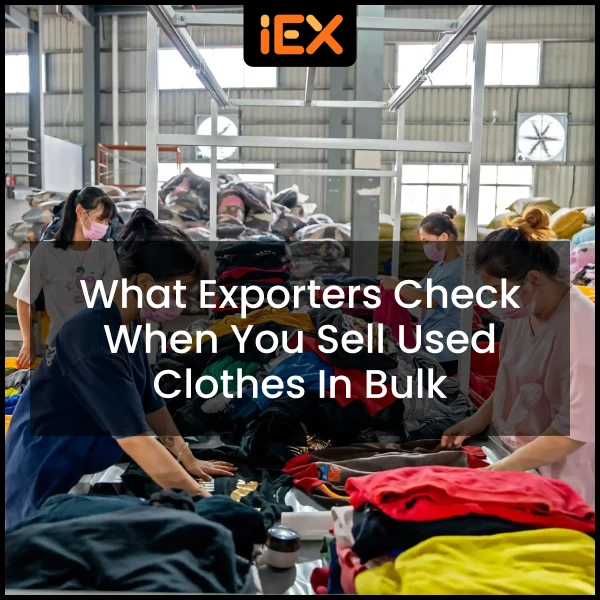
You must keep high quality to make buyers happy and protect your brand. You can do this by training your team well on sorting and baling. Buy modern machines for better control and faster work. Check quality often with audits.
Quality control helps you meet standards and lowers mistakes. This means fewer complaints and more trust from buyers. Good quality also saves money and keeps your reputation strong. When you focus on quality, your exports become more reliable and competitive.
Tip: High-quality used clothing makes customers happy and brings repeat sales.
Navigating Logistical and Regulatory Barriers
You face many rules and shipping problems in used clothing exports. Customs rules can change quickly. You need to stay updated and get all papers ready before shipping. Work with partners who know the newest export laws. Use technology to track shipments and paperwork. This helps you avoid delays and extra costs. Check your process often and talk with your team and partners. When you handle shipping and rules well, your exports keep moving and your profits stay safe.
You can make more money from used clothing exports by using smart steps. Get good quality clothes and keep track of your inventory. Make shipping simple and easy. Use software to watch your profit margins. Check your process often to find problems. Learn new export rules so you do not make mistakes. Set clear goals for profit margins and change your plan when the market shifts.
Tip: Always look at your numbers and change your plan when needed. This helps you stay ahead and grow your business.
FAQ
What is the best way to track profit margins in used clothing exports?
You can use inventory software like QuickBooks Commerce or Shopify. These tools show your costs and sales. You see your profit margins in real time. This helps you make smart choices.
How do you keep used clothing quality high for export?
You should train your team to sort and check every item. Use audits to find mistakes. Buy modern machines for better control. High quality brings repeat buyers.
Tip: Always check clothes before packing. This keeps your brand strong.
Which documents do you need for exporting used clothing?
Document | Purpose |
|---|---|
Commercial Invoice | Lists goods and prices |
Packing List | Shows shipment details |
Export License | Allows export |
You must prepare these papers before shipping.
How can you lower shipping costs for used clothing exports?
You can choose ocean freight for large shipments. Consolidate shipments to save money. Use strong, reusable packaging. Compare prices from different freight forwarders.
Ocean freight costs less.
Reusable packaging saves money.
Comparing prices helps you find deals.