If you are researching used clothing import for the first time, the price range you see quoted — roughly $5,000 to $25,000 for a full container — tells you almost nothing useful. Whether you are reviewing a second hand clothes wholesale price list or comparing quotes from bulk used clothing suppliers, the real question is not what a container costs in absolute terms, but what you get for your money at each price point and whether the math works for your specific market.
The figures below are budgeting ranges, not a fixed shipment promise. Your current quotation can change with product mix, supplier-defined grade, packing, freight, destination charges, and the named trade term.
This guide breaks container pricing down by size, grade, cost components, and destination, so you can estimate your landed cost before you contact a supplier.
20ft vs 40ft Container: Pricing Comparison
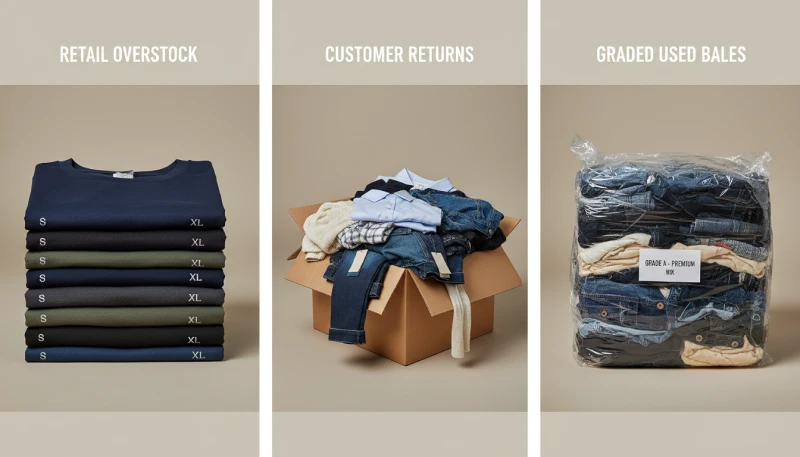
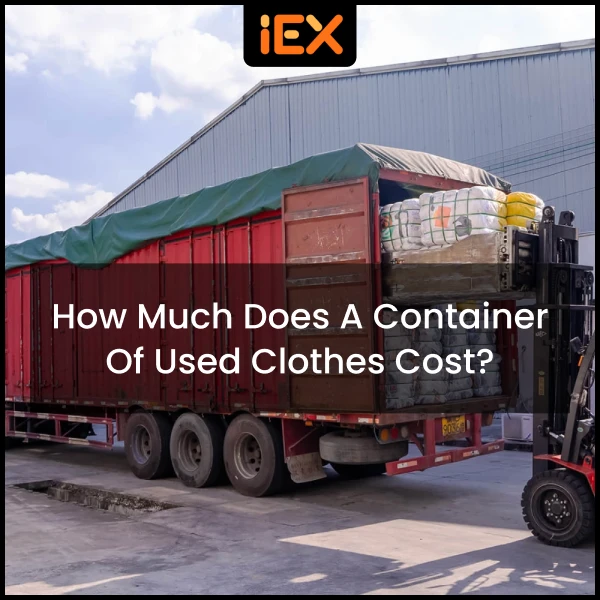
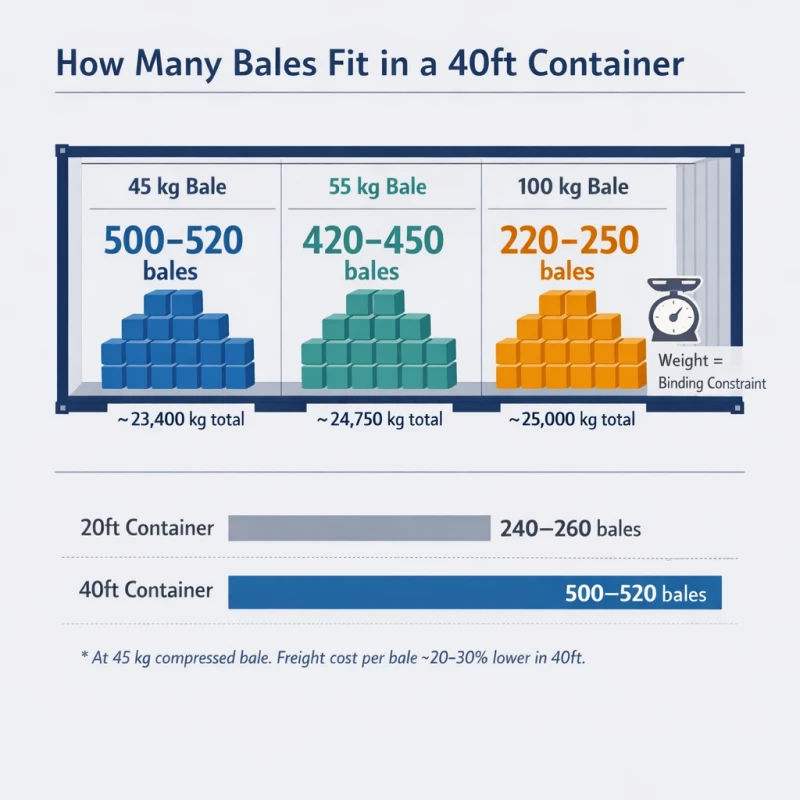
The first pricing decision is container size. The two standard options for used clothing exports are the 20ft container and the 40ft container (including high-cube variants). Here is how their costs typically compare:
| Factor | 20ft Container | 40ft Container |
|---|---|---|
| Total bales | 250–300 | 500–600 |
| Total weight | ~14,000–16,500 kg | ~26,000–28,500 kg |
| Product cost range (Grade B, FOB) | $5,000–$8,000 | $9,500–$15,000 |
| Ocean freight (China → East Africa) | $1,800–$2,500 | $2,800–$4,000 |
| Estimated landed cost (Grade B) | $7,500–$12,000 | $14,000–$22,000 |
| Per-kg cost (product only) | $0.35–$0.50 | $0.30–$0.45 |
| Per-kg landed cost | $0.55–$0.75 | $0.50–$0.70 |
Note: Estimated landed cost includes approximate import duties (15–30% depending on destination) and port clearance fees ($1,000+). The ranges above reflect Grade B containers shipped from China to East Africa. Actual costs vary by destination country, duty classification, and seasonal freight rates.
The 40ft container offers a 15–20% lower per-kg cost than a 20ft, but the absolute investment is roughly double. First-time buyers often start with a 20ft container to limit risk while validating their local market. Buyers with existing distribution — or access to credit — typically move to 40ft containers by their second or third order because the per-unit margin improvement is significant at volume.
A common misstep is buying a 20ft container but paying 40ft-level per-kg pricing. Some suppliers charge a premium on smaller orders because the handling and documentation costs are similar regardless of container size. If you see a 20ft quote above $0.55 per kg for Grade B, ask whether the premium is justified by the composition of the bales, not just the container size.
For a detailed breakdown of how many bales and garments fit in each container type, see our bale weight and container capacity guide.
Grade-by-Grade Price Breakdown
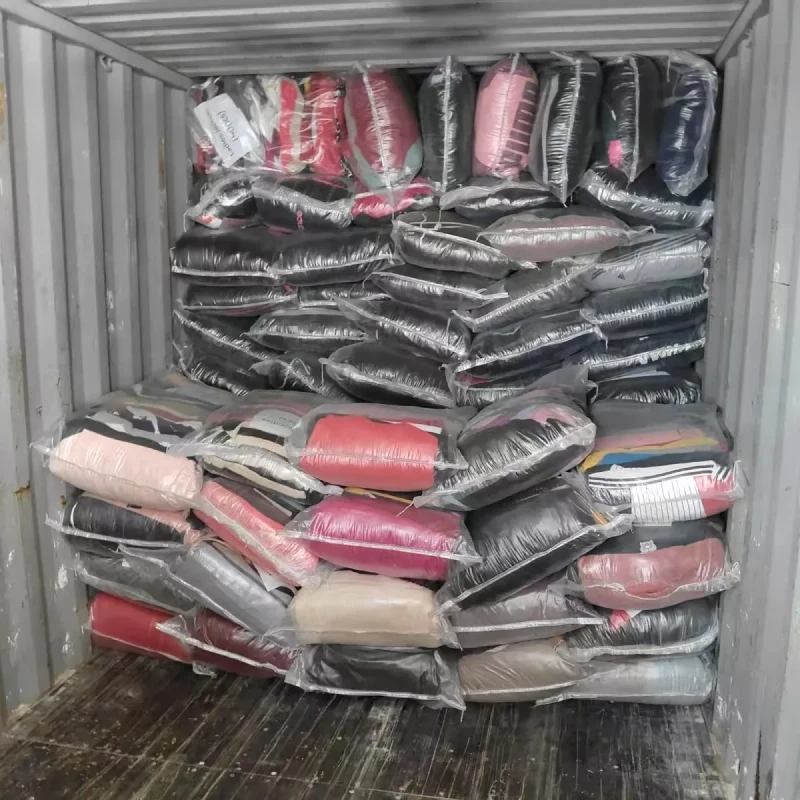
Grade is the single biggest factor in container pricing. A Grade A container costs roughly 2–3 times more per kg than Grade C, but it also yields a much higher proportion of sellable items. Here is how the three standard grades compare:
| Grade | Price per kg (FOB) | Sellable yield | Typical content | Best market fit |
|---|---|---|---|---|
| Grade A (Premium) | $0.70–$1.20 | 95–100% | Branded items, minimal wear, sorted by category | Domestic resale, premium secondhand shops, online platforms |
| Grade B (Standard) | $0.35–$0.55 | 70–85% | Mixed brands, moderate wear, seasonal mix | General import, thrift stores, developing-market wholesale |
| Grade C (Economy) | $0.15–$0.30 | 45–70% | Heavy wear, unsorted mix, higher recycling share | Budget markets, industrial rags, textile recycling feedstock |
These ranges reflect FOB pricing from major exporting regions. Your effective cost per sellable piece is the number that matters more than the per-kg price. A Grade A container at $0.90/kg with 95% sellable yield gives an effective cost near $0.95 per kg — and nearly every item is ready for retail. A Grade C container at $0.20/kg with 50% sellable yield gives an effective cost of $0.40 per kg of sellable goods, but those sellable items are lower quality and will command lower retail prices. The remaining 50% of Grade C is typically used for industrial wiping rags or textile recycling feedstock, not wearable clothing — buyers should factor this into their yield expectations.
The grade decision is therefore a margin calculation, not a cost calculation. High-duty markets (many West African countries charge 20–30% duty on used clothing) tend to favor higher grades because the duty is applied to the total shipment value, and higher-value goods can absorb the duty cost. Low-duty markets (some SE Asian countries at 5–10%) can work with a wider range of grades.
For a comprehensive look at how grading criteria differ between suppliers, see our complete used clothing grading guide.
What Makes Up the Total Price? Cost Structure Explained
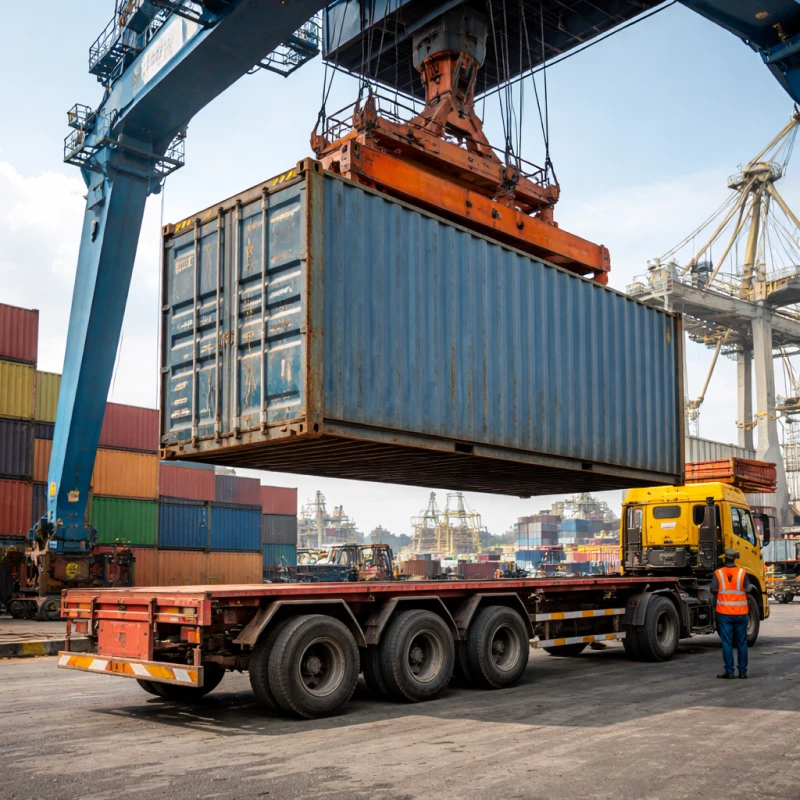
When a supplier quotes you a container price, that number typically represents the cost of the goods loaded onto the vessel at the port of origin (FOB — Free on Board). The total cost you pay to receive the container at your warehouse includes several additional layers.
Typical cost allocation for a Grade B 40ft container to East Africa
| Cost Component | Approximate Cost | Share of Total |
|---|---|---|
| Product (FOB) | $10,000 | 56% |
| Ocean freight | $3,000 | 17% |
| Import duty (20%) | $2,500 | 14% |
| Port handling & clearance | $1,000 | 6% |
| Inland transport | $800 | 4% |
| Insurance | $200 | 1% |
| Inspection & documentation | $300 | 2% |
| **Total landed cost** | **$17,800** | **~100%** |
Note: The figures above are approximate examples for illustration. Individual cost components and their proportions vary by supplier, destination, and shipping conditions.
FOB vs CIF: Some suppliers quote CIF (Cost, Insurance, Freight), which includes ocean freight and insurance in the quoted price. A CIF quote will be higher than an FOB quote, but it gives you a more complete upfront picture. Always confirm which pricing basis the supplier is using before comparing quotes — comparing an FOB quote from one supplier to a CIF quote from another will mislead you.
The freight component fluctuates significantly. In 2024–2025, ocean freight rates from China to West Africa ranged from $2,500 to $5,000 per container depending on season and port congestion. Buyers who watch freight cycles and order during low-season windows (typically February–April and September–October) can save $1,000–$2,000 per container on freight alone.
Factors That Affect Container Pricing
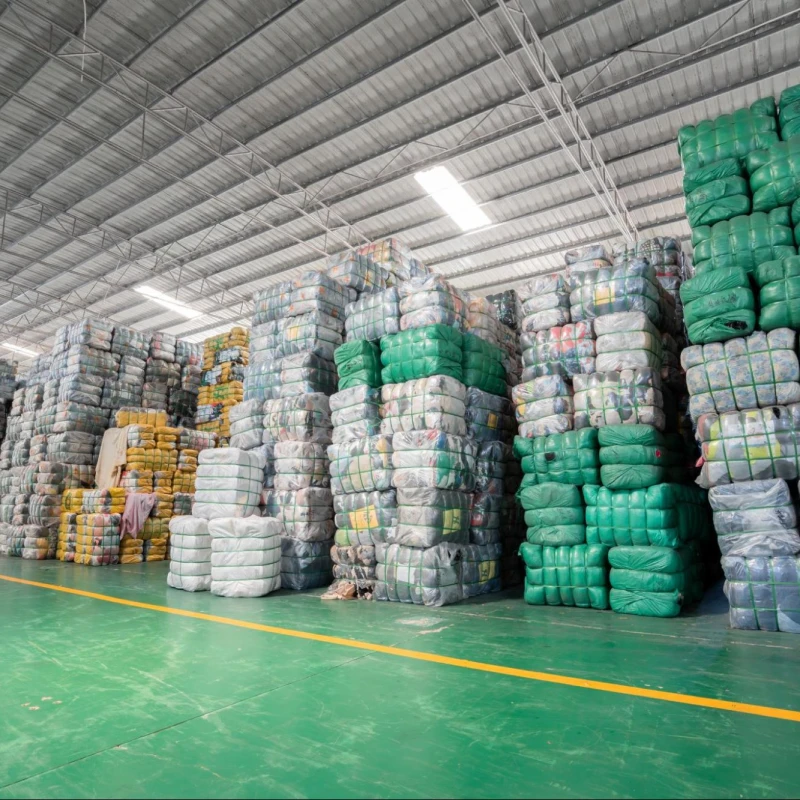
Beyond grade and size, several structural factors influence what you pay for a container of used clothing.

Sourcing channel. Suppliers who collect inventory through municipal contracts and charity partnerships have lower acquisition costs than those who buy from intermediaries. This difference shows up in pricing — a supplier with direct collection networks can offer more consistent pricing across seasons because their input cost is stable. For buyers evaluating bulk used clothing suppliers, understanding the sourcing chain helps you assess whether a quoted price is realistic and sustainable.
Sorting depth. The level of sorting applied to the bales is the most underappreciated pricing factor. A supplier who sorts into 10+ categories (men’s, women’s, summer, winter, denim, accessories, etc.) has higher labor costs but delivers bales that need less post-import sorting. A supplier who offers only “mixed clothing” bales has lower sorting cost but shifts the sorting burden and cost to you.
Brand mix percentage. Bales with a higher share of recognizable global brands command a premium because the resale value per piece is higher. A Grade B bale with 20–30% branded items can yield 40–50% more retail revenue than a Grade B bale with mostly unbranded items, even though the purchase price may be similar.
Seasonal cycles. Collection volumes in Europe and North America follow seasonal patterns. Volumes drop 15–25% in Q1 (post-holiday slowdown) and peak in Q3 (spring cleaning, back-to-school sorting). Prices tend to rise 10–15% in Q4 when supply is tightest and demand from developing markets is high ahead of year-end selling seasons.
Indetexx processes used clothing through a 20,000 m2 facility where each incoming batch is sorted, graded, and recorded. The Recydoc recycling system tracks item-level data throughout the collection and processing pipeline, providing documentation of what each container contains — not just a grade label.
Regional Price Variations by Destination
Your landed cost varies significantly by destination because import duties, port fees, and inland transport costs differ by country.
East Africa (Kenya, Tanzania, Uganda): Used clothing is a large, established import category. Duty rates range from 15–25% depending on the country and product classification. Port handling in Mombasa or Dar es Salaam adds $800–$1,500 per container. For detailed country-specific guidance, see our East Africa market overview. Total landed cost for a Grade B 40ft container: $18,000–$24,000.
West Africa (Ghana, Nigeria, Benin, Côte d’Ivoire): The largest used clothing import region globally. Nigeria has the highest duty structure (25–35% effective rate) and port costs. Ghana is more moderate. Learn more in our West Africa market analysis. Total landed cost for a Grade B 40ft container to Tema or Cotonou: $19,000–$27,000.
Southeast Asia (Philippines, Indonesia, Malaysia): Duty rates are generally lower (5–15%) but import regulations around used goods are more restrictive in some countries. The Philippines has a well-established ukay-ukay market with moderate duties. Total landed cost for a Grade B 40ft container: $16,000–$21,000.
South America (Chile, Peru, Colombia): Duty rates vary by country classification of the goods. Chile has relatively open import policies for used clothing (0–6% duty under certain classifications). Peru and Colombia are 10–20%. Visit our South America market guide for country-specific details. Total landed cost range: $17,000–$23,000.
Middle East (UAE, Oman, Jordan): Dubai functions as a major re-export hub. Duty to UAE is low (5%), making it a cost-effective entry point for regional distribution. Total landed cost for a 40ft container: $15,000–$20,000.
Indetexx manages export procedures to 110+ countries with documented compliance for each market. See our regional market pages for country-specific import guidance.
Hidden Costs First-Time Buyers Often Miss

Experienced importers factor these into their budget; first-time buyers often do not.
Demurrage and detention. If your container sits at the port beyond the free period (typically 3–7 days), daily charges of $50–$150 apply. A one-week customs delay can add $350–$1,000. This is the most common unbudgeted cost for new importers.
Currency fluctuation. If your local currency weakens against the US dollar between quote and payment, your effective cost rises. A 5% currency move on a $20,000 container adds $1,000 to your cost. Buyers in markets with volatile currencies (Nigeria, Ethiopia, Pakistan) should factor in 3–5% buffer.
Quality verification. A sample bale typically costs $100–$300 including shipping. Pre-shipment inspection by a third party adds $300–$600. These costs are optional but highly recommended for first orders, and they reduce the risk of a bad container far more than they cost.
Post-delivery sorting labor. Unless you bought pre-sorted bales, you will need to sort each bale by category, grade, and condition before selling. Sorting labor costs vary by market but typically run $0.02–$0.05 per kg. On a 28,000 kg container, that is $560–$1,400.
Non-sellable items. Even Grade B containers have 15–30% non-sellable items (too worn, wrong season, damaged). These have disposal cost or very low recycling value. The effective cost of your sellable inventory is higher than the per-kg price implies.
Suppliers with transparent quality documentation reduce several of these hidden costs. Pre-shipment quality reports from documented sorting processes give you confidence in what you are buying before the container ships.
How to Evaluate Whether a Container Price Is Fair
Use these benchmarks when comparing supplier quotes:
Price-per-kg check. Grade B FOB pricing should fall in the $0.35–$0.55/kg range. When reviewing a second hand clothes wholesale price list, compare the per-kg rate across suppliers rather than the total container price — this normalizes for container size differences. Below $0.30/kg, question whether the grade is truly Grade B. Above $0.60/kg, the supplier should be able to demonstrate why (higher brand mix, finer sorting, specific category composition).
Composition transparency. A supplier who cannot or will not tell you the approximate breakdown of what is in the bales (by category, brand percentage, season) is asking you to buy a blind box. Request documented composition data.
Sample bale availability. A supplier who offers sample bales (paid or refundable on full order) is confident in their product quality. A supplier who refuses sample orders is signaling that individual bales may not represent the container quality.
Grade consistency documentation. Ask whether the supplier uses a documented grading system or an informal visual assessment. Systems like the Recydoc app provide item-level records that remove ambiguity from grade claims. Suppliers with fine-sorting infrastructure like Indetexx’s sorting facility maintain documented grade separation throughout processing.
Red flags:
- Price significantly below market range with no explanation
- Vague quality descriptions (“good quality”) without specific grade criteria
- No sample or trial order option
- Pressure to pay 100% upfront without inspection terms
- No documented processing or sorting facility
FAQ
How much does a 40ft container of used clothes cost?
A 40ft container of Grade B used clothing costs approximately $9,500–$15,000 FOB from major exporting regions. Total landed cost including freight, insurance, duties, and handling typically ranges from $14,000 to $22,000 depending on the destination country.
How much does a 20ft container of used clothes cost?
A 20ft container of Grade B used clothing costs approximately $5,000–$8,000 FOB. Total landed cost, including shipping and duties, typically falls between $7,500 and $12,000 for most destination markets.
What grade of used clothes should a first-time importer buy?
Grade B offers the best risk-adjusted entry point. It has a moderate price ($0.35–$0.55/kg FOB) with 70–85% sellable yield, giving first-time buyers room to learn their market without the cost pressure of Grade A or the low yield of Grade C (which is largely destined for industrial rags and textile recycling).
How many bales are in a container of used clothes?
A 20ft container holds 250–300 bales (typically 45–55 kg each). A 40ft container holds 500–600 bales. Total weight ranges from 14,000–16,500 kg for a 20ft and 26,000–28,500 kg for a 40ft.
What is the difference between FOB and CIF pricing?
FOB (Free on Board) includes the cost of goods loaded onto the vessel at the port of origin. CIF (Cost, Insurance, Freight) includes the goods, ocean freight, and insurance. CIF quotes are higher but give a more complete upfront cost picture. Always confirm which basis a supplier is quoting.
How much does shipping a container of used clothes cost?
Ocean freight for a 40ft container from China to East Africa or West Africa typically ranges from $2,800 to $5,000 depending on season, port, and shipping line. Freight from the US East Coast to the same destinations is generally $1,000–$2,000 higher.
How much profit can I make on a container of used clothes?
Profit varies widely by market and retail channel. Typical gross margins for importers range from 30–100% depending on grade, market pricing, and distribution efficiency. Grade A containers destined for premium resale channels generate higher per-item margins but require more selective buyers.
How do I know if a used clothing container price is fair?
Compare the per-kg price against the $0.35–$0.55 range for Grade B FOB. Check the supplier’s composition transparency, sample availability, and grading documentation. A price below $0.30/kg likely means lower grade despite the label, and above $0.60/kg requires justification.
Is it cheaper to buy used clothes by the bale or by the container?
Per-kg pricing is typically 15–25% lower for full container loads compared to individual bale purchases. However, bale-level buying suits new importers who want to test quality before committing to a full container.
How much are import duties on used clothing?
Import duties range from 0% to 35% depending on the destination country. Chile duties can be as low as 0–6%, while Nigeria duties reach 25–35%. Check your country’s customs classification for used clothing (typically HS 6309.00) before placing an order.
Request 2026 Wholesale Price List & Container Catalog
Get current FOB pricing, grade-specific container options, and market-specific landed cost estimates tailored to your destination. Indetexx helps you plan your first or next container with documented quality and transparent pricing.
- ✓ 2026 price list by grade (A/B/C) and container size
- ✓ Country-specific landed cost estimate & duty guidance
- ✓ Sample bale program for quality verification
- ✓ Recydoc App grading reports with each container
Prices and cost ranges in this guide are estimates based on market data as of mid-2026. Actual pricing depends on your destination, volume, grade specifications, and current market conditions. Contact suppliers for current quotes specific to your requirements.