Neither option promises a complete size run, the same mix on a repeat order, or a particular resale result.
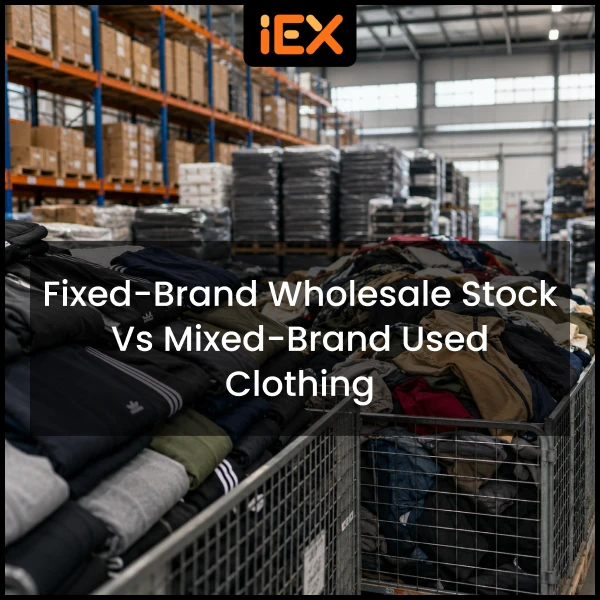
Choose by Proven Demand, Not by the Brand Label
Start with the reason customers bought from you. A fixed-brand lot can work when shoppers ask for that label, in that garment category, and in the sizes currently offered. If the brand sold well only in footwear, that result does not prove that a fixed-brand lot of jackets will move at the same pace.
Mixed-brand used clothing serves a different buying pattern. It can fit stores where customers browse by garment type, condition, price point, color, or the appeal of each piece. The advantage is broader choice within a category. The trade-off is that your team must inspect and present more variation.
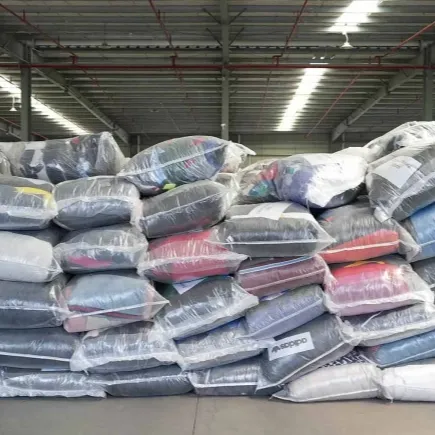
Sales channel matters as much as product type. A retailer with standardized online listings may prefer a fixed-brand lot when the current styles and sizes match existing demand. A shop that refreshes its rails frequently, a live seller, or a reseller that photographs items individually may make better use of a mixed assortment. These are operating patterns, not rules; your own sales history is the stronger evidence.
Consider two jacket resellers. The first has repeat requests for one sportswear label and can show which sizes sold in the last two seasons. The second wins customers by offering a changing selection of windbreakers and prices every item separately. The first has a reason to examine a fixed-brand lot sheet. The second is already organized for mixed-brand used jackets.
Before requesting a quotation, write a short demand brief. Include the brand or category that sold, the useful size range, the season, the sales channel, and the amount of variation your operation can accept. If you are still screening fixed-brand suppliers, this guide to assessing an apparel stock clearance supplier explains what to verify before you treat available stock as a buying opportunity.
Fixed-Brand Stock vs Mixed-Brand Used Clothing: What Can You Customize?
The biggest practical difference is that a fixed-brand stock lot already exists. You may be able to choose between available lots, but you usually cannot rebuild the assortment around your ideal size run. The declared brand may be attractive while the available colors, styles, or smaller and larger sizes do not match your customers.
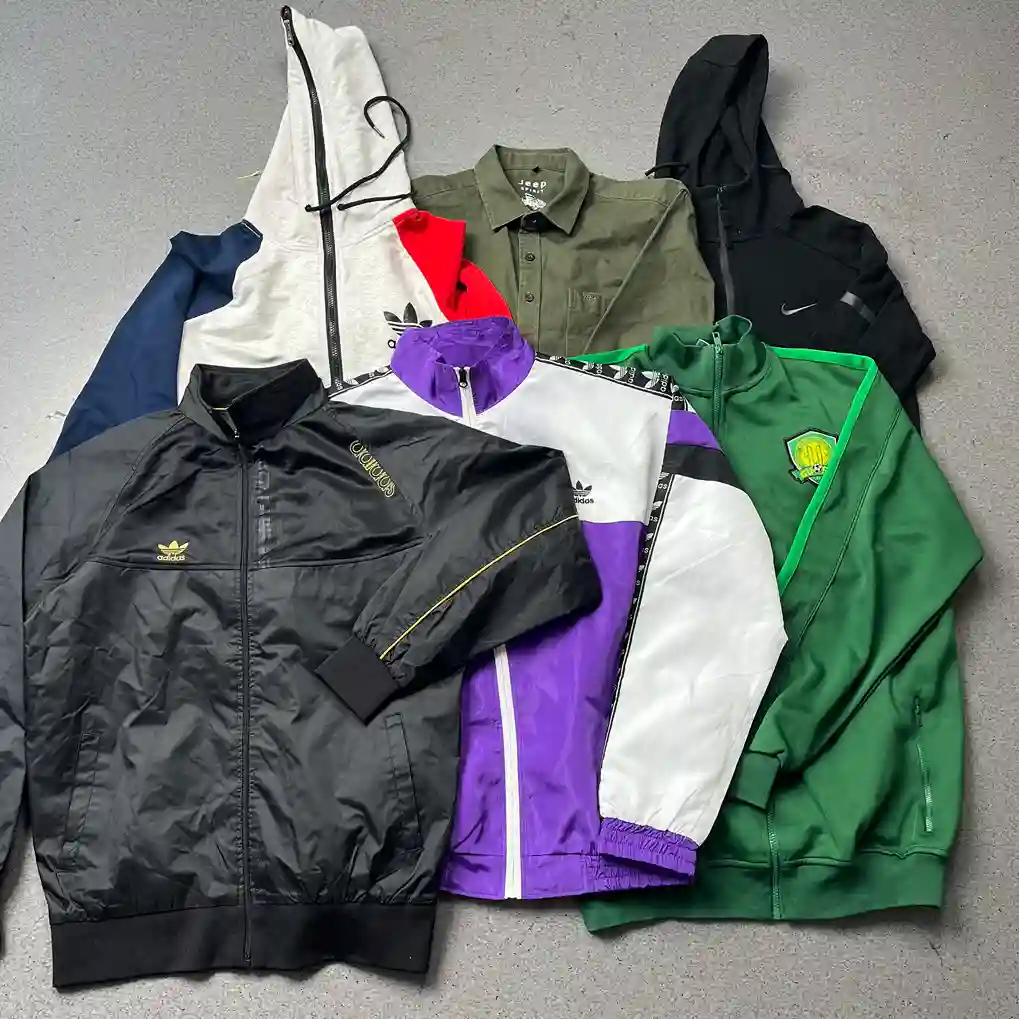
With mixed-brand used clothing, start with the category you want to sell. For example, you can ask for adult windbreakers for a given season, an agreed condition grade, a practical size range, and packing that suits your operation. The supplier can then tell you what current inventory can support. You can shape the category, but you cannot pick every brand, size, or style.
If you need a mixed size run, include the range in your inquiry and ask how it will guide sorting. Do not assume this creates a complete run or a fixed share of every size. The aim is to avoid clearly unsuitable sizes without making the category impossible to prepare.
Tell Indetexx which category, grade, bale format, and packing you need. You may also include a useful size range and ask whether it is feasible for that order. The team can explain what current inventory can support before quoting. Brands, exact size ratios, and future assortments will still vary. Use the clothing mix request guide to turn your sales history into a clearer request.
Suppose two resellers each need 600 adult windbreakers. Quote A contains one brand across four existing styles and lists the size count for each style. Quote B covers mixed-brand used windbreakers with an agreed condition grade, size range, and packing, but no fixed brand ratio. If customers repeatedly buy the brand and listed sizes, Quote A is easier to assess. If customers buy individual jackets and the team already photographs each piece, Quote B may fit better. The quantities are illustrative, not a promise of what any current lot contains.
Compare Wholesale Apparel Lots Using Six Order Details
Once you know the demand and customization limits, read the current offer rather than relying on labels such as “single brand,” “mixed brand,” or “Grade A.” The quotation and product specification should tell you what is actually being offered and what still needs discussion.
For wholesale branded stock lots, ask for the current lot reference, declared brand, condition, style or SKU list, colors, size breakdown, quantity, and packing. A photograph is useful only when the supplier explains whether it shows the current lot or a general example. A visible label by itself does not prove authorization, authenticity, or permanent access to that brand.
For mixed-brand used clothing, focus on the category, season, grade or condition boundary, useful size range, quantity, packing, and any sampling option available for that order. Brand information may be provided as representative rather than exact. If the grade wording is unclear, use the Indetexx used-clothing classification system to understand the types of details that still need to be agreed for your order.
What to Request for the Current Order
Use the table to spot missing details that could change your decision. If an answer cannot be exact, ask whether the supplier is giving an example or cannot provide it for this order. The goal is simple: know what you will check when the goods arrive.
Indetexx may discuss selected Chinese-brand stock when a suitable lot is available. Ask about the brand, condition, styles, colors, size breakdown, quantity, and packing for that exact lot. Treat each offer as current inventory, not a promise of ongoing supply or a complete size run. Buyers should verify any authorization or brand-use requirements separately.
Match the Receiving Check to the Order You Placed
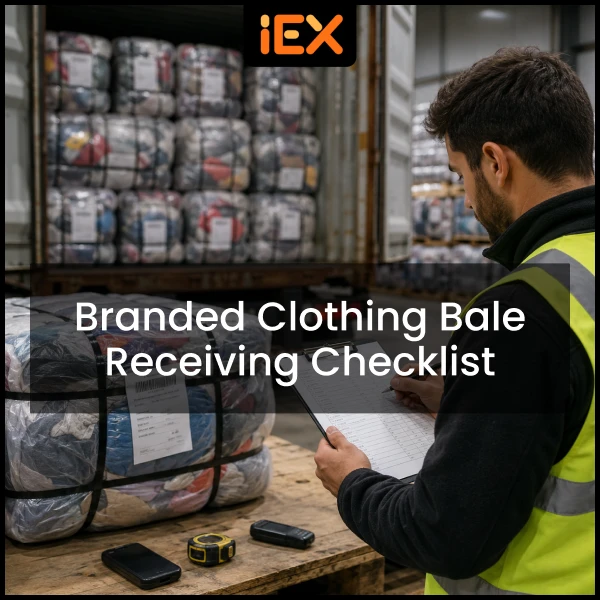
Do not use one generic receiving checklist for both models. Fixed-brand stock is mainly checked against item details listed for the lot. Mixed-brand used clothing is checked against the category and condition specification using the sampling method agreed for that order.
Check fixed-brand stock against the lot sheet
Start with the lot reference on the quotation and invoice. Compare the received brand, condition, styles or SKUs, colors, sizes, quantity, and packing with the details supplied before payment. If substitutions were allowed, check them against the agreed limits instead of deciding after arrival that any replacement is acceptable.
Record missing sizes, substituted styles, quantity differences, and packing changes before the goods are mixed into your other inventory. Keep the quote, stock list, and photos for that lot together. This makes any discrepancy easier to show.
Sample mixed-brand used clothing against the specification
For a mixed used-clothing order, check the category, season, grade or condition boundary, quantity, and packing. Your sampling plan should reflect the order size and the risks your business wants to control. You might inspect more than one package or more than one position in a shipment, but agree the method for the order instead of treating any sample rate as universal.
Use the same condition words at receiving that you used before payment. If the quotation described brand or size information as representative, do not later treat it as an exact ratio. For a more detailed list of fields to put into the order, use this used-clothing bale specification sheet.
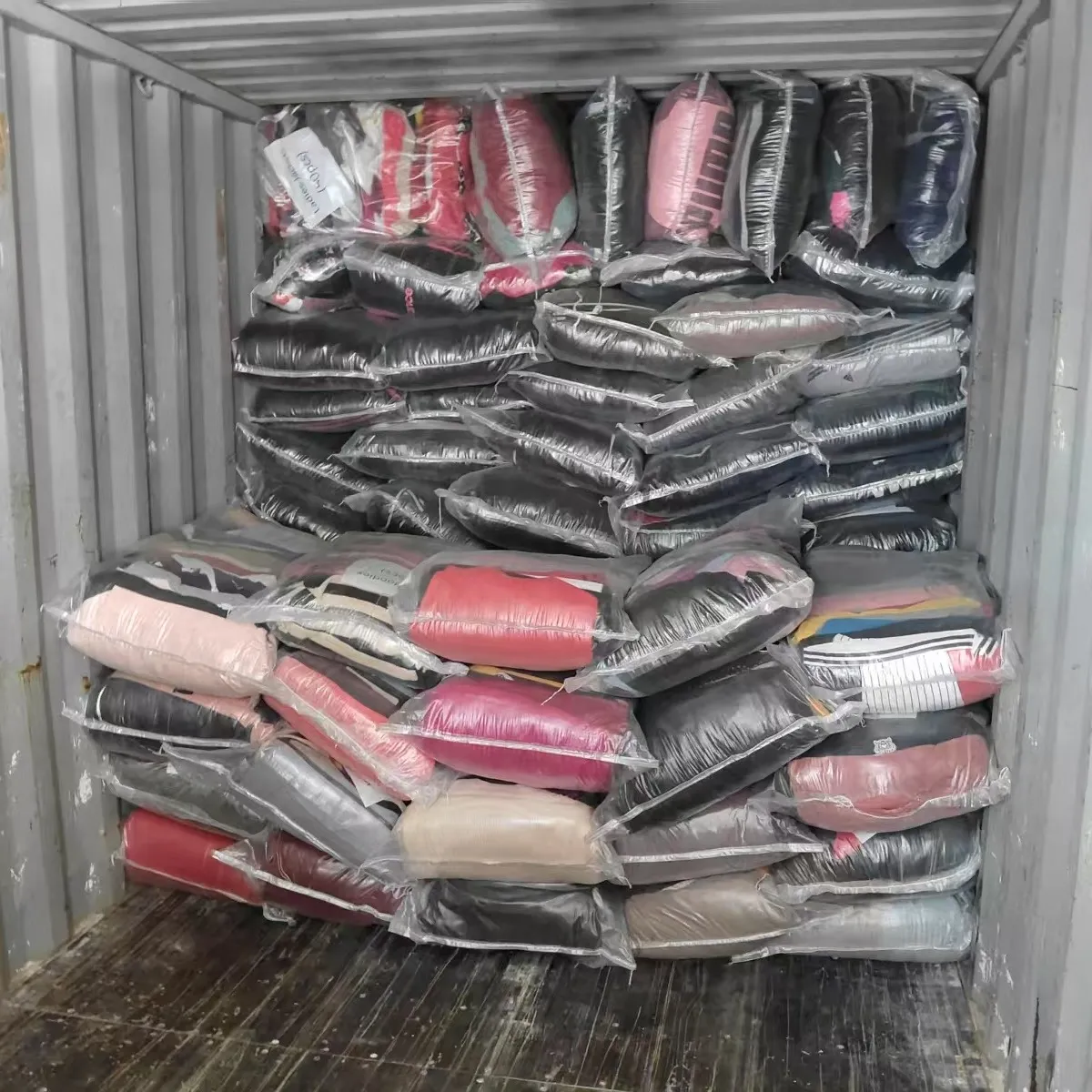
Indetexx applies its warehouse definitions for Grade A, B, and C. In your inquiry, name the category, grade, size range, quantity, packing, and receiving check, then ask what can be written into the quote. A grade defines the agreed condition; it does not promise exact brands, sizes, sellable yield, or the same mix next time.
Count the Work and Cost After Delivery
The quotation price is only one part of the choice. An order can match its specification and still be expensive to process, store, list, or discount. Compare the work that begins after receiving, because that is where the two assortment models behave differently.
Fixed-brand stock may simplify brand-level cataloging, especially if your store already sells that label. It can still create separate listings and storage locations for several styles, colors, and uneven sizes. A low purchase price loses its advantage when slow size bands occupy space or force repeated markdowns.
Mixed-brand used clothing usually needs more condition checking, category sorting, grouping, pricing, photography, and varied merchandising. That extra work can support a constantly changing offer, but only when your team has a repeatable way to handle it. Unsorted variety becomes a queue, not a sales advantage.
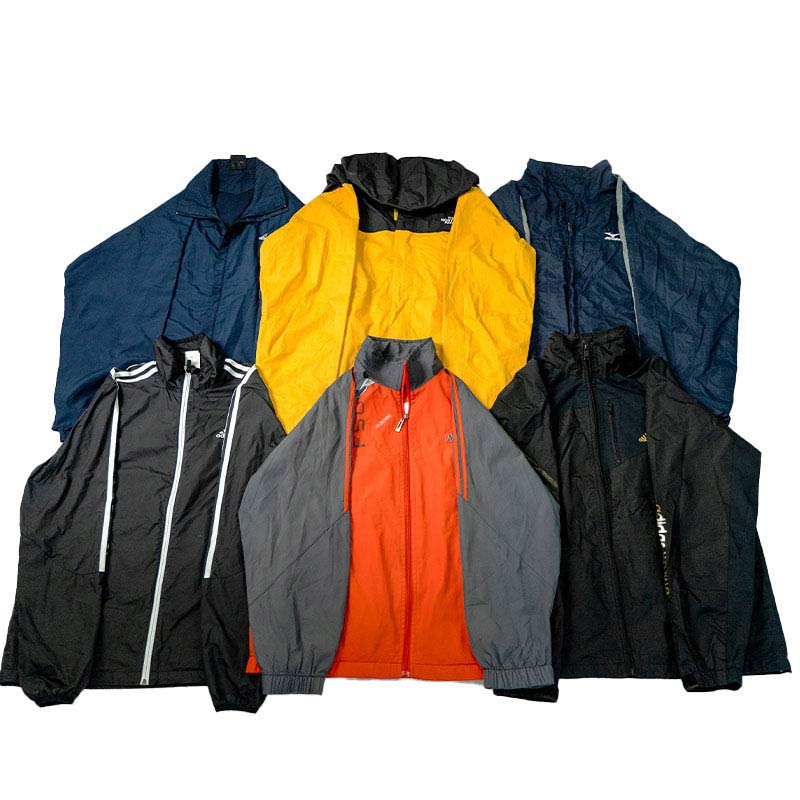
In the fixed-brand order, four styles can still mean four product pages and several storage positions for uneven sizes. In the mixed order, the reseller may need to inspect and photograph every jacket before pricing it. One risks slow styles and sizes; the other trades that concentration for more work per piece.
For each quote, total the product, freight, and applicable import costs. Then add staff time for receiving, sorting, listing, and photography, plus storage and likely markdowns based on your own sales history. Note how much cash may sit in slow-moving sizes or categories. That gives you a truer comparison than purchase price alone.
For example, suppose every mixed jacket needs ten extra minutes of inspection, photography, and listing. Price that time before comparing margins. If the expected margin cannot cover the extra handling, variety is not an advantage. Use your own timing rather than treating ten minutes as a standard.
Plan Every Reorder as a New Assortment Decision
Do not choose either model on the assumption that the same goods will return. Fixed-brand stock depends on the stock available at that time, so the next lot may have different styles, colors, sizes, or quantity. Mixed-brand used clothing can be reordered by category, grade, and packing, but the individual brands and pieces can still change.
Choose fixed-brand stock when demand for the brand and category is already proven and the available styles and sizes fit that demand. Make sure you can sell the lot without depending on an identical replacement. Choose mixed-brand used clothing when customers value category choice and variation. Your team must also be able to inspect, sort, price, and merchandise the pieces.
Do not order yet if the offer is too vague to check on arrival or if your team cannot handle the work it creates. For a reorder, send the supplier concrete notes: slow fixed-brand styles or sizes, substitutions, unclear mixed-category boundaries, condition issues, and hard-to-sell sizes. Ask for a fresh stock list or mixed-clothing specification instead of copying the last order.
Send a Model-Specific Inquiry
“Send your best branded garments” is too broad to produce a useful offer. Tell each supplier what has sold, what you need now, and which details must appear in the quote. Copy and adjust the relevant brief below.
Copyable inquiry for fixed-brand stock
Subject: Request for current fixed-brand stock lot details
Hello, we are sourcing fixed-brand stock for sale in [country] through [sales channel]. We are looking for about [quantity] pieces of [garment category]. Our customers already buy [brand or brand type], mainly in sizes [size range].
Please send details for a lot you have now: lot reference, brand, condition, styles or SKUs, colors, size count by style, total quantity, and packing. Please also send photos and documents for this exact lot, and identify anything that is only a general example. Can this lot be reordered, or would we need a new stock list next time?
We will check the delivery against the agreed lot details. Please list any permitted substitutions in the quote.
Copyable inquiry for mixed-brand used clothing
Subject: Request for a mixed-brand used-clothing specification
Hello, we are sourcing [garment category] for sale in [country] through [sales channel]. We need [season], [grade or condition], sizes mainly within [range], about [quantity], packed as [bale/bag, including weight if needed].
Please confirm which of these requirements current inventory can support. If brands or size information are examples rather than exact ratios, please say so. Also explain any sampling or inspection option available for this order and include the agreed category, condition, size, and packing details in the quote.
We understand that brands, styles, and exact size ratios can vary. We will agree a new specification for any repeat order.
If your customers want recognizable labels but your operation still buys used merchandise, review branded used clothing bales as a separate option. They remain used-clothing assortments and do not create a fixed brand ratio or the style-and-size list of a fixed-brand stock lot.
The better model is the one you can describe before payment, check after arrival, and sell through your existing channel. Share that demand brief with Indetexx before asking for a price.
Tell Us What Your Customers Already Buy
Share your market, sales channel, target categories, useful size range and planned order volume. Indetexx can discuss mixed or category-specific used clothing, and selected Chinese-brand stock when a suitable lot is currently available.
- For fixed-brand stock, ask for the current styles, colors, size breakdown, quantity and packing.
- For mixed-brand used clothing, state the category, grade boundary, useful size range and packing you need.
- Confirm all lot-specific availability and order details in the quotation before payment.