Starting your own shoe brand is one of the most accessible entry points in fashion retail today. China’s manufacturing ecosystem produces billions of pairs annually, and the infrastructure for private label production has matured to the point where even first-time importers can work directly with factories. But the gap between what sourcing blogs promise and what factories actually require is wide enough to sink a new business.
This guide covers the real process of sourcing private label shoes from China — from finding genuine manufacturers and calculating true landed costs to navigating MOQ barriers and quality control.
Whether you are launching a brand or expanding an existing line, the information here is designed to help you make decisions that actually work on the ground.
Quick Takeaways
- Private label shoes are manufactured by a Chinese factory but sold under your own brand name, with varying levels of design control depending on the sourcing model you choose
- Factory MOQs typically range from 1,000 to 5,000 pairs per design per colorway — the 100-pair figure you see on dropshipping blogs is not realistic for genuine manufacturing
- FOB pricing ranges from $3 to $15 per pair depending on shoe type and materials, but total landed cost adds 20–40% on top of FOB
- The sampling process takes 2–4 weeks, and production samples are almost always better than the actual production run — independent QC is not optional
- Full lead time from first contact to arrival at your warehouse is 3–5 months, not the 4–6 weeks many first-time buyers expect
- Sourcing agents charge 3–5% commission but reduce risk significantly for first-time importers who cannot visit China
- Stock shoe alternatives exist with MOQs as low as 500+ pairs, offering a realistic entry path for buyers who are not ready for full private label commitment
What Are Private Label Shoes?
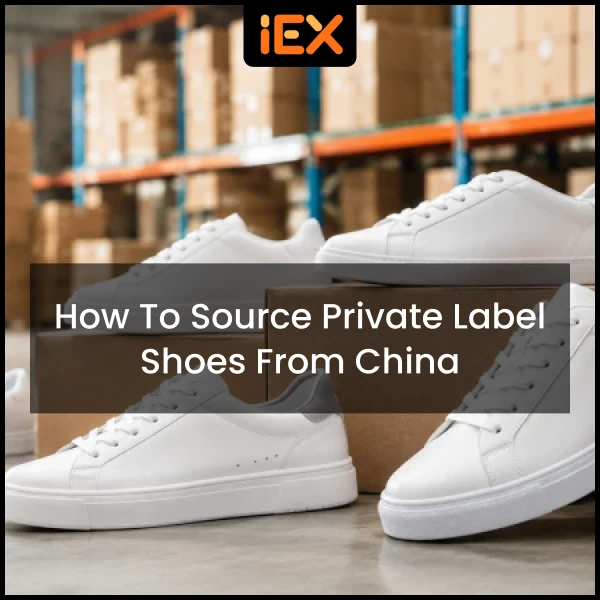
Private label shoes are footwear manufactured by a contract factory but sold under your brand name. The factory handles production, material sourcing, and assembly; you control the branding and, to varying degrees, the design. This is distinct from other sourcing models that first-time buyers often confuse.
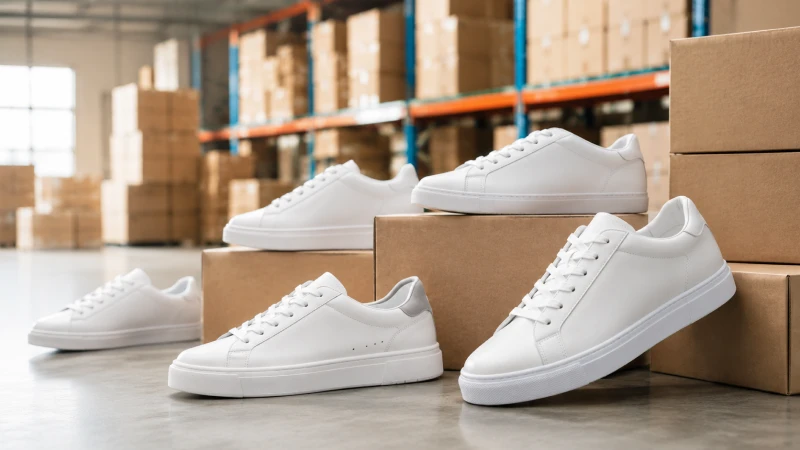
In a private label arrangement, the factory typically owns the base design. You select from their existing catalog, then customize elements such as colors, materials, hardware, and packaging.
For example, a factory in Fujian might offer ten canvas sneaker designs as private label options. You choose one, specify your colorway, add your logo, and order 2,000 pairs. The factory owns the design files; you own the finished product with your brand on it.
White label is similar but with less customization — you take a factory’s existing design exactly as-is and put your label on it. OEM (original equipment manufacturing) sits at the opposite end: you provide the complete design specification, and the factory produces exactly what you designed.
This gives you full control but requires the highest MOQ because the factory must invest in new molds and tooling. Stock shoes are pre-manufactured shoes, often from factory surplus or cancelled orders, sold unbranded with no customization. MOQ is lowest, but design control is zero.
The distinction matters because each model feeds into a different MOQ range, cost structure, and timeline. A buyer who asks for “private label pricing” but actually needs OEM will receive a quote three times higher than expected because the factory has to develop tooling.
Understanding these differences before you start contacting suppliers prevents costly miscommunication. For broader market context on how new shoes compare to other sourcing options, see our analysis of new shoes vs. preloved shoes in the wholesale market.
| Model | Design Control | MOQ Range | Branding | Best For |
|---|---|---|---|---|
| Private Label | Medium (choose existing design + customize) | 1,000–3,000 pairs | Your logo | New brand owners |
| OEM | Full (you provide spec) | 3,000–10,000 pairs | Your brand | Established brands |
| White Label | Low (pick from catalog) | 500–2,000 pairs | Your label | Budget entry |
| Stock Shoes | None | 100–500 pairs | Unbranded | Testing the market |
How to Find Private Label Shoe Manufacturers from China
Finding a legitimate manufacturer is the single most important step in the sourcing process, and it is also where first-time buyers are most vulnerable to mistakes.
The common belief that Alibaba’s verified suppliers are reliable factories is dangerously incomplete — industry estimates suggest that 60–70% of footwear “manufacturers” on Alibaba are actually trading companies or middlemen who mark up factory prices by 15–30% and have no direct quality control over production.
Four Sourcing Channels
Alibaba and Made-in-China.com are the largest online directories. They give you access to thousands of suppliers and the ability to compare pricing quickly. However, a “Verified” badge only confirms that a business license exists — not that the company operates a factory. Red flags include suppliers who list too many unrelated categories (“we make shoes AND electronics”), stock photos that look too polished, and refusal to do a live video call.
Canton Fair in Guangzhou is the largest trade fair in China, held twice a year. You can see products in person, meet factory owners directly, and assess quality with your own hands. The trade-off is cost — a trip to Guangzhou including flights, accommodation, and time easily runs $2,000–3,000. For committed buyers planning a large order, it is worth it.
Sourcing agents are Chinese intermediaries who vet factories, negotiate pricing, and inspect quality on your behalf. They typically charge 3–5% of the order value. For first-time importers, this fee is often the best money spent — an agent can identify factory types, verify licenses, and catch problems before they cost you a shipment. The downside is that you are one step removed from the factory relationship.
Factory visits are the gold standard. If your order value justifies the trip, visiting Wenzhou (leather shoes and boots), Fujian (sneakers and canvas shoes), or Guangzhou (dress shoes and sandals) gives you direct insight into production capacity, worker skill levels, and facility conditions. A factory that invites you for a visit and shows you a genuine production line is almost never a trading company.
Supplier Vetting Checklist
Before wiring money for samples or a deposit, request the following: a valid business license matching the company’s claimed location, client references from buyers in similar markets, a live video walk-through of the production floor, and a third-party audit report from SGS, Bureau Veritas, or Intertek. Audit reports cost $500–1,000 but can prevent losses of $15,000–30,000 on a single order. The same vetting principles apply across shoe categories; our used shoes sourcing guide covers these supplier evaluation techniques in more detail.
| Channel | Upfront Cost | Risk Level | Best For | Time Required |
|---|---|---|---|---|
| Alibaba | Low | Medium | Price comparison, first contact | 1–2 weeks |
| Canton Fair | Medium | Low | Seeing product quality in person | 1 week (biannual) |
| Sourcing Agent | 3–5% fee | Low | First-time importers | Ongoing |
| Factory Visit | High | Lowest | Large orders, long-term partner | 1–2 weeks |
Private Label Shoe Pricing: FOB Costs by Type
The $2–3 canvas sneakers you see on Alibaba are not real prices for export-quality private label manufacturing. They are either loss leaders to get you to inquire, low-grade materials that will not pass basic wear testing, or FOB prices that exclude a long list of additional costs.
FOB Price Ranges by Shoe Type
These are FOB (free on board) China prices — the cost of the shoes loaded onto the vessel at the Chinese port. Everything after that is additional.
| Shoe Type | Typical Material | FOB Price/Pair | Common MOQ | Lead Time |
|---|---|---|---|---|
| Canvas Sneakers | Cotton canvas, rubber sole | $3.00–6.00 | 1,000–3,000 | 45–60 days |
| Leather Casual Shoes | PU leather, rubber outsole | $5.00–10.00 | 1,000–2,000 | 60–75 days |
| Running Shoes | Mesh, EVA midsole, rubber | $6.00–12.00 | 2,000–5,000 | 60–90 days |
| Fashion Sandals | PU, TPR sole | $2.50–5.00 | 1,000–2,000 | 30–45 days |
| Ankle Boots | Suede/leather, stacked heel | $8.00–15.00 | 1,000–3,000 | 60–90 days |
| Dress Shoes | Leather, cemented construction | $7.00–14.00 | 1,000–2,000 | 60–75 days |
Hidden Costs That Add 20–40% to FOB
The largest hidden cost is mold and tooling fees, which apply to any shoe with a unique sole or shape. These range from $500 to $3,000 per design and are non-refundable — if the design does not sell, that money is gone. Sampling costs run $30–80 per pair including DHL shipping, and you will typically need 2–3 rounds of samples before production begins. Expect to spend $300–500 on sampling before committing to a production order.
Packaging adds $0.30–0.80 per pair for standard individual shoeboxes. Custom packaging with your brand printed on the boxes adds $0.50–1.50 per pair plus a $200–800 plate fee. Material testing for EU and US compliance (lead, phthalates, formaldehyde) costs $200–500 per material type and is mandatory if you plan to sell in regulated markets.
Shipping adds $0.50–2.00 per pair depending on destination and container utilization. Import duties vary by country: 8–20% in the US and 8–17% in the EU depending on the HS code and materials. Sourcing agent fees add 3–5%. Wire transfer fees add $25–50 per transaction.
A worked example: a canvas sneaker at $6.00 per pair FOB becomes approximately $8.50 landed for a 2,000-pair order shipped to Los Angeles — a 42% increase over the factory price. For a realistic private label order of 2,000 pairs, your total investment including sampling, molds, packaging, shipping, and duties lands between $15,000 and $25,000 before you sell a single pair.
MOQ Considerations: What Factories Actually Require
Minimum order quantity is the biggest barrier to entry in private label shoe manufacturing, and it is also the area where most online advice is misleading. The fantasy number of 100–500 pairs that appears in dropshipping blogs comes from three sources: trading companies who accept small orders then batch them with other buyers (leading to quality inconsistency), stock shoe sellers who are not doing genuine private label manufacturing, and outdated information from before material cost inflation raised factory minimums.
Real MOQ by Factory Type
Large export factories in Wenzhou and Quanzhou require 3,000–5,000 pairs per design. This gives you the lowest per-unit cost — typically 15–25% below smaller factories — but demands the highest upfront commitment. Mid-size factories in Fujian and Guangzhou are the sweet spot for new importers, with MOQs of 1,000–2,000 pairs. Small workshops can accept 300–1,000 pairs but charge higher per-unit prices and have less reliable quality control. Trading companies consolidate orders from multiple factories and may accept 500–1,000 pairs, but you lose direct quality oversight.
The MOQ Math That Most Buyers Miss
A “2,000-pair MOQ” does not mean 2,000 pairs total in any design and color. It means 2,000 pairs of the same design and color. If your plan is to launch with four colorways, that is 8,000 pairs — four separate production runs against the MOQ. Within each color, the size run also matters. If the MOQ is 2,000 and you want sizes 36–44 (nine sizes), that works out to approximately 222 pairs per size. The smallest sizes and largest sizes will move slower than the middle sizes, meaning you carry dead inventory on the extremes.
Negotiation Strategies That Work
You can negotiate MOQ downward, but the factory’s counteroffer will almost always include a higher per-unit price — typically 20–40% more. Factories have fixed costs per production run (setup, material cutting, stitching line allocation), and a smaller run means those costs are distributed across fewer pairs. Strategies that work include: offering to pay a premium for a lower MOQ, starting with a trial order of a single colorway, asking about existing stock shoe designs that can be relabeled, or proposing a phased order where you commit to repeat orders after the first run proves demand.
The cost of getting MOQ wrong is severe: a buyer who orders 2,000 pairs but only sells 500 eats the cost of 1,500 pairs of dead inventory. It is far better to start with a smaller order at a higher per-unit price than to overcommit on volume before you have demand data.
Quality Control and the Sampling Process
The most expensive mistake a first-time buyer makes is trusting that the factory sample represents production quality. Samples are typically hand-made by the factory’s most skilled workers using selected materials. Production runs are made by regular workers on production lines using bulk materials. The gap between the two is often dramatic — loose stitching, uneven gluing, off-color materials, and sizing inconsistencies that did not exist in the sample.
The Four-Stage QC Process
Stage 1: Initial Sample. Request 2–3 samples from your shortlisted factories. Evaluate fit, material quality, stitching precision, sole adhesion, color accuracy, and overall construction. Pay for samples ($30–80 per pair including DHL shipping) — free samples are usually low quality and signal a supplier who does not take quality seriously.
Stage 2: Pre-Production Sample (PPS). Once you select a factory, they make 1–2 pairs using the actual production materials and tooling. This is the first real indicator of what your final product will look like. Approve the PPS in writing before production begins.
Stage 3: During Production Inspection (DUPRO). A third-party inspector or your sourcing agent visits the factory while production is running, typically when 20–30% of the order is complete. The inspector checks materials against the approved PPS, evaluates workmanship on the line, and reviews packaging specifications. Problems caught at DUPRO can be corrected before the entire batch is finished.
Stage 4: Final Random Inspection (FRI). Before shipment, an inspector examines 10–15% of finished goods using AQL (acceptable quality limit) standards. AQL 2.5 means up to 2.5% of the inspected batch can have major defects and still pass — this translates to 25 pairs in a 1,000-pair order. AQL 4.0 applies to minor defects. If your defect rate exceeds these thresholds, you have the right to reject the shipment or request rework.
Quality Checklist
Specific defects to check include loose soles (the most common failure in new shoes), uneven stitching, mismatched colors between left and right shoes in a pair, glue residue on uppers or soles, wrong size labeling inside the shoe, and inconsistent or damaged packaging. For comparison, facilities that take quality control seriously operate integrated inspection systems. Indetexx, for example, runs a 20,000 m² self-owned facility where QC is built into the operation rather than outsourced at the last minute. This kind of infrastructure is what you should look for when evaluating a manufacturer’s commitment to quality. For a deeper look at shoe quality standards, see our used shoes quality check guide, where many of the same inspection principles apply.
Skipping QC — even on a small order — is a false economy. A $500 inspection on a $30,000 order costs less than 2% of the total but can prevent a 100% loss on a rejected shipment. One first-time buyer received 3,000 pairs where 40% had sole separation within two weeks of wear. Because they did not inspect before shipment, they had no recourse with the factory.
Shipping and Logistics for Private Label Orders
The complete timeline from initial factory contact to shoes arriving at your warehouse is 3–5 months. First-time importers consistently underestimate this by half. Here is how the timeline breaks down.
Sampling phase: 2–4 weeks. Communicating design requirements, factory preparing samples, shipping samples to you, your evaluation, and revisions. Each sample round adds 1–2 weeks.
Production phase: 4–8 weeks. Varies by shoe type and order size. Canvas sneakers and sandals are faster (4–6 weeks). Running shoes and boots require more assembly steps and longer material curing times (6–8 weeks).
Shipping phase: 3–6 weeks. Sea freight from China to the US West Coast takes 25–35 days. To Europe, 30–40 days. To Africa, 25–45 days depending on the port. Air freight is 3–7 days but costs 4–6 times more than sea freight.
Shipping Methods
For orders under 15 cubic meters, LCL (less than container load) is the standard option. Your goods share a container with other shipments. LCL costs more per cubic meter than full containers but avoids paying for unused space. For orders over 15 cubic meters, FCL (full container load) gives you better per-unit shipping costs and reduces the risk of damage from mixed cargo.
Documentation Requirements
The paperwork required for customs clearance includes: bill of lading (the carrier contract — errors in consignee names cause weeks of port delays), commercial invoice (must match your payment terms exactly), packing list (needed by destination customs), certificate of origin (can reduce duty rates under free trade agreements), and fumigation certificate (required for wooden pallets — a missing certificate can hold your container at port for days).
Incoterms
FOB (free on board) is the most common Incoterm for Chinese shoe manufacturing. The factory’s responsibility ends when your goods are loaded onto the vessel. You are responsible for freight charges, insurance, destination port fees, customs clearance, and inland transportation. First-time buyers often assume FOB includes delivery to their door — it does not. CIF (cost, insurance, freight) is another common option where the factory pays freight and insurance to the destination port. It simplifies your logistics but typically includes a markup on shipping costs. For more detail on Incoterms and shipping documentation for shoe imports, refer to our used shoes shipping and logistics guide.
Lower-MOQ Alternatives for New Importers
If you have read through the MOQ requirements and pricing and realize that full private label manufacturing is not within your current budget or risk tolerance, you are not out of options. There is a middle path between “commit to 2,000+ pairs” and “don’t start at all.”
Stock Shoe White-Labeling
Stock shoes are pre-manufactured shoes from factory surplus, cancelled orders, or overstock. They are genuine new shoes, often from the same factories that produce private label orders, sold at 30–50% below private label FOB prices. The key advantages are a lower MOQ (100–500 pairs), zero manufacturing lead time (the shoes already exist), and significantly lower total investment.
The trade-off is limited design control — you work with what is available rather than designing from scratch. However, customization services allow you to add your own branding, hang tags, and packaging to stock shoes, giving you a branded product without the manufacturing commitment.
When Stock Shoes Make Strategic Sense
Stock shoe sourcing is not a compromise; for many buyers it is a smarter starting point. First-time importers can test the market with a small investment, validate which styles and price points work, and build revenue before committing to a private label design. Brands wanting to add a seasonal line without a full product development cycle can source stock shoes in 2–4 weeks instead of 3–5 months. Buyers with limited capital can generate cash flow from stock shoes and reinvest the profits into private label production later.
Indetexx offers new stock shoes with MOQs starting at 500+ pairs — a fraction of what most Chinese factories require for private label manufacturing. These shoes are pre-sorted, quality-checked, and stored at a 20,000 m² self-owned facility, ready for fast dispatch. Because the shoes are already produced, buyers skip the 8–10 week manufacturing lead time entirely. For buyers who want a branded product, customization services are available to add labels and packaging before the shoes reach your customers.
The long-term strategy that works for most successful shoe importers is phased: start with stock shoes to validate the market and build cash flow, move to white label once you have data on what sells, and graduate to full private label or OEM when you have consistent demand and working capital for larger orders. See our facility overview for a closer look at the infrastructure behind stock shoe sourcing.
FAQ
What is the minimum order quantity for private label shoes from China?
Factory MOQ for genuine private label manufacturing ranges from 1,000 to 5,000 pairs per design per colorway. This is a per-design, per-color requirement — a “2,000 pair MOQ” means 2,000 pairs of the same design in the same color. Lower-MOQ options exist through stock shoe white-labeling, where 100–500 pairs is possible, but true private label manufacturing does not start below 1,000 pairs.
Can I start a private label shoe brand with $5,000?
Not for full private label manufacturing. A realistic budget breakdown for a small 500–1,000 pair order includes sampling ($300–500), production ($3,000–6,000 at lower MOQ pricing), shipping ($500–1,500), and customs clearance ($200–500). Stock shoe sourcing is viable at $5,000 because there are no mold fees, no sampling costs, and no production lead time. Full private label manufacturing realistically requires $15,000–25,000 for a 2,000-pair order including all costs.
How long does it take to manufacture private label shoes in China?
The complete timeline from first contacting a factory to receiving your shoes is 3–5 months. This breaks down into sampling (2–4 weeks), production (4–8 weeks), and shipping (3–6 weeks). Stock shoe alternatives can ship in 2–4 weeks because the manufacturing step is already complete.
How do I know if a Chinese shoe factory is legitimate?
Request a business license and verify it matches the company’s claimed location. Confirm Alibaba Gold Supplier status but do not rely on it alone. Ask for a live video walk-through of the production floor — trading companies will refuse or make excuses. Request a third-party audit report from SGS, Bureau Veritas, or Intertek. Ask for existing client references, ideally from buyers in your target market. If you can, visit the factory in person or hire a sourcing agent to do it for you.
What is the difference between private label and white label shoes?
Private label means you customize an existing factory design — choosing colors, materials, hardware, and packaging — and sell it under your brand. White label means you take a factory’s existing design exactly as-is and put your brand on it. Private label offers more differentiation but requires higher MOQ and longer lead times. White label is faster and cheaper but gives you no design exclusivity.
What shoe types are easiest to private label from China?
Canvas sneakers and fashion sandals are the easiest starting points. They have the lowest material complexity, the simplest sole construction, and the shortest production lead times (30–60 days). Running shoes require specialized tooling (EVA midsole molds), more material types (mesh, foam, rubber), and higher MOQs. Ankle boots and leather dress shoes require more skilled labor and longer assembly times.
Do I need a registered trademark to private label shoes from China?
You do not need a trademark to start. Factories will print any brand name you request. However, China operates on a first-to-file trademark system, meaning the first person to register your brand name in China owns it legally. If a factory or another party registers your brand before you do, they can prevent you from selling under that name in China or even block your exports. Register your trademark in China early — it costs approximately $300–500 and takes 6–12 months.
Start Your Private Label Shoe Journey
Sourcing private label shoes from China comes down to three decisions. First, choose your model: private label, white label, OEM, or stock shoes. Each determines your MOQ, cost, timeline, and risk. Second, find and vet your manufacturer using a systematic process that goes beyond Alibaba profiles. Third, plan for the real costs — sampling, molds, QC, shipping, and duties — to avoid budget surprises.
For many new importers, the smartest first step is not a full private label order. It is a lower-MOQ stock shoe order to validate the market, understand the logistics chain, and build capital for larger production runs. That path gets you to market faster, with less risk, and with the same end goal: a shoe brand that actually sells.
Ready to Apply These Strategies?
Indetexx supports new wholesalers with consultation, sample orders, and transparent grading. Practice what you’ve learned with a trusted partner who explains the process, not just sells products.
- ✓ Consultation on market selection & product mix
- ✓ Sample stock shoe orders available for quality verification
- ✓ Customization services to add your branding to stock shoes
- ✓ Trial orders with flexible MOQ starting at 500+ pairs
Explore our facility overview for a closer look at how Indetexx manages quality and stock at scale