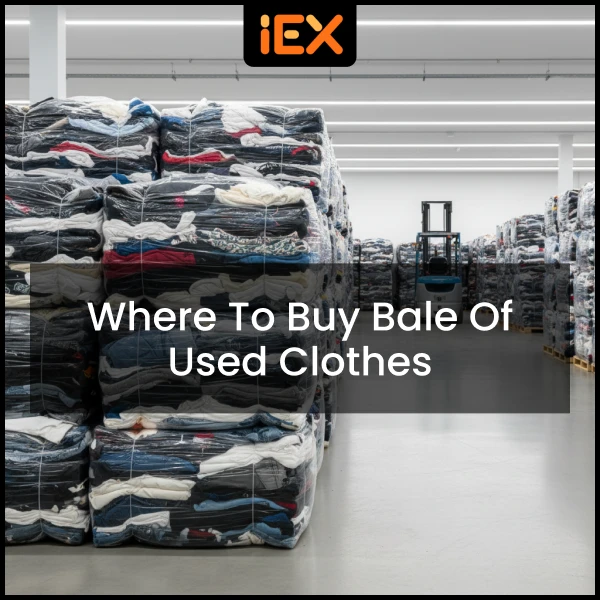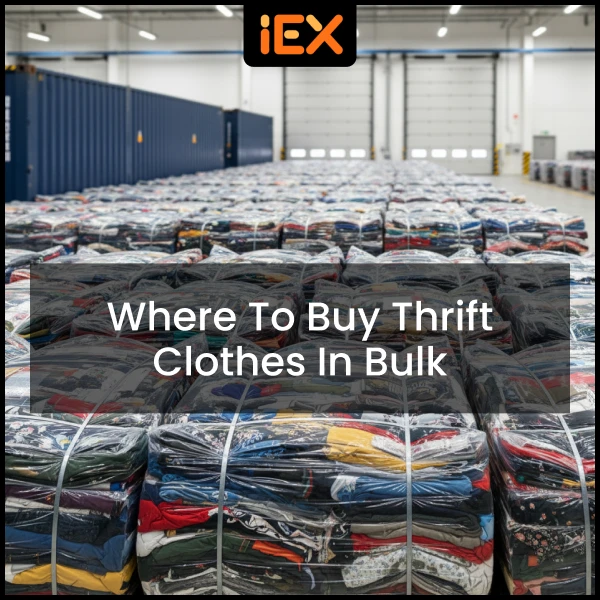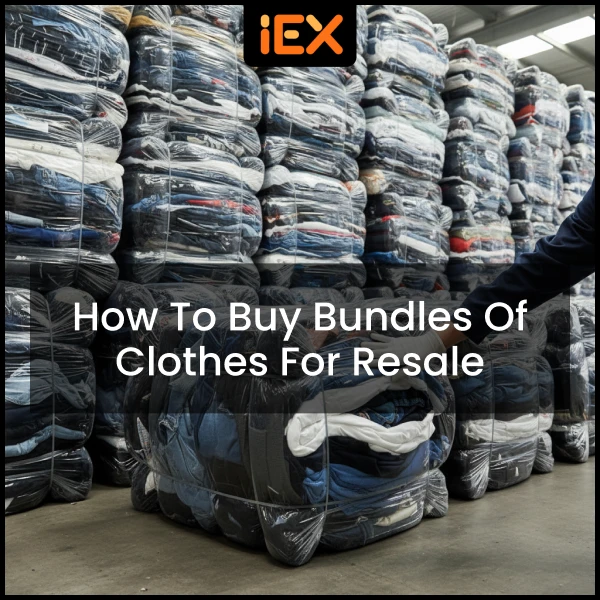
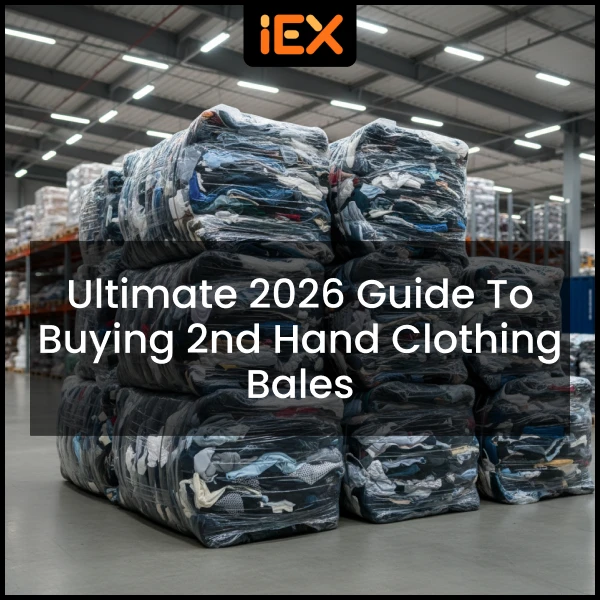
In 2026, second hand clothing bales remain the backbone of the global used clothing trade—not because they are cheap, but because they offer structural advantages that no other sourcing format can match. Bales provide scalability for high-volume markets, cost control in volatile logistics environments, and flexibility across regions with vastly different consumer behaviors.
While curated resale, handpicked vintage, and per-piece sourcing dominate media narratives, they fail to meet the needs of importers operating at scale. In regions such as Africa, Southeast Asia, the Middle East, and Latin America, success is determined by volume consistency, grading reliability, and logistics efficiency—areas where bales outperform all alternatives.
The buyers winning today are no longer opportunistic traders. They are system builders who understand grading discipline, sourcing geography, risk control mechanisms, and resale economics. This guide consolidates market intelligence, sourcing strategy, grading logic, pricing models, and execution frameworks to deliver genuine information gain—not surface-level advice.
Market Boom: The Macro Forces Driving Bale Demand
The global secondhand apparel market is projected to reach USD 485 billion by 2031, with an estimated 10–16% CAGR, signaling a fundamental structural shift rather than a temporary trend. This growth is driven by deep changes in consumer behavior, regulatory pressure, and economic conditions.
Gen Z and Millennials increasingly prioritize value, durability, and sustainability, making secondhand apparel a default choice rather than an alternative. At the same time, inflation continues to push consumers toward affordable clothing, especially in emerging markets. Governments and international organizations are also tightening regulations on textile waste, accelerating the transition toward circular fashion models.
For wholesalers and importers, clothing bales sit at the intersection of price accessibility and supply scalability. During periods of economic uncertainty, bales provide predictable sourcing at controlled cost levels, making them the most resilient and adaptable procurement format in 2026.
Key Insight: Sustainability is no longer a branding angle—it has become the primary demand engine driving bale consumption worldwide.
ROI Reality: Why Grade A Bales Deliver 300% Potential Returns
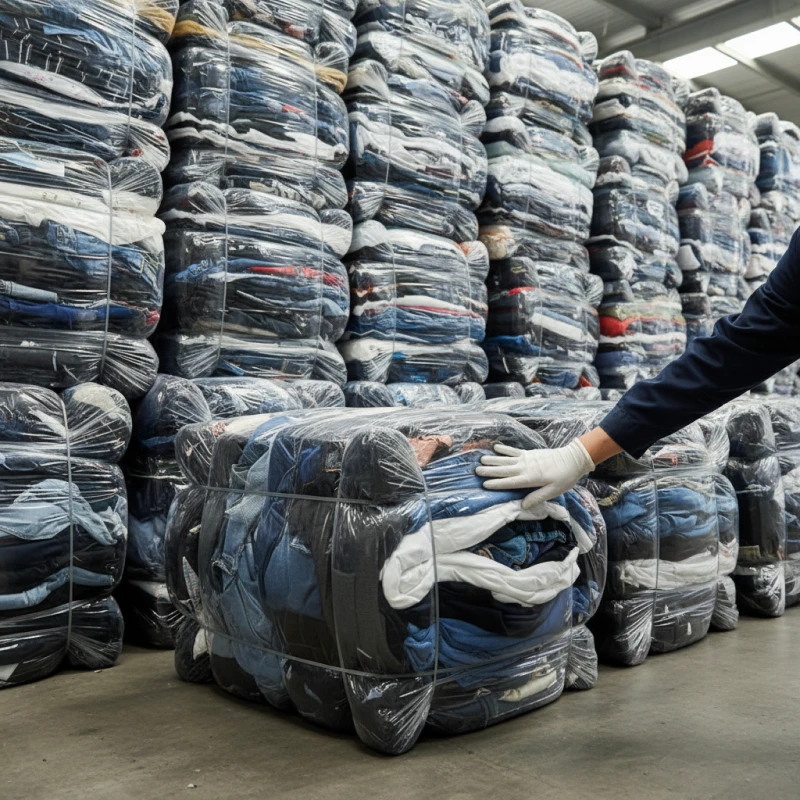
High-performing importers consistently prioritize Grade A and premium sorted bales, even when unit prices are higher. The reason is simple: resale predictability matters more than nominal cost. Grade A bales offer higher sellable yield, lower defect rates, and faster turnover, all of which directly impact cash flow and profitability.
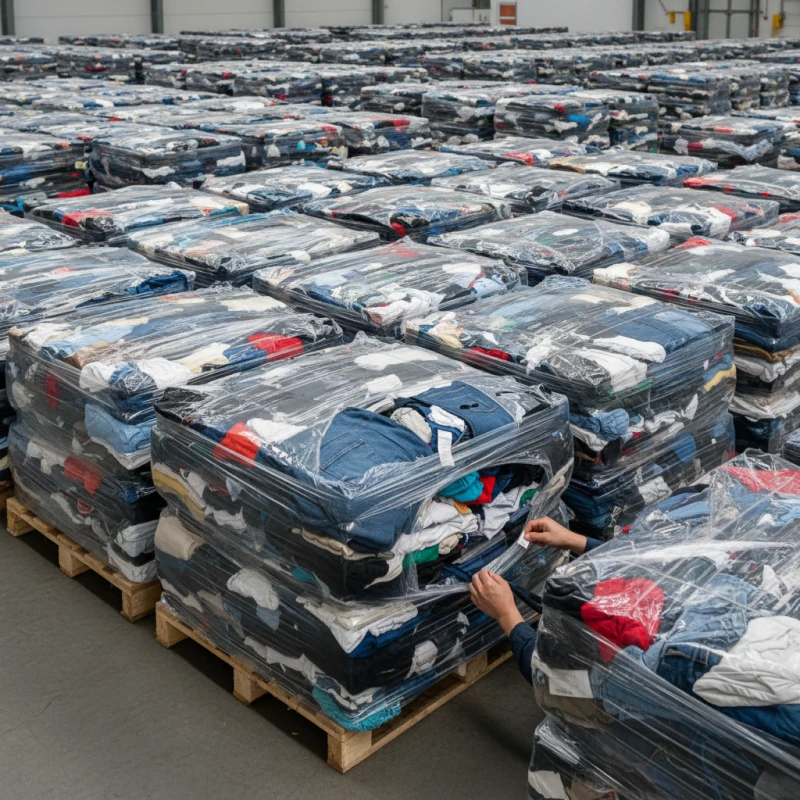
A professionally sourced Grade A bale typically moves through the supply chain faster, reducing storage time and capital lock-up. It also supports higher resale pricing due to better visual condition and stronger consumer acceptance. In markets with brand awareness or online resale channels, this predictability significantly reduces risk.
In strong resale environments, Grade A bales routinely generate 200–300% ROI, particularly when paired with efficient container loading and market-aligned category mixes. The key is not the grade itself, but how consistently it is defined and delivered by the supplier.
01 — Bale Basics & Essential Grading (Profit Starts Here)
A clothing bale is not defined by its weight alone—it is defined by sorting depth, grading accuracy, and quality discipline. Most export bales weigh between 200–500kg, yet two bales of identical weight and price can produce dramatically different results depending on how they were sorted and graded.
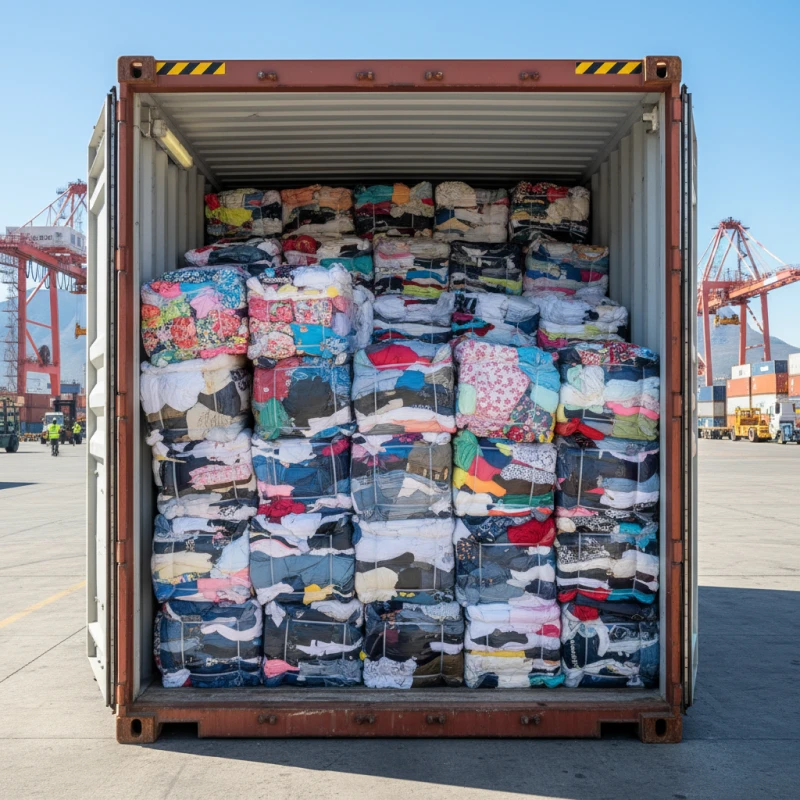
Grading establishes expectations for condition, wear level, and resale suitability. Without clear grading standards, buyers absorb all quality risk. Professional importers therefore treat grading as a contractual standard rather than a marketing label.
Core Grade Framework (Industry Standard)
Grade A
Approximately 90% premium wearable quality with minimal defects. Commonly sourced from the USA and Europe. Typical pricing ranges from $1.8–$2.2/kg, ideal for resale-driven markets.
Grade B
Minor defects acceptable, suitable for tolerant markets. Pricing typically $1.2–$1.6/kg.
Grade C
Low resale value, primarily for recycling or industrial use.
Professional Rule: Never purchase bales without written grade definitions. “A/B mix” without ratios is a major red flag.
Global Sourcing Strategies: Where Your Bales Should Come From
USA & Europe — The Quality Benchmark
The USA and Europe remain the gold standard for sourcing second hand clothing bales. These regions consistently deliver branded casual wear, contemporary silhouettes, and better size consistency. Brands such as Levi’s, Nike, and Adidas are more prevalent, and garments generally show less extreme wear.
While bales from these regions command higher prices, they provide superior resale stability, especially in brand-sensitive or online markets. Lower reject rates and predictable consumer acceptance often offset the higher purchase cost.
Asia & Africa — Cost-Driven Supply
Asian and African sourcing hubs offer more competitive pricing but require stricter quality oversight. These regions are best suited for volume-focused markets where price sensitivity outweighs brand preference. Ethical sourcing verification and consistent supplier monitoring are critical to avoid quality drift.
Red Flags Every Professional Buyer Must Watch
Professional buyers avoid losses by identifying warning signs early. The most common red flags include opaque shipping costs presented as “all-in later,” absence of sampling or inspection policies, prices significantly below market averages, and unclear or shifting MOQ structures.
Extremely low pricing often signals compromised grading, inconsistent sorting, or hidden logistics costs. Lack of transparency usually results in post-arrival disputes that buyers are forced to absorb.
Reality check: The cheapest bale frequently becomes the most expensive mistake once landed costs and reject rates are calculated.
Step-by-Step Buying Process (Professional Workflow)

1️⃣ Target Market Assessment
Before purchasing, buyers must clearly define their end customers. This includes understanding whether products will be sold to market traders or online consumers, climate and seasonality requirements, and brand sensitivity versus price tolerance. Market-first sourcing prevents slow-moving inventory.
2️⃣ Quality Inspection & Sampling
Professional buyers always start with 300–1,000kg test orders. For high-volume operations, factory visits are strongly recommended. Buyers should analyze reject rates, sell-through speed, and pricing elasticity based on real sales data.
3️⃣ Terms, Pricing & Compliance
Final negotiations must include MOQs, written grade definitions, customs duties, landed cost calculations, and delivery timelines. Clear terms reduce disputes and protect margins.
Profitability Matrix (Realistic Economics)
| Bale Type | Buy Price/kg | Resale Potential | Best Markets |
| Grade A USA | $1.8–$2.2 | High (Branded) | Asia / Africa |
| Grade B Europe | $1.2–$1.6 | Medium | LatAm / Europe |
| Mixed Vintage | $1.0–$1.5 | Variable | Online resale |
Benchmark: A bale landed at $2/kg can generate $1,000–$3,000 profit, depending on local resale prices between $5–$15/kg.
Risk & Quality Control: Where Professionals Separate Themselves
Professional buyers invest heavily in risk control. Third-party inspections before shipment help prevent grade downgrades, weight discrepancies, and hidden defects. Comprehensive contracts must clearly specify grade tolerance, weight variance, and delivery schedules.
Advanced suppliers increasingly adopt AI-assisted grading tools to reduce human bias and improve consistency across shipments. Additionally, ESG and sustainability compliance is becoming a commercial necessity rather than a branding choice, especially for buyers serving regulated markets.
Unlocking Resale Potential: From Bale to Cash Flow
Successful resale begins with visibility and trust. High-impact strategies include keyword-optimized listings such as “Grade A 2nd hand clothing bales Guangzhou”, transparent unboxing content, and clear sustainability narratives that resonate with modern buyers.
African case studies show disciplined resellers scaling to 20+ bales per month, generating $50,000+ in monthly revenue. These results are driven not by speculation, but by consistent execution and market-aligned sourcing.
Partnering for Profit: Why Supplier Structure Matters
At scale, 2nd hand clothing bales supplier capability determines whether growth is sustainable. Industrial exporters such as Indetexx provide structural advantages through:
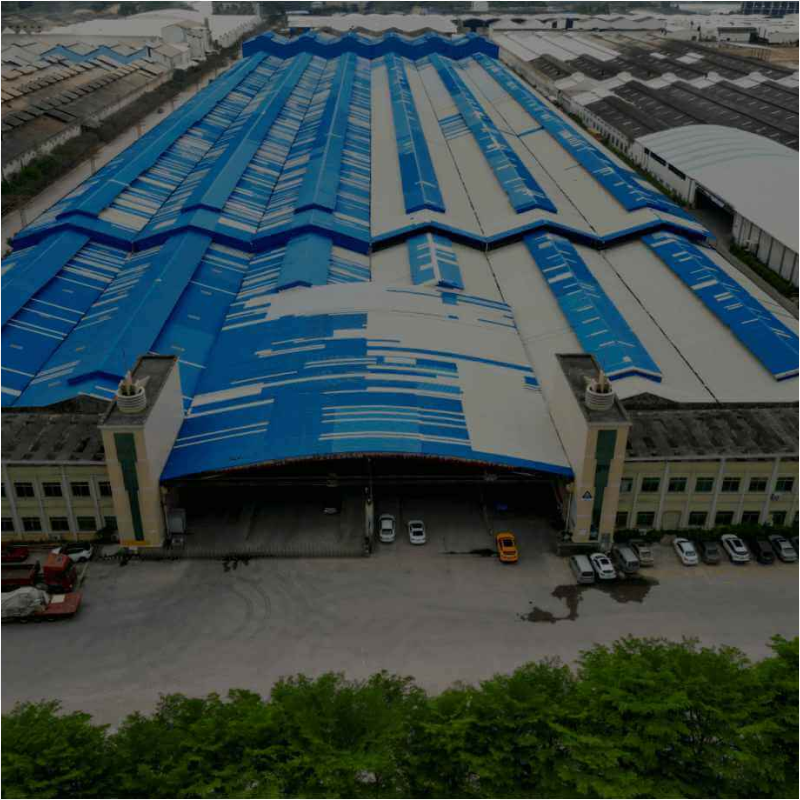
- 20,000㎡ self-owned factory
- 6,000 tons monthly sorting capacity
- 3,000 tons raw material inventory
- Export coverage across 110+ countries
- 120–200 fine sorting categories
- High container loading efficiency (10–15% cost reduction)
Such infrastructure enables repeatability, consistency, and long-term profitability.
Frequently Asked Questions (Short Version)
1. How much capital do I need to start buying clothing bales?
A realistic starting budget ranges from USD 3,000–10,000, allowing for a 300–1,000 kg test order, freight, customs, and basic resale operations. The priority is not capital size, but how it is used. Structured test orders provide critical data on grade accuracy, sell-through speed, and pricing tolerance, significantly reducing long-term risk.
2. Should I choose Grade A or cheaper Grade B / mixed bales?
There is no universally “better” grade—only better market alignment. Grade A bales offer higher consistency, faster turnover, and lower reject rates, making them ideal for online resale and brand-sensitive markets. Lower grades can work in price-tolerant markets but require adjusted pricing strategies and risk awareness. Professionals choose grades based on margin stability, not headline cost.
3. How do I verify bale quality before shipment?
Quality must be verified before shipment, using a combination of batch samples, written grading agreements, and third-party inspections. Photos alone are insufficient. Clear contracts defining grade tolerance and dispute terms are essential. Pre-shipment verification is a core risk-control step, not an optional extra.
4. Which markets are best for clothing bales in 2026?
Africa remains the largest volume-driven market, Latin America continues to grow in branded demand, and Southeast Asia favors sorted summer clothing. Online resale markets require higher grades and tighter category control. Profitability depends on how well bale type and grade align with local consumer behavior, not market size alone.
5. Why does supplier structure matter more than price?
Supplier structure determines consistency, scalability, and hidden risk. Industrial exporters with standardized grading, stable sourcing, and efficient container loading deliver predictable outcomes. Cheaper suppliers often create higher long-term costs through inconsistency. Professional buyers prioritize repeatability over short-term discounts.
6. Are clothing bales still highly profitable in 2026?
Yes—but profits now come from process optimization, not speculation. Buyers who control grading, logistics, and data-driven sourcing continue to scale successfully. Those relying on guesswork or one-off deals struggle. In 2026, clothing bales remain profitable only when managed as a disciplined business system.
Conclusion: From Bale Buying to a Repeatable Profit System (2026 Outlook)
In 2026, the key difference between successful bale buyers and those leaving the market is operational maturity, not access to supply. Second hand clothing bales remain one of the most powerful sourcing formats in the global resale economy, but they only deliver consistent returns when managed as part of a structured system rather than opportunistic trading.
Professional importers treat bales as a supply-chain input, not a finished product. Performance depends on grade discipline, market alignment, logistics efficiency, and supplier reliability. Buyers who focus only on price per kilogram face volatile results, while those optimizing sellable yield, reject rates, and turnover speed achieve stable margins—even in competitive markets.
As sustainability regulations tighten and resale markets professionalize, bale sourcing increasingly favors data-driven testing and long-term partnerships. When approached strategically, second hand clothing bales remain one of the most scalable and resilient models in the $485B global sustainable fashion economy.