The question that decides whether a bale works for you is not whether damage exists. It is what your order counts as damage, how much of it the specification allows, and what happens to the pieces a sorting line removes. Buyers who settle that before the bales are packed spend far less time arguing about it after the container arrives.
This guide explains how damage is defined inside a sorting line, why no line removes every damaged piece, how the damage share changes your cost per sellable item, which damage happens after sorting rather than during it, and how to write a damage rule into your order brief. It does not promise a fixed defect rate for any shipment, and it does not replace the inspection you run on receipt. The only reliable figure is the one your own order and your own receiving sample produce.
Quick Takeaways
- A bale can be graded correctly and still be unsellable in your market; damage and market fit are separate problems.
- Wear, staining and structural failure are the three working damage categories, and each one implies a different action.
- No industrial sorting line can hand-check every garment at the speed a container is built.
- The damage share matters most as a cost-per-sellable-item figure, not as an abstract quality complaint.
- Write the damage rule into the order brief, then inspect against that written rule instead of against expectations.
What Counts as Damage in a Used Clothing Bale
Damage in the used clothing trade means a physical condition problem in the garment itself. It does not mean that the piece is the wrong size, the wrong season or the wrong style for your shop. That distinction matters because the two problems have different causes and different fixes: one belongs in the order brief, and the other belongs in your buying decisions.
Wear, Staining and Structural Failure
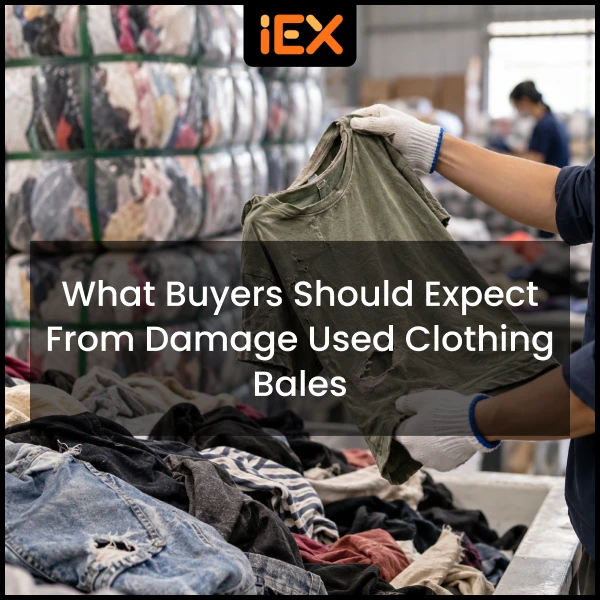
Wear is surface deterioration: faded colour, thinning fabric, stretched cuffs, pilling or a print that has cracked. The garment still functions, and for many resale channels it still sells if the price reflects the condition.
Staining is contamination. Some marks come out in the wash and some do not, which is why staining sits uncomfortably on the boundary of a damage rule. A supplier cannot know how a specific stain behaves in your laundry process, and you cannot assume every mark is removable.
Structural failure is the clearest category: holes, split seams, broken zips, missing buttons, collapsed elastic, cracked soles, or a garment that cannot be worn without repair. This is the category most buyers mean when they say a bale contains damaged pieces, because the item fails at the point of use rather than showing its age.
Why “Unsellable” Is Not the Same as “Damaged”
Research on used clothing traders in Kenya found that between 20% and 50% of the pieces in purchased bales were unsellable, and that the causes were mixed: damage, but also size, climate and local style fit. That range describes specific importers in one market, not a universal defect rate, and it should be read as an illustration of a category error rather than a benchmark.
The category error is common. A buyer receives a bale, finds a third of the pieces hard to sell, and concludes that the bale is damaged. In practice part of that share was always going to be unsellable in that market because the sizes were wrong or the styles were not local. Only the genuinely defective pieces belong in a damage conversation with the supplier. Sorting the two apart is what makes a claim credible and a reorder decision useful.
Why No Sorting Line Removes Every Damaged Piece
Sorting is a physical process performed at industrial speed under time pressure, and its output is a grade, not a guarantee.
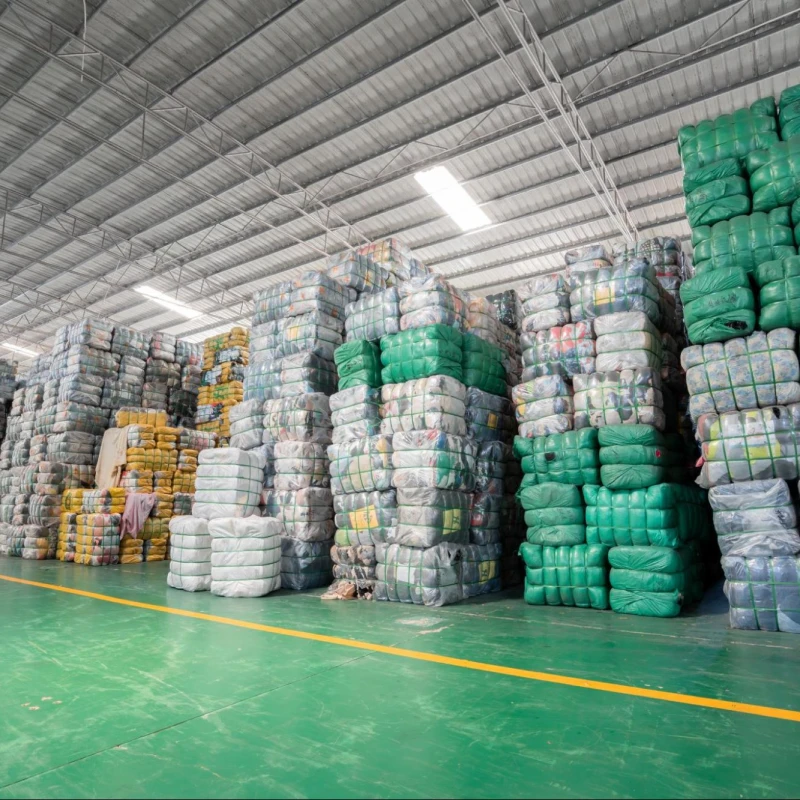
The first reason is volume. A facility handling thousands of tonnes a month moves garments by the bale, and the economics of hand-checking every individual piece at that scale do not exist anywhere in the industry. Sorting lines remove what trained eyes can see and what the order specification tells them to remove.
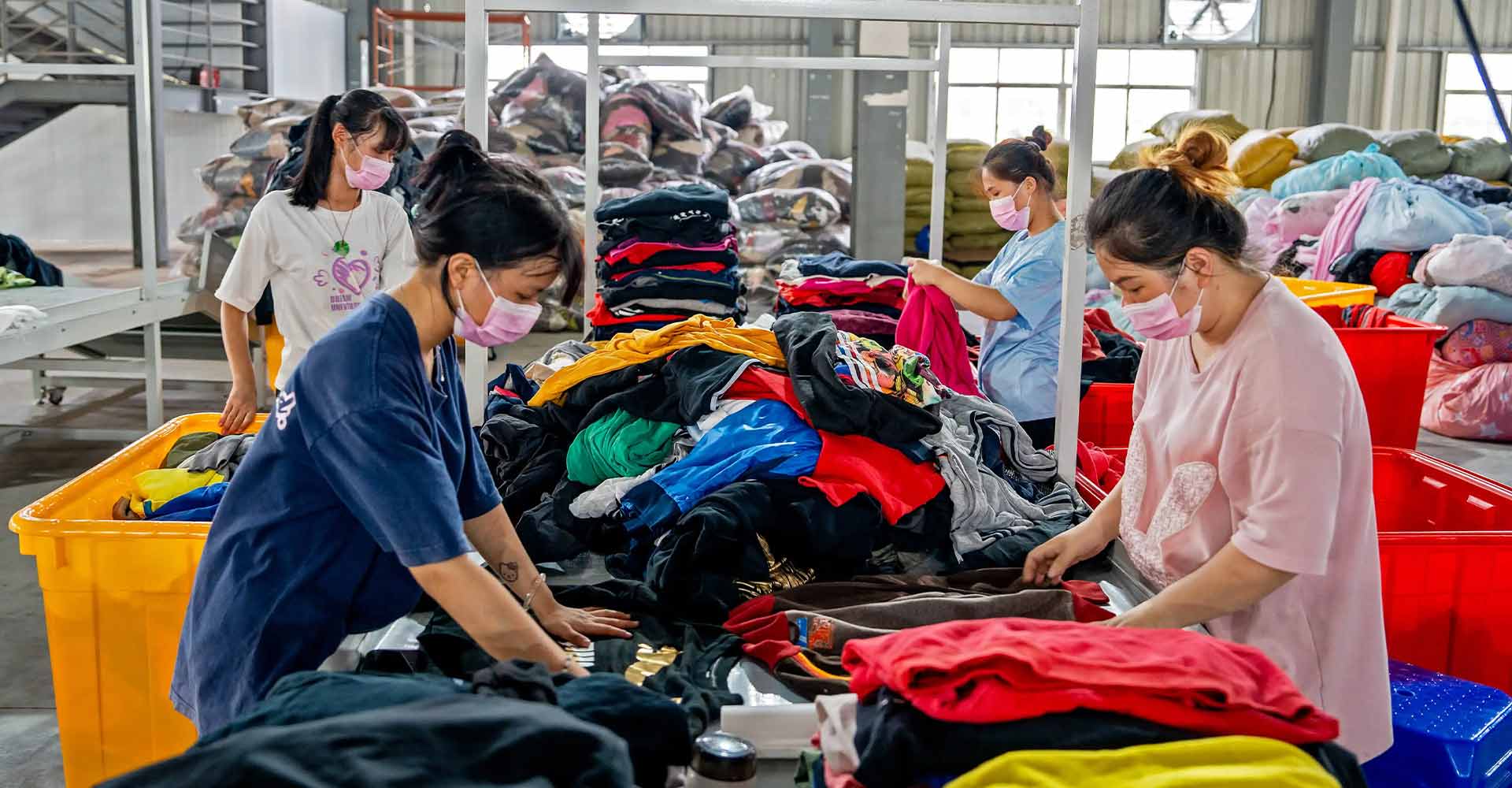
The second reason is visibility. Internal damage often does not appear until the garment is washed or worn. A hidden seam failure, a degraded lining or a print that lifts after one wash can look acceptable on the table. No inspection step in a sourcing chain reliably predicts how a garment behaves after five washes in the buyer’s market.
The third reason is the order definition itself. A supplier sorts to the specification it was given. If the brief does not say whether stained or repaired garments are excluded, the sorting team will apply the default for that category, and the buyer will judge the result against a standard that was never written down.
What a capable supplier controls is the sorting logic, the category accuracy, the grade boundary it applies, and the consistency between the sample and the reorder. It does not control whether an individual garment survives your laundry process or whether it matches your customers’ taste.
Indetexx applies that logic per order: the category, grade definition and any agreed exclusion rule are set before baling, and the sorting line works to that written specification rather than to a general grade label. The three limits above still apply, which is exactly why the specification matters more than the label.
How the Damage Share Changes Your Cost per Sellable Item
The commercial effect of damage shows up in the denominator, not in the complaint. Two orders can carry the same price per kilogram and produce very different cost per sellable item, because the share of pieces that can be offered for sale is different.

Here is an illustrative calculation with assumed figures, used only to show the mechanism. Suppose two 1,000 kg orders cost the same per kilogram. Order A yields 700 pieces you can offer at your normal price. Order B yields 600 pieces at the same price, because a larger share of the weight is in pieces that need repair, washing or downgrading to a lower channel. The second order costs the same to buy and more to process, and it earns less per kilogram of material purchased. The gap is the damage share expressed as money rather than opinion.
That is why the useful question is not “how much damage is in this bale” but “what is my cost per sellable item, and how does it change between two orders”. The bale sellable percentage guide sets out how to define the outcome buckets and run that calculation on your own numbers instead of borrowing someone else’s percentage.
Run that calculation on the order specification rather than on a marketing claim. Indetexx states the category, grade definition and bale weight for the order being shipped, which are the inputs the cost-per-sellable-item method needs before the container is booked.
Damage That Happens After Sorting
Not all damage found on arrival happened before baling. Some of it is created between the packing table and your warehouse, and that distinction decides who is responsible.
Moisture and Storage
Baled textiles absorb moisture, and a container crossing several climate zones can produce condensation on the ceiling that falls onto the load, a pattern often called container rain. Garments stored damp develop mildew, odour and colour transfer, and those problems are not visible on the packing table. Stacking practice, ventilation and storage humidity matter, which is why the site’s used clothing warehouse safety guidance treats moisture and bale stacking as a handling problem rather than a cosmetic one.
Compression, Loading and Unloading
Compressed bales are dense, and the forces involved in compression, stacking and container loading are real. Straps cut into bales that are handled by a single band, bales dropped from height split, and bales dragged across a floor abrade the wrapper that protects the outer layer. The packing and container loading process explains how the load is built, and the 40ft container planning guide shows why the count and the weight have to be planned together.
Damage found at the outer layer of a bale is also the easiest to misread. The outer pieces take the handling load, so the first garments you pull out are not a fair sample of the whole bale.
Write a Damage Rule Into the Order Brief
The most effective damage control happens before the order is packed, and it costs nothing but a paragraph. Give the supplier a written rule instead of a general instruction to remove damaged goods.
A usable damage rule answers five questions. First, which categories are excluded outright: torn pieces, single shoes without a pair, garments with missing fasteners, items with permanent staining, underwear, or anything requiring repair before it can be sold. Second, which categories are allowed with a price or grade consequence: worn but wearable pieces, items suitable for rags, or stained garments that belong in a downgrade channel. Third, which pieces are borderline and how the sorting team should decide them. Fourth, how the decision is recorded, so a receiving dispute can be checked against the order rather than against memory. Fifth, what happens in a repeat order when the first delivery produced a higher share of unsellable pieces than expected.
The rule belongs in the bale specification sheet alongside the category, grade definition, bale weight and packing format. A supplier cannot sort to a standard that exists only in the buyer’s head.
The wording you send matters more than the assurance you receive. Indetexx applies the exclusions and downgrade categories written into the order specification and records the category, grade, bale weight and packing format the goods were packed to, so the receiving check has something concrete to compare against. What that cannot do is convert the rule into a fixed defect rate or a guaranteed sellable yield.
Inspect Without Turning Damage Into a Dispute
Inspection produces evidence, and evidence decides disputes. The method matters more than the volume of photographs.
Sample across the bale rather than from the outer layer. Open more than one bale from different positions in the container, and take pieces from the middle of a compressed bale as well as the face. Record the bale identifier in every photograph, and count the conforming and non-conforming pieces against the categories you wrote into the brief. The remote bale inspection guide explains how to structure that check when you cannot be at the warehouse, and the repeat-order quality guide covers what to do when the second delivery drifts away from the first.
Two habits keep an inspection from becoming a dispute. Report the difference against the written rule rather than against satisfaction, and separate condition problems from market-fit problems in the same report. A supplier can act on “these pieces fail the exclusion you agreed” far more precisely than on “this bale was poor”.
What Indetexx Controls Before Loading
Indetexx sorts to the order-specific category and grade definition and applies the Grade A, Grade B and Grade C warehouse classification within the framework. The workshop process is documented in the factory sorting walkthrough, and the grade boundaries themselves are explained in the used clothing grade guide.
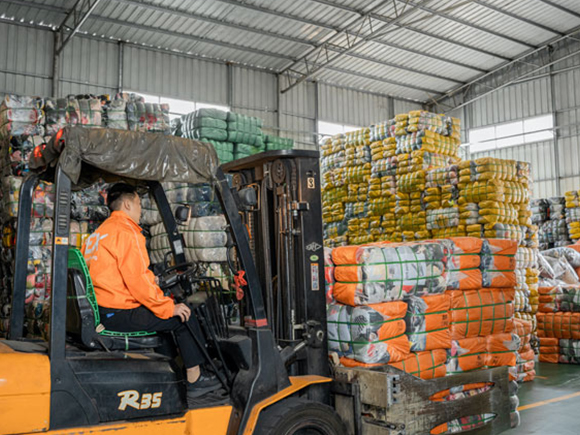
In practice that means the damage rule you write is applied inside a defined sorting logic rather than improvised per bale, and the loaded category, grade, bale weight and packing format are recorded for the order being shipped. The boundary is worth stating plainly: a fixed defect percentage, a sellable-yield guarantee and a brand or style mix promise are not part of that description, and they should not appear in any supplier’s quotation for a mixed used clothing order. Facility capacity describes supply and processing; it does not certify the condition of an individual garment.
Frequently Asked Questions
What percentage of a used clothing bale is damaged?
There is no universal figure, because the answer depends on the category, the source material, the grade definition and the market you sell into. Research on importers in one market found a wide unsellable share that included size and style fit as well as damage. Use your own receiving sample to build the number that applies to your orders.
Is a stained garment the same as a damaged garment?
Not necessarily. A stain is contamination whose behaviour depends on the fabric and your washing process, while structural damage means the garment fails at the point of use. Decide in advance which stained pieces you accept, which you downgrade and which you exclude, then write that decision into the order brief.
Can I reject a container because of damage?
Only against a standard that was agreed before shipment. A claim is strongest when the order brief named the excluded condition, the inspection followed a recorded method, and the affected pieces can be counted and identified. Without a written rule, the discussion becomes a disagreement about expectations rather than a check against a specification.
Does washing damaged clothes make them sellable?
Washing fixes some problems and reveals others. It can remove surface soiling, but it cannot repair a split seam or a hole, and some garments are damaged further by heat or agitation. Treat washing as a processing cost in your cost-per-sellable-item calculation rather than as a repair step.
How do I set a damage tolerance when I have never imported before?
Start with a written rule rather than a percentage. Name the exclusions, the accepted-with-downgrade categories and the borderline decision. Order a small quantity, inspect it methodically, and calculate your cost per sellable item. The tolerance you can live with becomes visible in that calculation, and it becomes the basis for the next order brief.
Set the Damage Rule Before the Next Bale
Damage is a normal part of a used clothing order; unmanaged damage is a cost. Decide what counts as damage in your channel, put the exclusions and downgrade rules into the written brief, grade the pieces you receive against that rule, and review the result as a cost per sellable item rather than as a complaint.
That approach also produces the most useful conversation with a supplier, because it separates a condition failure from a market-fit difference and gives the next order a precise instruction. Review the grade definitions used at Indetexx first, then set the damage rule for the categories you buy.
Ready to Set the Damage Rule for Your Next Indetexx Order?
Send the category, grade definition, bale weight, packing request and destination, plus the pieces you want excluded or downgraded. You will receive the current written Indetexx order details so the sorting instruction is fixed before your bales are packed.
- State the category and grade definition for the quoted goods
- State the exclusions and downgrade rules for this order
- Confirm bale weight, packing and current availability for the shipment
Or browse our bale clothing options before you order