A used-clothing container rarely fails because the ocean rate was a few dollars high. It fails because the booking was placed with the wrong equipment, the shipping instructions arrived after the carrier cut-off, the verified gross mass was filed late, or two parties each believed the other was handling destination clearance. Choosing a freight forwarder for a used clothing export is therefore a decision about control and evidence before it is a decision about price.
This guide is for exporters and suppliers shipping baled used clothing, used shoes and used bags in 20ft or 40ft containers. It explains what a forwarder actually controls, how to test whether a provider fits your trade lane and cargo, which questions expose a weak quotation, how the document and cut-off timeline works, and where a forwarder’s responsibility stops. It does not replace your carrier’s rules, the destination’s import requirements, or the contract you sign with the provider.
Quick Takeaways
- A freight forwarder controls the transport plan and the transport records, not the goods, the grade, or destination admissibility.
- Match the provider to your lane, equipment and cargo weight before you compare rate levels.
- Booking, shipping-instruction and verified-gross-mass cut-offs decide whether the container sails as planned.
- Ask for one written service scope: who books, who files, who pays, who corrects, and who is notified when something changes.
- A low all-in rate is not comparable until free time, destination charges and correction costs are itemised.
What a Freight Forwarder Actually Controls on a Used Clothing Export
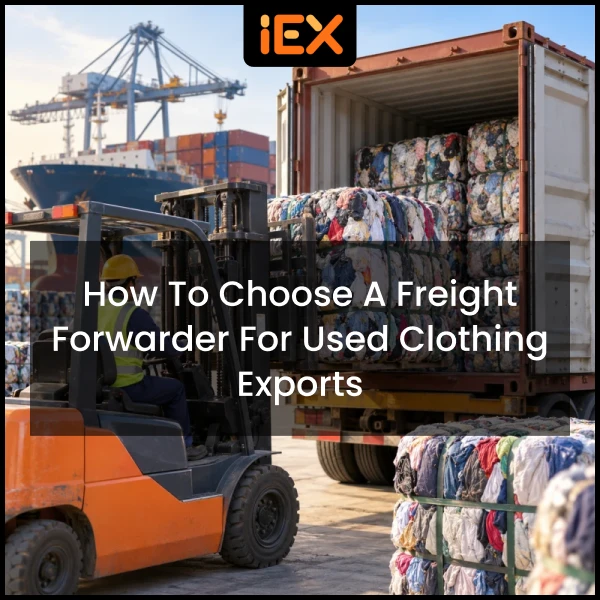
A freight forwarder organises the movement of your cargo and coordinates the transport records that travel with it. U.S. International Trade Administration guidance describes the usual scope as booking cargo space, arranging inland transport, tracking freight, consolidating cargo where needed, and coordinating shipping or export documents. Notice what is absent from that list: a forwarder does not decide whether your bales are admissible in the destination country, does not inspect grade, and does not become the importer of record.
That boundary matters more for used clothing than for general cargo. Baled clothing is dense, absorbs moisture, and sits inside destination rules that treat used textiles differently from new apparel. A forwarder can move the container perfectly and still deliver a commercial problem if nobody checked admissibility, classification or the buyer’s import registration before the vessel sailed.
Booking, Equipment and Routing
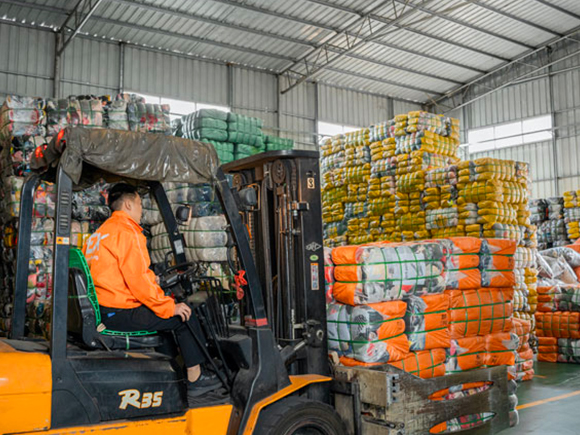
The forwarder turns your instruction into a booking: which carrier, which service, which port pair, which equipment, and which routing. On this lane the equipment decision is rarely trivial. A 20ft and a 40ft container do not hold the same bale count, and the choice changes the payload available for dense bales, the number of loading hours, and the terminal handling cost.
The forwarder also decides where the container is released, when the empty is picked up, and how the loaded box reaches the terminal. If any of those steps depends on your warehouse being ready, the forwarder needs the loading plan in advance rather than a phone call on the day of stuffing.
The Records the Forwarder Issues or Coordinates
Most of the paperwork a used-clothing importer argues about later is generated in this phase. A typical file includes a booking confirmation, container release and pick-up details, shipping instructions, a draft bill of lading for approval, the verified gross mass filing, an arrival notice, and a delivery order issued by the destination agent.
The forwarder coordinates these records, but it does not invent the facts inside them. Cargo description, bale count, weights, value and party names come from the shipper. When those inputs are inconsistent between the invoice, the packing list and the bill of lading, the correction normally arrives as a cost and a delay rather than a warning.
Match the Forwarder to the Cargo, Not to the Lowest Rate
Start from the cargo and the destination, then compare providers. A company that handles your route well for palletised general goods may still be the wrong choice for a container of compressed bales moving into a market with a pre-shipment inspection regime.
Trade-Lane Experience With Used Textiles
Used clothing carries two questions that general apparel does not. The first is classification: worn clothing is normally declared under HS 6309, and the boundary between used goods and waste has become a live compliance issue as regulators tighten textile-waste controls. The second is admissibility: several destinations require pre-shipment conformity or inspection before the container is released.
Kenya, for example, applies pre-export verification of conformity and an import declaration process to used textiles and shoes, and Nigeria routes conformity certification through its standards authority. A forwarder working on this lane should recognise those names immediately and explain who arranges the inspection, when it must happen, and what the container cannot do until the certificate is issued. If the answers are vague, keep looking.
Destination breadth is a reasonable proxy for that experience. Indetexx ships used clothing, used shoes and used bags to more than 110 countries, so the order file starts from the destination requirement rather than from one standard document pack. Ask a prospective forwarder for the same evidence: which destinations on your route have they actually handled, and what did those shipments require that a routine booking does not?
Equipment, Weight and Destination Constraints
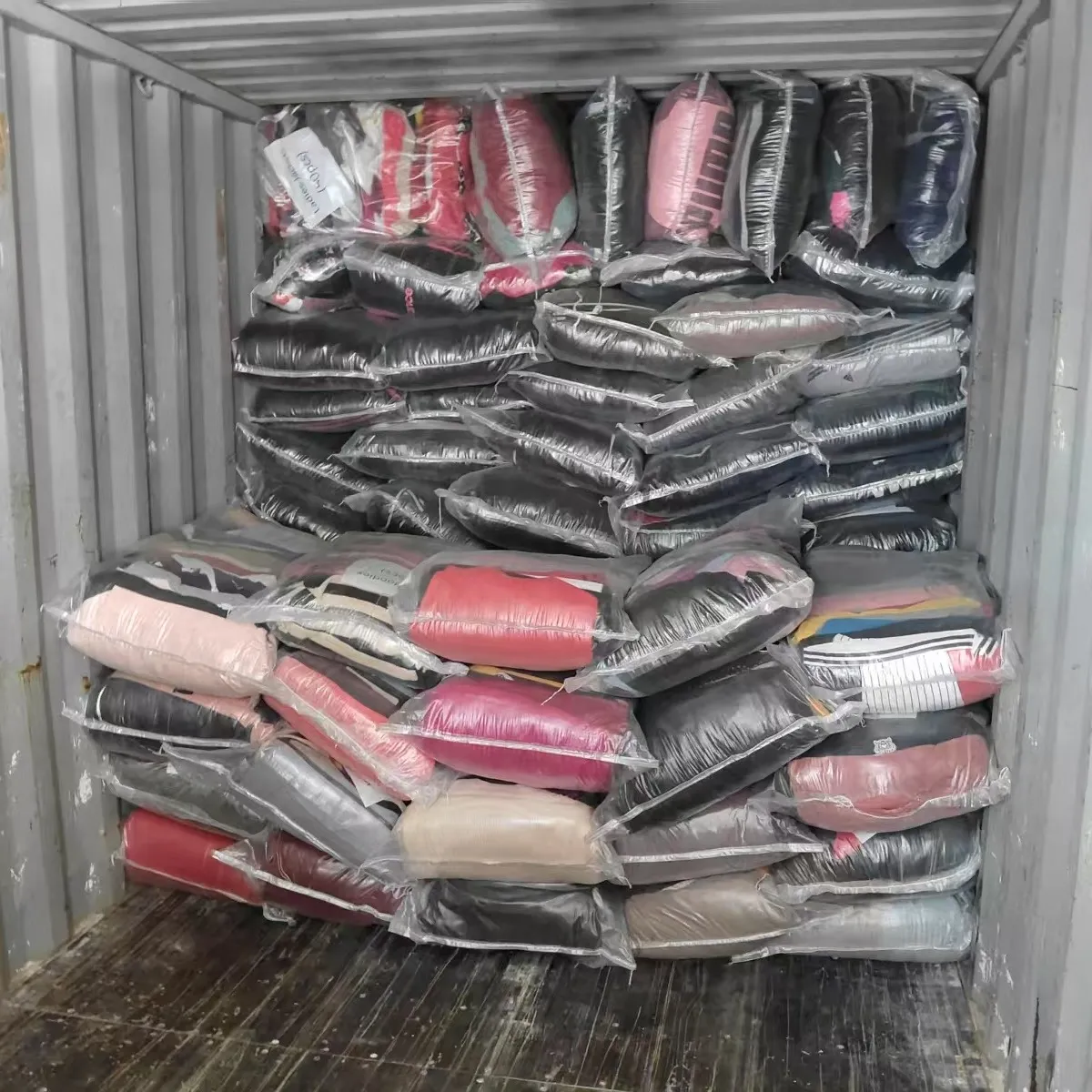
Dense bales create a payload question before they create a freight-rate question. The number of bales that fit in a 20ft or 40ft container depends on bale weight, bale dimensions, compression, and the legal weight limit on the route, not on floor space alone. A loading plan that ignores weight produces an overweight box or a container that cannot be verified in time.
This is where the supplier’s written specification does useful work before anyone books. Confirm the current bale weight basis, the intended bale count per container, the packing format and the category mix for this order, then hand that document to the forwarder. Indetexx issues category, grade, bale weight and packing details for the order being shipped and plans 20ft and 40ft loads, which lets the forwarder calculate payload and the verified gross mass on the basis that will actually be loaded. Treat that confirmation as order-specific: it describes the shipment being booked, not a standing payload, bale count or availability promise for the next one.
Two practical checks follow from this. First, compare the bale count in the supplier’s loading plan with the count in the forwarder’s booking. Second, confirm whether the destination port or inland route has a weight restriction that changes the loading plan.
The Questions That Reveal Whether a Forwarder Fits Your Export
Rate sheets rarely separate a competent provider from an expensive mistake. These questions do, because each one forces a specific answer rather than a general promise.
Use the answers as a written comparison, not as a conversation. The provider that returns specific names, dates and exclusions is usually also the provider that warns you before a cut-off rather than after it.
The Export Document and Cut-Off Timeline
A container sails on document deadlines, not on the loading date. Once the booking is confirmed, the working calendar is driven by carrier cut-offs that sit days before the vessel arrives at the terminal. Missing one rarely cancels the shipment; it moves it to a later vessel and adds cost.

Shipping Instructions and Bill of Lading Drafts
Shipping instructions carry the facts that will appear on the bill of lading: shipper, consignee, notify party, port pair, cargo description, package count, weights and freight terms. The forwarder submits them to the carrier and returns a draft bill of lading for approval. Approve that draft against the invoice and packing list, not from memory.
Consignee details deserve particular attention on used-clothing shipments. If the buyer has not completed its import registration, or the consignee named in the draft cannot clear the goods, the correction happens after the vessel has sailed. Change requests at that stage are billed and cannot always be applied before departure.
Verified Gross Mass and Late Filing
Under the SOLAS verified gross mass requirement, a packed container cannot be loaded without a verified gross mass. The shipper is responsible for providing it, and the two accepted methods are weighing the packed container or calculating the mass from verified component weights.
Whichever method is used, the number has to be filed before the carrier’s deadline. When the supplier’s bale weights, pallet weights and dunnage are confirmed in writing at loading, the calculation is straightforward and consistent with the packing list. Indetexx records the loaded bale count, weight basis and packing format for the order, which gives the forwarder a documented input for the weight calculation instead of an estimate. The declaration remains the shipper’s responsibility and must reflect the actual loaded container, so reconcile the figures against the real load rather than a planning figure.
Write the Service Scope Before You Book
A quotation is a price. A service scope is an instruction about who does what. Ask for the scope in writing and keep it with the booking, because most disputes on this lane are about an unassigned task rather than an unknown cost.
The scope should name the party responsible for: booking and space confirmation, empty container release and pick-up, inland transport to the loading site, gate-in at the terminal, shipping instruction submission, verified gross mass filing, bill of lading draft approval, certificate or inspection coordination where the destination requires it, insurance arrangement if required, and notification of any change in schedule.
It should also state the communication rule. On a container with a fixed cut-off, the useful agreement is that the forwarder reports a missed deadline, a rolled booking, or a terminal restriction as soon as it is known, not when the invoice is issued.
On the supplier side, Indetexx prepares the commercial invoice, packing list and bale-level loading record, and states the category, grade definition, bale weight and packing format the goods were packed to. Those are the inputs a forwarder uses to build the shipping instructions and the transport documents. They do not replace the forwarder’s own filings, the importer’s destination requirements, or the authority that decides admissibility.
Costs That Are Not the Freight Rate
Two quotations rarely fail because the ocean freight differs. They fail because the comparison stopped at the freight line. Before comparing totals, itemise the charges that sit outside the rate:

- Documentation and amendment fees, including bill of lading corrections after the draft is approved.
- Re-weighing, re-packing or terminal handling charges if the container is presented outside the agreed format.
- Free time and the daily demurrage or detention charges after it, at both origin and destination.
- Destination charges: terminal handling, delivery order, port storage, and the agent’s own documentation fees.
- Inland delivery and any waiting time charged by the haulier if the receiving site is not ready.
- Inspection or conformity costs when the destination requires them, plus the cost of a missed booking if the certificate is not ready.
Use the same list for every provider. The provider that itemises exclusions is easier to compare, but it is also the provider that has already thought about the risks that produce surprise invoices.
What a Forwarder Cannot Decide for You
Some decisions sit outside the transport contract, and treating the forwarder as the authority on them is how container problems become commercial disputes. A forwarder can move the goods; it cannot decide whether the shipment is admissible, how the goods should be classified, whether the grade matches the order, or whether the buyer’s insurance cover is adequate.
Those decisions belong with the shipper, the buyer’s customs broker, a qualified classification adviser, and the insurer. If you want the role difference drawn explicitly, the guide to customs broker vs freight forwarder for used clothing imports separates the two functions, and the HS code 6309 and 6310 comparison explains why the declared description affects the whole document set. Freight terms such as FOB and CIF decide who arranges the main carriage, and that choice changes what you are asking the forwarder to quote.
Frequently Asked Questions
What is the difference between a freight forwarder and a shipping agent?
A freight forwarder organises the cargo movement and coordinates the transport documents, while a shipping agent usually represents the carrier or the vessel at a port. On a used-clothing shipment the practical difference is who you instruct and who is paid for which service, so write the responsibilities into the service scope before booking.
Can a freight forwarder also handle customs clearance?
Some forwarders employ or partner with licensed customs brokers, and some do not. Ask directly whether clearance at the destination is included, who is legally permitted to act there, and how that party is charged. Movement of the container and clearance of the entry are separate responsibilities even when one company sells both.
Who is responsible for the verified gross mass of my container?
The shipper is responsible for providing the verified gross mass of the packed container. The forwarder commonly submits it to the carrier, but submission does not transfer the duty to declare correctly. Confirm who weighs or calculates, who files, and which deadline applies to the specific booking.
How do I compare two forwarder quotations for a used-clothing container?
Normalise both quotations to the same container size, named ports, free time, and inclusion list before comparing totals. Add the document, amendment, inspection and destination charges that each quote treats differently, then compare the all-in figure for the same load rather than the headline rate.
What happens if my shipping instructions arrive late?
The container is usually rolled to a later vessel, and the carrier may apply amendment or rebooking charges. Late instructions also risk a bill of lading that does not match the invoice and packing list, which is more expensive to correct after departure than before.
Should the freight forwarder arrange cargo insurance?
Only if the scope says so and the cover is confirmed in writing. Insurance is a separate contract from transport, and the cover, exclusions and claim documents should be checked by the buyer. The comparison guide on marine cargo insurance for used-clothing containers explains what to verify.
Brief the Next Container on One Written Basis
Treat forwarder selection as a documentation exercise. Confirm the cargo data with the supplier, choose the provider whose answers were specific, agree the service scope and cut-off responsibilities in writing, and keep the invoice, packing list and bill of lading draft on one set of facts. That is what makes a rate comparable and a sailing date realistic.
Domestic and ocean charges still start with the loaded container, so fix the load first. Review the used clothing container cost guide for the cost structure, then ask Indetexx for the current order specification – category, grade definition, bale weight, packing and container size – and brief one forwarder from that written basis.
Ready to Brief a Forwarder on an Indetexx Order?
Send the destination, product category, order-specific grade definition, bale weight, packing request and container size. You will receive the current written Indetexx order details for the shipment you are actually planning, so your forwarder can quote and file against confirmed figures.
- Confirm the category and grade definition for the quoted goods
- Confirm bale weight, packing and container size for this order
- Confirm current availability and commercial terms for the shipment
Or compare our bale clothing options before you book