If you are comparing a Trans-Americas Trading container offer, start with the programme and bale format. Its general export range and separate Premium/Crème range lead to different purchasing questions. A useful Trans-Americas Trading review should help you connect those descriptions to the stock your wholesale customers accept and the way you handle it after arrival.
This guide examines the public buyer information of the New Jersey clothing processor at tranclo.com, checked in November 2026. It is independent desk research, without a personally audited purchase or a supplier rating. The aim is to help you build a specific inquiry and compare current offers, rather than treat a public description as proof of your future shipment.
Quick Takeaways
- Select the export or Premium programme before comparing category and condition; the label alone does not make two quotations equivalent.
- A published bale weight is also a receiving and resale unit. Choose it around how you distribute stock downstream.
- The published 540-bale and 250-bale container examples refer to 100 lb bales and remain subject to road limits.
- The supplier’s short marine-cover description does not resolve whether clothing matches an agreed condition specification.
- Keep product, packing, weight basis and route consistent when requesting competing quotations.
Trans-Americas Trading Review: Choose the Programme First
Use the programme that matches your intended stock before asking whether the price is competitive. The Trans-Americas export page describes its general secondhand-clothing export offer. A separate Premium/Crème page describes a more selective range and an inspection-by-appointment route. Current inspection access and available goods still need arranging with the supplier.
The practical distinction is the clothing you are prepared to receive. A wholesaler supplying everyday mixed clothing needs a different category and condition agreement from one buying a selected range for higher-priced resale. A broad quality label cannot tell either business the accepted wear, excluded defects, season or assortment of the quoted goods.
For example, if your customers purchase sealed summer-clothing bales, a quotation needs to identify the included categories and acceptable condition within that programme. A Premium inquiry for selected items needs its own description. Moving from one programme to the other without changing those fields can leave a price comparison attached to different products.
Indetexx uses an order-specific category and Grade A/B/C framework. If you compare an Indetexx offer with a Trans-Americas Premium offer, put the accepted categories, wear and exclusions into both inquiries. This makes the differences visible; it does not establish that Premium automatically equals Grade A or that the two lots will deliver the same resale result.
Descriptions mentioning garments with original tickets also need care. Tickets on some items do not turn a secondhand shipment into an entirely new, tagged or authenticated load. Your decision should follow the goods and condition actually described in the current quotation.
Match the Bale to the Way You Receive and Resell
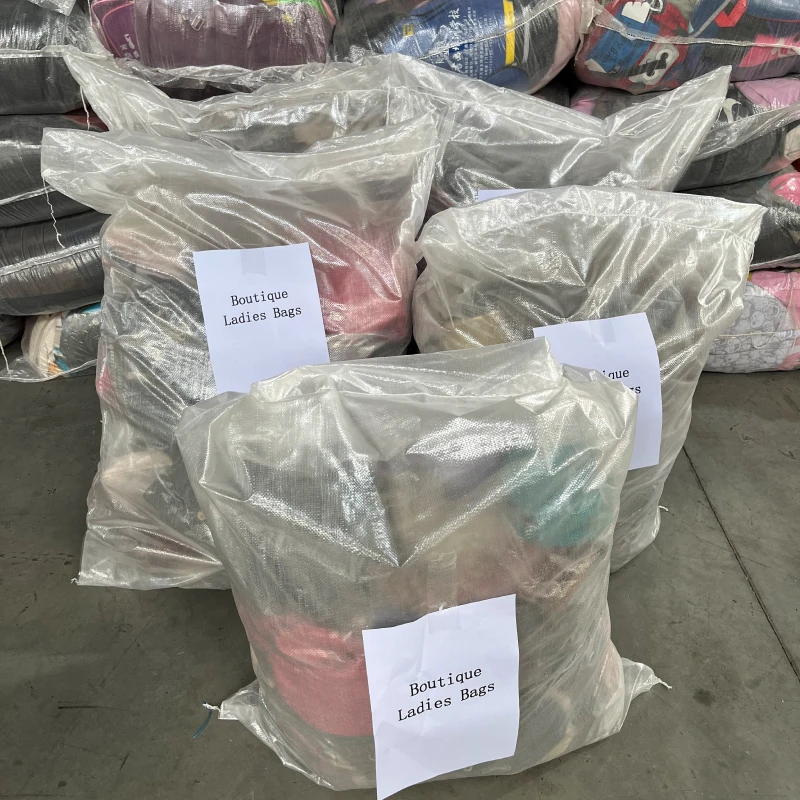
Choose the pack around your receiving operation and downstream sale unit. Trans-Americas publishes examples of 100 lb/45 kg, 180 lb/82 kg and 1,000 lb/450 kg bales on its export page. The kilogram figures are the supplier’s rounded equivalents. They are useful starting points for an inquiry, rather than confirmation that every product is currently available in every format.
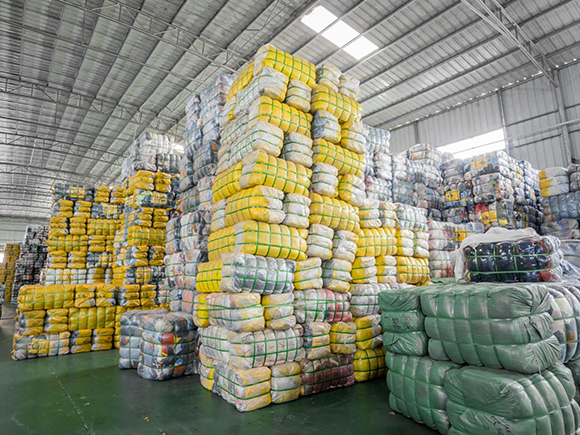
Consider a distributor whose customers buy sealed, category-labelled bales. A format those customers can purchase and move as one unit may avoid an extra opening and repacking step. A distributor buying larger packs to subdivide stock has a different task: it must be able to unload, open, separate and repack that unit. Neither approach is inherently cheaper once your own receiving work is included.
This is why a larger bale should not be selected solely because its quoted price per unit looks attractive. First establish whether the price is per bale or per weight, and whether the weight describes clothing alone or includes packaging. Then compare the format with your actual handling arrangements and customer order size. The existing clothing bale-weight comparison develops those broader trade-offs.
Indetexx offers mixed and category-specific bales and 20-foot or 40-foot container options. In an inquiry, explain whether you distribute sealed bales or break them down, then state the requested category, condition, pack and destination. Those options help frame a feasible discussion; the current quotation must establish the available format and load rather than borrowing a competitor’s published packing example.
Read the 540-Bale Container Example With Its Conditions
Keep the published count attached to the published pack. Trans-Americas lists 540 bales of 100 lb for a 40-foot high-cube container and 250 bales of 100 lb for a 20-foot container. Its first-time export buyer FAQ adds the qualification that over-the-road limits cannot be exceeded.
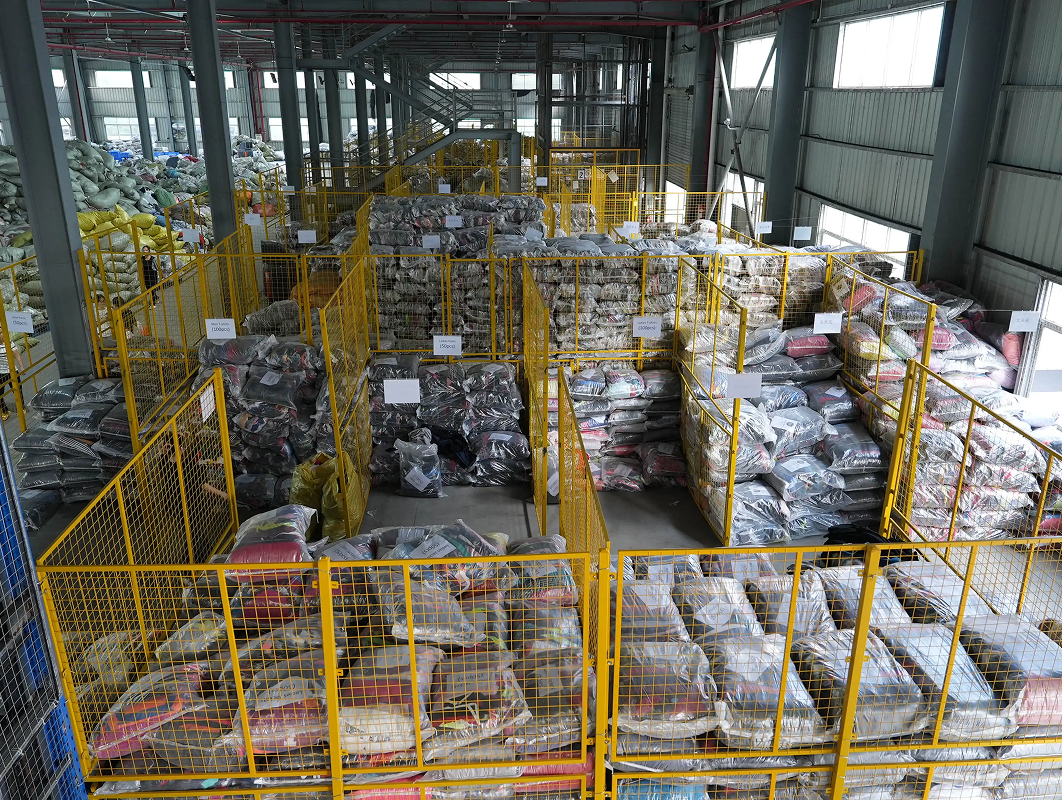
The arithmetic explains the statement: 540 × 100 lb gives 54,000 lb, while 250 × 100 lb gives 25,000 lb. These are the supplier’s published loading examples. They do not establish the permitted load for your chosen road leg, carrier, container or weight basis, and they are not a promise of landed clothing weight.
A change to 180 lb bales therefore requires a revised plan. Keeping the count at 540 would change the weight assumption substantially; it would not be the same published example. Pack dimensions and loading arrangement also need resolving, so dividing one headline weight by a different bale weight is only a preliminary calculation.
Ask for the count, bale weight, total cargo weight and container type together on the current packing proposal. Have the relevant transport parties confirm the route constraints. For a broader explanation of weight and space, use the used-clothing container loading guide. Here, the important decision is whether the actual Trans-Americas offer uses the same assumptions as the public example.
Understand What the Published Marine Cover Does Not Settle
Read the marine-cover statement separately from the clothing specification. The Trans-Americas buyer FAQ describes F.P.A. marine insurance at 110% of container value, port-to-port, for complete loss and non-delivery. That short statement does not establish the full terms of a current policy or promise payment for every problem with delivered stock.
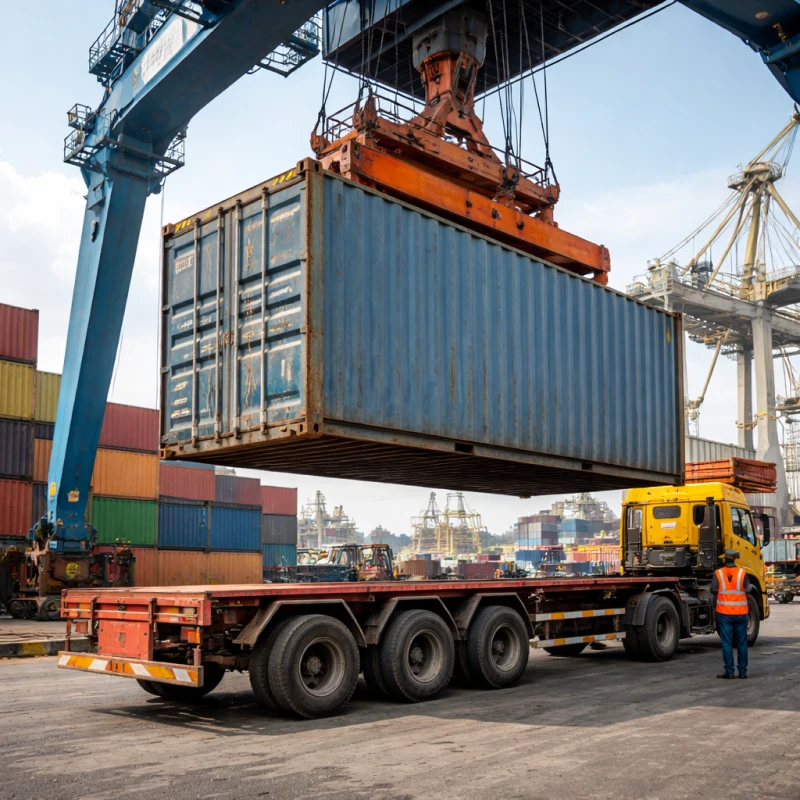
For a clothing importer, the distinction matters at receiving. A container may arrive while its contents still raise a question about the categories or condition agreed in the order. The public loss-and-non-delivery wording does not answer that dispute. The agreed goods description and the shipment’s insurance documents serve different purposes.
Before relying on the cover, obtain the current policy or certificate and establish the goods, shipment, insured value, route and covered risks it actually describes. Do not infer partial-damage, inland, shortage or clothing-quality cover from the percentage alone. The marine cargo insurance guide for used clothing explains the wider document checks without treating this supplier’s brief FAQ as a complete policy.
Turn the Review Into a Comparable Container Inquiry
The most useful outcome of this review is a current offer your business can evaluate. Send a concise brief that connects the chosen programme with your accepted goods, handling unit and route. Leave unresolved fields visible so a general catalogue answer cannot be mistaken for an agreed order.
Include these points in the inquiry:
- The Trans-Americas programme and categories you want, including season, accepted condition and exclusions relevant to your customers.
- The requested bale format, the quoted weight basis and whether you resell the bales sealed or subdivide them.
- The proposed container type, bale count, cargo weight, destination and route assumptions.
- The price and freight scope, current availability, preparation schedule, inspection arrangements and commercial terms still to be confirmed.
- The current insurance wording and the product description against which the received goods will be assessed.
Use the same underlying requirement when obtaining an Indetexx quotation. Keep the Trans-Americas programme name in your comparison notes, but translate your requirement into Indetexx’s category and order-specific grade description. If one offer includes a broader mix or a different pack, identify that difference before judging the price. A lower price for a different unit or assortment does not answer the same purchasing question.
Once those details agree, move to the order confirmation and payment documents. The supplier payment guide covers that separate stage. Public research should help you reach a clear quotation; it should not substitute for the current terms you approve before payment.
Frequently Asked Questions
Does Trans-Americas publish a fixed container price?
Its buyer FAQ says pricing depends on container composition, size and quality. Obtain a current quotation for your chosen programme and packing. A price quoted for another mix or container does not establish the cost of your order.
Can the export catalogue include shoes and handbags?
The public export catalogue includes shoes and handbags alongside clothing. That establishes catalogue scope, rather than current stock or permission to add any quantity to a clothing load. Specify the product and packing you need and ask what is available for the current order.
Is container preparation time the same as arrival time?
No. Preparation concerns getting the order ready; arrival also depends on the booked transport and destination process. Keep those dates separate in the current quotation and shipment schedule. An undated preparation estimate on a supplier page is not a delivery commitment.
Put the Programme and Packing Into One Quote
Shortlist the programme that fits your wholesale channel, then connect it to the pack you can receive and resell. A useful offer states the product, condition, weight basis, container assumptions and unresolved terms together. That gives you a stronger basis for a purchasing decision than a quality label or loading count on its own.
Request a Comparable Indetexx Clothing Quote
Share your wholesale requirement so the current written offer can be assessed against the same product and packing needs.
- State the categories, season and accepted condition
- Explain your receiving unit and requested bale format
- Include the destination and proposed container size
Availability, packing and commercial terms must be confirmed for the current order.