Mixed stock lots are sold under at least four different names, and the name usually tells you who assembled the lot and why. A mixed merchandise listing from a US liquidation platform, a mixed stocklot from an Asian exporter and an assorted pallet on a marketplace can describe very different goods, packed to very different rules, with very different evidence behind them. Before you compare prices, you have to know which of those you are actually being offered.
This guide explains what a mixed lot is, how the naming works across trading channels, what belongs in a written mix specification, and what a mixed lot cannot promise. It is written for importers and distributors who buy at container, pallet or bale scale. It does not claim that any mix is safer than another, and it does not promise a brand ratio, a category ratio at piece level, or a resale outcome, because those depend on what you specify and on the market you sell into.
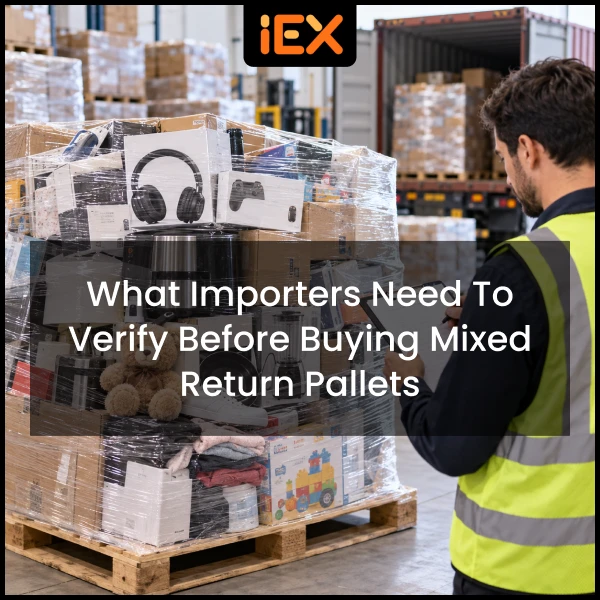
This guide covers the stock side of that supply. A mixed stock lot is bought on specification and packing; a mixed return pallet is bought on what came back from customers, and it carries the manifest and condition questions that come with returns. If you are pricing returned goods rather than unsold stock, start with the guide to buying Amazon return pallets and the site’s Amazon and Temu return pallet range, then come back here when you are ready to write the mix specification.
Quick Takeaways
- “Mixed stock lot”, “mixed merchandise”, “assorted lot” and “mixed pallet” describe the same buying idea across different channels, so the label alone tells you very little.
- A mixed lot is defined by its specification: category groups, ratio basis, packing, marking and exclusions.
- The commercial reason to buy mixed is container fill and category balance; the risk is paying for categories your channel cannot move.
- No mixed lot carries a guaranteed brand mix, a fixed ratio at piece level, a sellable yield or a resale price.
- Write the mix into the order specification before you compare quotations, not after the container arrives.
What a Mixed Stock Lot Actually Is
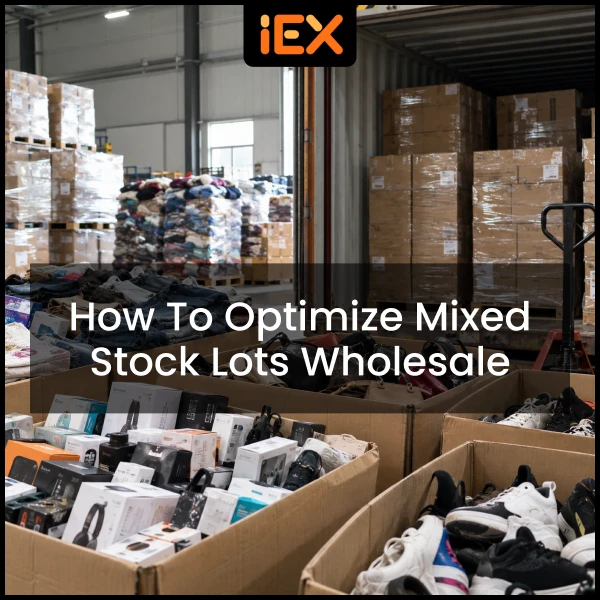
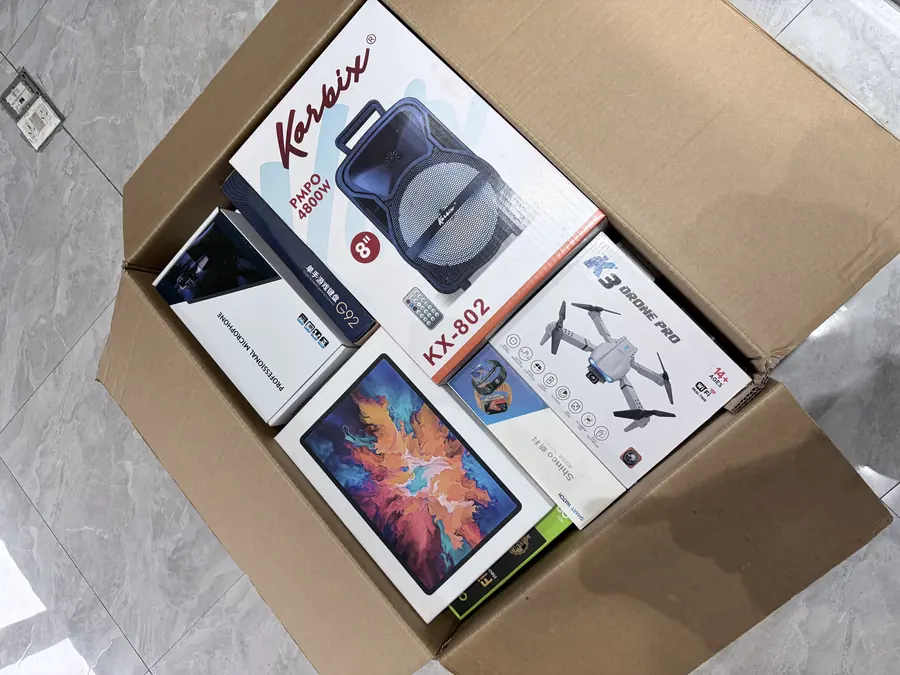
A mixed stock lot is a single order assembled from two or more product groups. It might combine general merchandise with consumer electronics, or it might mix several clothing categories, or it might combine footwear, bags and household goods. What makes it “mixed” is the assembly decision, not the word on the label.
That distinction matters because two lots can carry the same name and be built for opposite reasons. One is assembled to a buyer’s specification, carton by carton. The other is what remained after everything else was sold.
The Naming Problem: Merchandise, Stocklots, Assorted Lots
The trade uses several names, and each one tends to belong to a different part of the market.
Mixed merchandise and general merchandise are the standard terms on the US liquidation side. Search those phrases and the results are liquidators selling pallets and truckloads of returned or surplus goods, usually for domestic pickup. Mixed stock lots and stocklots are the terms used more often by exporters and global B2B marketplaces, where the unit of sale is closer to a container. Assorted lots and assorted pallets are marketplace listing language, and they carry the least definition of all. If the goods are customer returns rather than unsold stock, the phrase buyers use is mixed return pallets, and that is a different purchase with different price logic.
One phrase to avoid is consolidated container. In the packaging and logistics industries that term means an actual container product or a freight consolidation service, so a buyer searching it will not find the goods they want.
The practical rule is simple: match the term to the channel you are buying from, and then ask for the specification. The label tells you where the listing came from. The specification tells you what you will receive.
Mixed by Design, or Mixed by Leftover
Ask any supplier which of these two they are offering, because the answer changes what you should pay and what you should inspect.
A lot mixed by design is assembled against a written category list with a stated share for each group. The supplier can usually explain which category fills the volume, which category carries the value, and how the packing is laid out.
A lot mixed by leftover is whatever remained after the saleable categories went out. It can still be commercially useful, but it is not the same product, and it should not be priced or specified as though the mix were planned in advance.
What Goes Into a Mixed Lot
Mixed lots vary by supplier and by market, but most of them draw from a small number of category groups. The table below is a starting map for a specification conversation, not a description of any particular shipment.
Use the last column as the boundary line. Everything in it belongs to the specification you write, not to the label you were quoted.
How Ratios Are Specified
The word “ratio” hides four different measures: share by weight, share by piece, share by carton or box, and share by value. They produce very different loads, and a supplier may quote one while you are thinking about another.
Ask which basis is being used, and put it in writing. A mix described as “30% electronics” is meaningless until you know whether that is 30% of cartons or 30% of declared value. When a ratio is quoted by weight, remember that heavy low-value categories will dominate the number without contributing the value the buyer expected.
Packing and Marking
Mixed lots are normally packed as cartons, baled goods, or palletised units, and often as a combination. Packing decides how the container fills, and marking decides how quickly your team can sort the load on arrival.
Ask for the carton marking convention, whether the packing list is carton-level or category-level, and how the load is layered inside the container. A mixed container that arrives with unmarked cartons costs receiving time, and receiving time is money that was never in the quotation.
Why Importers Buy Mixed Instead of Single-Category
There are four legitimate reasons, and each one has a cost attached.
The first is container fill. Mixing dense and light goods can reduce the amount of unused space or unused payload in a container, which improves the cost of moving each unit. The calculation is the same one used in any container loading plan, applied to categories with different densities. Indetexx plans 20ft and 40ft loads from the confirmed specification, so the fill question is answered before the container is booked rather than after it is loaded.

The second is category balance. A market that cannot absorb a full container of one category can often absorb a mix, and a distributor may prefer to hold several categories rather than one.
The third is testing. A mixed order lets an importer test several categories in one shipment before committing to a specialist container. The trade-off is that each category is then sampled in smaller volume, so the evidence for each one is weaker.
The fourth is administrative: one supplier, one specification, one invoice and one shipment instead of several of each. That saving is real, but it disappears if the mix arrives without the documentation to clear it.

The same logic applies inside a single category. The site’s guide to what is inside a mixed shoes container shows how category, pairing and grade rules change what a mixed load can be sold as, and the mixed rags range follows a similar logic for an industrial rather than a retail channel.
What a Mixed Lot Cannot Promise
This is the part of the conversation that protects both sides.
A mixed lot cannot promise a brand mix. Brands inside a lot depend on what entered the sorting line, and a supplier that guarantees a brand ratio before seeing the goods is describing a marketing position rather than a specification.
A mixed lot cannot promise a piece-level ratio. Ratios are usually agreed at carton, bale or weight level, because that is the level at which the load is actually built and checked.
A mixed lot cannot promise a sellable yield. Whether a unit can be sold depends on your channel, your price point, your market’s season and your labor cost, not only on its condition.
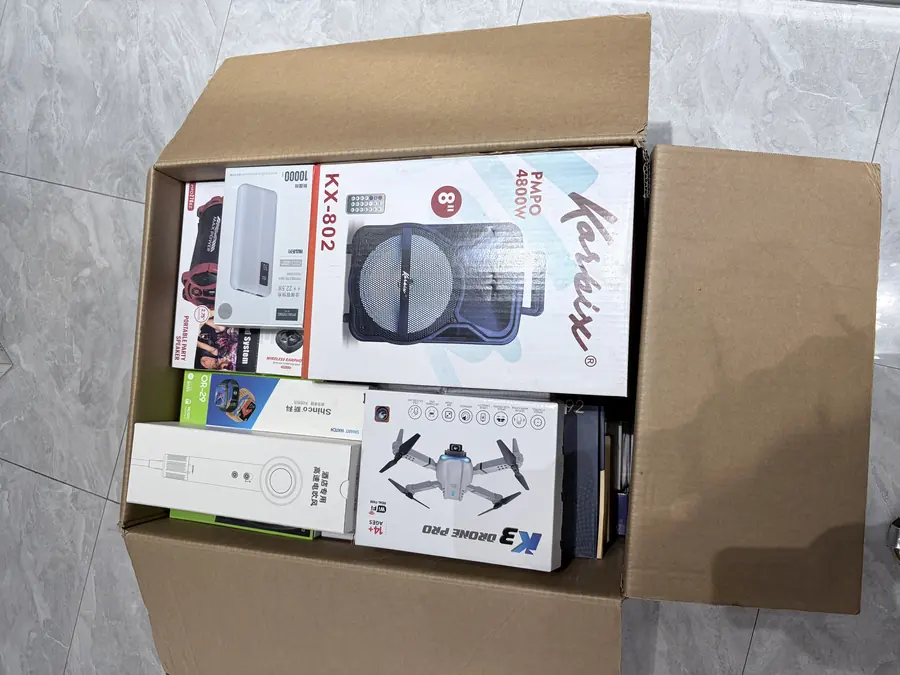
A mixed lot cannot be fully verified from a photograph. A photo can show a category, a carton, a label and a general condition. It cannot show the composition of every carton in the container.
How to Specify a Mixed Order Before Quotation
Write these fields before you ask for a price. A supplier can only build a mix that has been described.
- The category groups you want, in priority order, and the minimum or maximum share of each.
- The ratio basis: by weight, by piece, by carton or by value.
- The packing format and the carton or bale marking convention.
- The exclusion list, stated as observable conditions rather than adjectives.
- The sampling method you intend to use on arrival, and what you will do if a category is outside the written rule.
This is the same discipline the site applies to single-category orders in the bale specification sheet. Indetexx states the category, grade definition, bale weight and packing format for the order being shipped, which is the input a mix specification has to agree with. That statement describes the order being built; it does not certify the contents of every carton, and it is not a standing guarantee for a later booking.
How to Verify a Mixed Shipment
Verification for a mixed load is harder than for a single-category one, because you are checking several specifications at once.
Sampling Across Categories
Sample each category separately and record the bale, carton or pallet identifier for every sample. Do not let one strong category set the impression for the whole container, and do not let one weak category be dismissed as an exception.
When the order is being built by Indetexx, ask for the sample positions used at loading rather than only the photographs, because a face sample and a carton-centre sample of the same mixed load can tell two different stories.
The remote bale inspection guide explains how to structure a check when you cannot be at the warehouse, and the same method applies to cartons: select without looking at condition, open deeply enough to see more than the top layer, and record the basis of every count.
Documentation and Destination Rules
A mixed load produces a mixed document problem. The commercial invoice and packing list have to describe several category groups in a way that matches what is physically inside, and the declared description has to survive the destination’s own rules.
Electronics add a second layer, because destination markets apply their own certification, voltage, plug and import requirements to electrical goods. Confirm those with your broker or the destination authority rather than relying on a supplier statement. The import documents checklist covers the document set, and the HS code comparison shows why the declared description matters before the goods move.
What Indetexx Controls in a Mixed Order
Indetexx assembles orders from its own sorted and stock lines, and the mixable range depends on what is available at the time of quotation rather than on a catalogue that never changes. On the used side that includes mixed clothing categories, footwear, bags, mixed rags and used toys; the electronics stocklot range and the Amazon return electronics guide cover the newer lines, and the stock kitchenware range is a further stock category.
What that changes for a buyer is the specification step: the category groups, grade definition, bale weight and packing format are stated for the order being shipped, and 20ft and 40ft loads are planned from that statement. The boundary is worth repeating. Indetexx does not promise a brand ratio, a piece-level category ratio, a sellable yield or a resale price, and a mixed order should never be bought on the assumption that those exist.
Frequently Asked Questions
What does “mixed stock lot” mean?
It means a single order assembled from two or more product groups, usually sold by container, pallet or bale. The term is used more by exporters and global B2B marketplaces, while “mixed merchandise” is the equivalent term on the US liquidation side.
Is a mixed lot cheaper per unit than a single-category lot?
Not necessarily. A mixed lot can improve container fill or let you test several categories at once, but the cost per sellable unit depends on the categories you receive and what your market can absorb. Calculate landed cost per sellable unit rather than comparing headline prices.
Can I choose the ratio inside a mixed lot?
You can specify a ratio, and you should, but you also have to state the basis: by weight, by piece, by carton or by value. Agree the basis in writing before quotation, because the same percentage means very different loads depending on which measure it uses.
Can a supplier guarantee the brand mix in a mixed lot?
No supplier can guarantee a brand mix at piece level, because brands depend on what entered the sorting or returns stream. A supplier can agree to a category specification, an exclusion list and a sampling method, and those are the parts worth writing down.
What is the difference between a mixed lot and a liquidation pallet?
A liquidation pallet is typically a single pallet of returned or surplus goods sold through a domestic liquidation channel. A mixed stock lot is generally larger, assembled across several category groups, and sold for export. The two can overlap, which is exactly why the specification matters more than the label.
Next Step: Define the Mix Before You Compare Prices
Start with the categories, the ratio basis and the destination. Then write the exclusion list and the marking convention. Only after those are on paper does a mixed quotation become comparable with another one, because the two suppliers are then quoting the same product rather than the same adjective.
That sequence also protects you at receiving, because a count can only be checked against a written rule. Ask Indetexx for the current written order details for the mix you are planning, and compare the specification before you compare the price.
Ready to Specify a Mixed Stock Lot?
Send the category groups, the share you want for each, the ratio basis, the packing and marking requirements and the destination. You will receive the current written Indetexx order details for the mix you are actually planning, so two quotations can be compared on the same basis.
- State the category groups and the share of each for this order
- State the ratio basis, packing format and marking convention
- Confirm current availability and commercial terms for the shipment
Or browse our wholesale mixed ranges before you specify the mix