If you are searching for a single pair of Nike running shoes for personal use in South Africa, this is not the article you need. Head to Totalsports or Nike SA for retail. This guide is written for resellers and importers who want to source bulk quantities of used Nike running shoes — by the bale or by the container — for the South African market. New Nike runners retail at R1,500 to R3,500 in SA stores.
Used Grade A pairs sell at R800 to R1,500 on the second-hand market, creating a price gap that resellers with reliable wholesale supply can exploit profitably. SA importers are already buying used footwear containers at volume — the question is not whether the market exists, but how to source well.
Quick Takeaways
- South Africa’s running culture — driven by the Comrades Marathon (25,000+ annual runners), Parkrun SA (400+ weekly events), and the Two Oceans Marathon — creates consistent demand for Nike running shoes among price-sensitive buyers who cannot afford new retail.
- Grade A used Nike running shoes retail at R800 to R1,500 in SA, offering resellers an estimated 2–3x margin over wholesale landed cost when sold through direct-to-consumer channels.
- Used Nike shoe bales typically contain 50–65% running and training models (Pegasus, Revolution, Winflo) with the remainder split between lifestyle/casual Nike and other athletic brands.
- SA import duties on used footwear fall under HS tariff heading 63.09 — the rate varies, and buyers should confirm current figures with a licensed SA customs broker before placing orders.
- Reliable wholesalers offer Grade A sorting (minimum wear, no damage, intact components), trial bales for quality verification (1–5 bales, approximately 45–225 kg), and documented grading standards.
- Standard MOQ is a 20 ft container (roughly 800–1,200 pairs depending on size mix), but trial bales are available from some suppliers for first-time buyers who want to verify quality before committing to container-scale orders.
- The SA market favours lightweight modern running shoes — heavy boots and formal styles sell significantly slower and at lower margins, so sourcing running-specific bales matters for turnover.
Why South Africa for Used Nike Running Shoes?
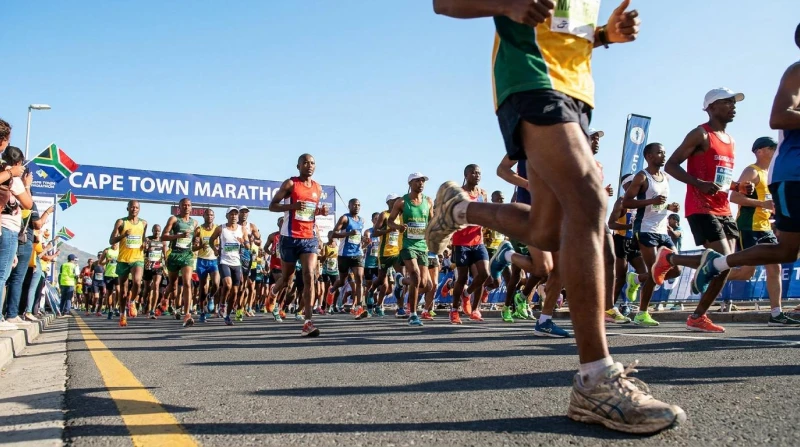
South Africa runs one of the largest second-hand footwear markets in Sub-Saharan Africa, and the demand for used Nike running shoes specifically rests on a particular economic mechanism. SA has the highest running participation rate on the continent — the Comrades Marathon draws over 25,000 runners annually, Parkrun SA operates more than 400 weekly events with hundreds of thousands of registered participants, and events like the Two Oceans Marathon sustain year-round running culture. This is not a niche; running is a mainstream activity across income brackets.
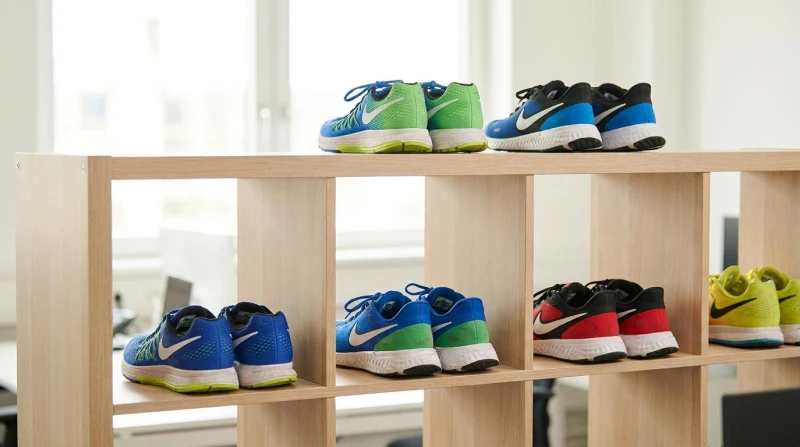
The price gap between new and used is what makes the wholesale model work. A Nike Pegasus 40 retails at approximately R2,199 on Totalsports.co.za. A Grade A used Pegasus in good condition sells for R900 to R1,200 on Facebook Marketplace. The buyer gets the same model at roughly half the price.
For the majority of SA consumers who find R1,500–R3,500 for new running shoes prohibitive, the used market is not a compromise — it is the only realistic option. This structural affordability gap means demand does not rely on trends or marketing; it is built into the economics of the market.
The resale infrastructure in SA is already active and proven. A search for “Nike running shoes” on Facebook Marketplace in Johannesburg returns hundreds of active listings daily. Gumtree, Bob Shop, and informal township market stalls all move used footwear at volume. Running shoes specifically outsell basketball or high-top styles in SA by a significant margin because of the year-round mild climate, the prevalence of running as a sport, and the practical preference for lightweight footwear over heavy alternatives. For a reseller importing container quantities, the combination of existing channel infrastructure, proven buyer demand, and structural price sensitivity creates a market that rewards consistent supply more than clever marketing.
Indetexx lists South Africa as a confirmed export market, with established shipping routes and direct experience supporting SA importers through customs clearance at Durban and Cape Town ports. For buyers who want confirmation that their supplier understands the SA market specifically, this direct experience reduces a significant source of first-time importer risk.
What You Get in a Used Nike Running Shoes Bale
First-time buyers often imagine a used shoe bale as a random pile of unsellable footwear. In practice, a well-sorted shoes bale from a reputable supplier is a structured product with predictable composition, grade distribution, and model mix. Understanding what is inside before you buy is the difference between a profitable container and a costly surprise.
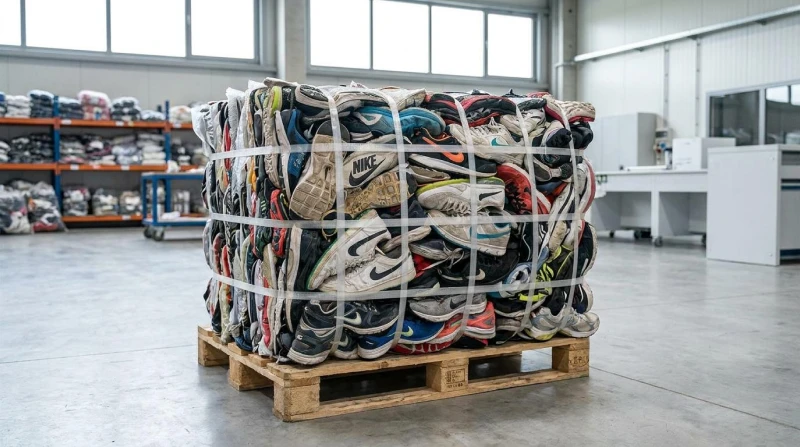
A typical used Nike running shoes bale from a supplier with fine sorting capability breaks down as follows. Running and training models (Nike Pegasus, Revolution, Downshifter, Winflo, Renew, Vomero) make up 50–65% of content. Lifestyle and casual Nike styles (Air Max, Blazer, Court) account for 20–30%. The remaining 10–20% consists of other athletic brands that ended up in the Nike stream during collection — Adidas, New Balance, Puma, and Asics are common cross-brands that still sell well in SA. In well-sorted bales from experienced suppliers, Grade A represents approximately 70–80% of content, with Grade B making up the balance.
A standard 45 kg bale holds roughly 60 to 80 pairs depending on shoe size and style. Heavier boots take fewer pairs by weight; lightweight running shoes pack more densely. Most running-specific bales use 45 kg as the standard weight, with 80 kg or 100 kg options available for buyers who prefer fewer, larger units. A common concern is whether compression damages running shoe cushioning. In practice, compression packing affects the shape of the box and packaging, not the structural integrity of the shoe — cushioning foam rebounds once unpacked, provided the bale has not been stored under extreme heat or moisture.
Typical Nike Running Shoes Found in Wholesale Bales
| Model | Type | SA Resale Appeal | Typical Grade Found | SA Resale Price Range |
|---|---|---|---|---|
| Nike Pegasus | Daily trainer | High — recognised brand, durable, consistent demand across all channels | A / B | R800–R1,200 |
| Nike Revolution | Entry-level runner | High — lower retail price ceiling means high volume at accessible used prices | A | R700–R1,000 |
| Nike Downshifter | Budget trainer | Medium-Low — less known in SA, lower perceived value slows turnover | A / B | R500–R800 |
| Nike Winflo | Neutral trainer | Medium — steady demand but slower than Pegasus in most SA channels | A | R700–R1,000 |
| Nike Renew | Cushion runner | Medium-High — deep cushioning appeals to heavier runners and casual daily wearers | A | R800–R1,100 |
| Nike Vomero | Premium trainer | Medium — higher resale value but less common in wholesale bales limits volume | A | R1,000–R1,500 |
A note on the Downshifter: it sells slower in SA primarily because the model has less brand recognition here than in markets like Europe or North America. SA buyers gravitate toward models they know — Pegasus and Revolution move fastest. If you receive Downshifters in a bale, price them slightly below market to clear inventory faster, or bundle them with higher-demand models as a lot sale. The variability between bales is normal — one bale may have 20% Pegasus, the next only 10%. This is not a sign of poor sorting; it reflects the natural distribution of what is collected. For a broader look at how the athletic footwear bale market operates, this article on compressed athletic footwear bales provides useful background.
Grading Standards — What “Grade A” Means for Used Nike Runners
The single biggest objection for buyers considering used footwear is quality uncertainty. “How do I know I am not getting garbage?” is the question behind every hesitation. Clear grading standards are how reputable suppliers answer it. For used Nike running shoes specifically, grading criteria revolve around the condition of components that directly affect wearability and resale value.
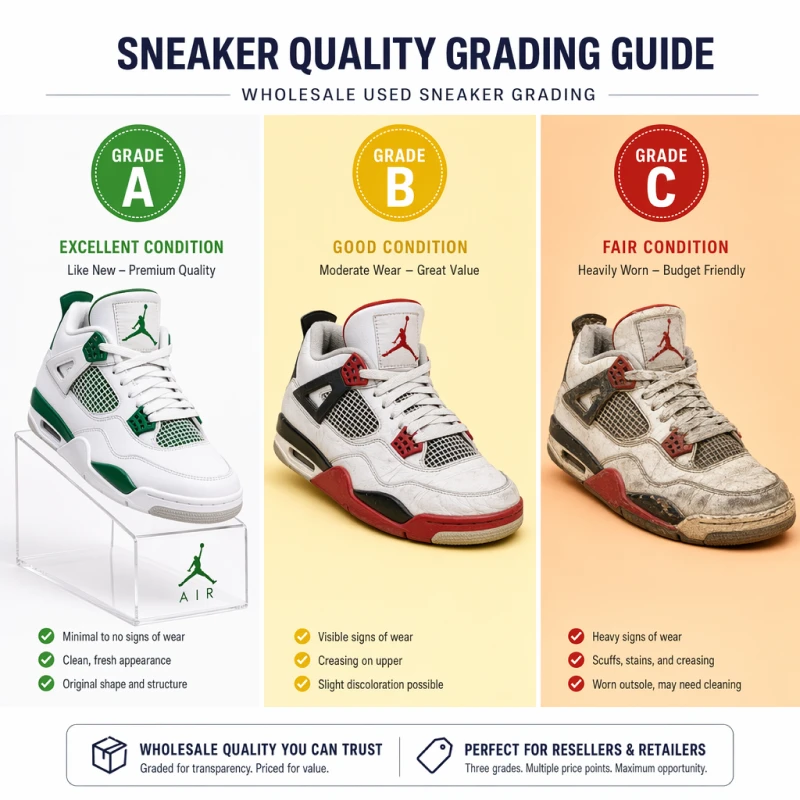
Grade A used Nike running shoes meet the following criteria: uppers are clean with no stains, tears, or abrasions; soles retain 70% or more of original tread depth (wear bars are still clearly visible); original laces and insoles are present; the heel counter and toe box have no structural damage. Grade A is the standard that commands R800 to R1,500 in SA resale channels. Grade B shows cosmetic scuffs on the upper, minor sole wear (50–70% tread remaining), and may have replacement laces or a missing insole. These are still fully wearable and sell at R400 to R800 in SA. Grade C has stains, small tears, less than 50% tread remaining, or damaged lining — these sell at R150 to R300, typically through budget channels or bulk disposal.
A critical misconception to correct: Grade A does not mean “like new.” It means minimal wear, fully functional, and cosmetically clean. A buyer expecting factory-new condition will be disappointed. The SA market is also more forgiving of cosmetic wear than European or North American markets. The reason is economic — price-sensitive buyers accept scuffs and fading in exchange for a significant discount off retail. A shoe that a European buyer would reject as Grade B sells well at the right price in SA township markets and digital channels, where the value proposition is “good enough at half the price” rather than “indistinguishable from new.”
No supplier can guarantee that every single pair in a container is Grade A. Grading at scale is statistical — a well-sorted bale targets 70–80% Grade A with the remainder as Grade B. Transparent suppliers provide expected percentage ranges rather than absolute promises. This is where documented grading adds genuine value.
Quality Criteria for Used Nike Running Shoes
| Condition | Upper | Sole (Tread) | Lining & Insole | Expected SA Resale Price | Typical Sell-Through Time |
|---|---|---|---|---|---|
| Grade A | Clean, no stains or tears | 70%+ tread remaining | Intact, original insole, no odour | R800–R1,500 | 2–4 weeks per pair in active channels |
| Grade B | Minor scuffs or fading | 50–70% tread | Slight wear, cleanable insole | R400–R800 | 1–3 weeks (faster due to lower price point) |
| Grade C | Stains or small tear present | Less than 50% tread | Damaged lining, missing insole | R150–R300 | Variable — bulk to budget buyers or dump channel |
Grade C buyers tend to be informal traders and bulk discount sellers who move stock by volume at low margins — they are a secondary market, not the primary opportunity for a container importer. The real margin is in Grade A with some Grade B blended in.
Suppliers who can document their grading standards provide a significant advantage. Indetexx uses the RECYDOC Recycling System — a digital platform that sources and processes second-hand branded products through a nationwide collection network, with rigorous inspection and photo documentation at the collection level. This gives buyers documented evidence of brand and condition rather than verbal promises. Recydoc is not an AI sorting system and does not authenticate items; it is a recycling system that brings transparency to the grade quality of what goes into each bale.
Pricing, MOQ, and Container Options for the SA Market
The business case for importing used Nike running shoes to SA depends on three numbers: your landed cost per pair, your average resale price, and your sell-through speed. Getting these right requires understanding how wholesale pricing works and what affects it.
FOB pricing for Grade A mixed-Nike used shoe bales from China typically ranges from approximately $4 to $7 per kg, depending on brand concentration, grade mix, and sorting depth. A 45 kg bale at $5 per kg costs roughly $225 FOB. With freight to Durban (approximately 18 to 25 days transit), SA customs duties under HS 63.09, VAT at 15%, and port handling charges, the landed cost adds significantly to the FOB price. The key variable is the grade mix — a bale with 80% Grade A and 20% Grade B costs more per kg than a bale with 50/50 split, but generates higher per-pair revenue on the resale side.
The standard entry point for wholesale used footwear is a 20 ft container, holding roughly 800 to 1,200 pairs depending on shoe size distribution and packaging density. At container scale, freight costs per pair drop significantly compared to smaller shipments. For first-time buyers, trial bales of 1 to 5 bales (45 to 225 kg) are available from some suppliers. The trade-off is clear: trial bales have higher per-unit cost but lower capital risk; containers have lower per-unit cost but require greater upfront commitment.
Price Factors for Used Nike Shoe Bales
| Factor | Effect on Price | Explanation |
|---|---|---|
| Grade mix | Higher Grade A percentage increases price per kg by 10–25% | Grade A commands premium but also sells faster and at higher margin in SA channels |
| Brand concentration | Pure Nike bales cost 15–30% more than mixed athletic | Nike-specific sorting requires additional labour and reduces volume per bale output |
| Seasonality | Prices rise 10–20% before SA summer peak (Oct–Dec) | Running shoe demand peaks alongside SA summer running events; order Jul–Sep for pre-season pricing |
| Container vs. bale | Per-unit cost is 20–40% lower at container scale | Bulk shipping reduces freight cost per pair and simplifies customs clearance per unit |
| Sorting depth | Fine-sorted (model-specific) bales cost 5–15% more than rough-sorted | Documented model-level sorting saves buyer downstream sorting labour and improves per-pair margin |
| Volume commitment | Consistent repeat buyers may qualify for tiered pricing of 5–10% discount | Established relationships reduce supplier transaction costs, passed on as price benefit |
The ZAR/USD exchange rate is a real risk factor for SA importers. A 10% swing in the exchange rate between order placement and payment can add or subtract 10–15% from landed cost. Resellers who hedge this risk by building a buffer into their margin calculation are better positioned than those who assume current rates will hold. Seasonality also matters: demand for running shoes in SA peaks from December through February (summer running season). Buyers who place orders between July and September capture pre-season pricing and have inventory ready for peak demand.
The scale of your supplier affects pricing stability. Indetexx handles 110+ containers per month with 6,000 tons of monthly sorting capacity, which means consistent supply availability for repeat orders — not one-off inventory clearance where you can never reorder the same grade and brand mix. For SA importers building a repeatable business, supply consistency is as important as initial price.
Shipping, Customs, and Landing in South Africa
The logistics of importing used footwear to South Africa are straightforward when you understand the regulatory framework and plan accordingly. First-time importers often overestimate the difficulty or fall for the myth that used shoes are banned — both mistakes are avoidable with the right preparation.
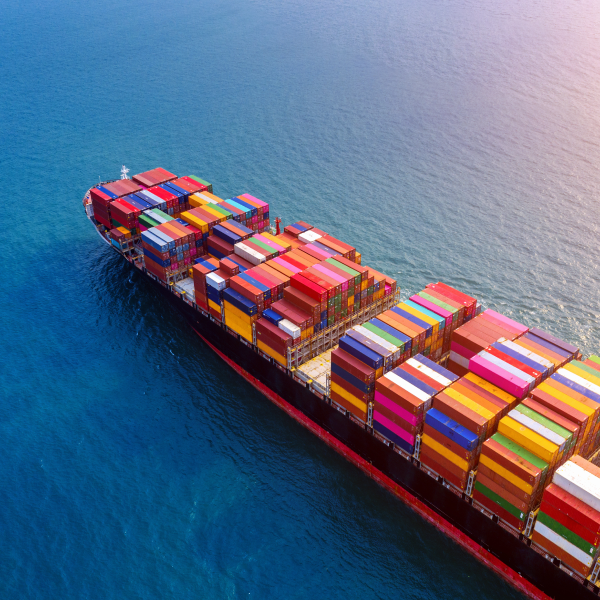
Used footwear enters SA under HS tariff heading 63.09 (worn clothing and other worn articles). This classification covers second-hand textiles and footwear that have been used and are being imported for resale. The duty rate under this heading fluctuates, and quoting a specific percentage here would be irresponsible — rates change. The correct approach is to engage a licensed SA customs broker before placing your first order and verify the current applicable rate. They will also confirm whether anti-dumping duties apply to your specific product classification.
The primary port of entry for containerised used goods into SA is Durban, which handles the majority of second-hand footwear traffic. Cape Town is a secondary option, particularly useful for buyers in the Western Cape who want to reduce inland haulage costs. Transit time from China to either port is typically 18 to 25 days for sea freight. Customs clearance, for properly documented shipments, averages 5 to 10 working days. Allow 10 to 15 days if an inspection is triggered. Durban port is known for periodic congestion, which can add 3 to 7 extra days to clearance — factor this into your timeline planning rather than assuming textbook transit.
The documentation required for clearance includes a commercial invoice, a detailed packing list with grade and brand breakdown, a bill of lading, a certificate of origin, and a clean used goods declaration. The packing list is the most important document for used footwear — SA customs will check that your declared grade mix matches the actual content. A critical operational rule: do not mix unsorted or visibly damaged stock with Grade A material in the same container. If customs inspection reveals material that does not match your declaration, the entire shipment can be held.
Importing used shoes to South Africa is legal. It is regulated, not banned. The misconception that used footwear imports are prohibited persists in online forums, but the regulatory reality is straightforward: used footwear is permitted under HS 63.09 provided it meets health and safety standards — no severe mould, no pest contamination, no biohazard. Grade A and B sorted stock from reputable suppliers clears without issue.
Suppliers with established SA route experience make this process significantly smoother. Indetexx routinely works with SA importers through customs clearance at Durban and Cape Town, providing complete commercial documentation that aligns with what SA customs brokers expect. For a closer look at logistics procedures and what to expect when shipping to different regions, the shipping information page covers the operational specifics.
How to Evaluate a Used Nike Shoe Wholesale Supplier
Price is the easiest thing to compare and the worst reason to choose a supplier. First-time buyers who select the cheapest quote often end up with inconsistent grading, poor communication, and inventory that does not match the description. A structured evaluation framework separates reliable partners from commodity traders.

Five criteria matter when evaluating a used Nike shoe wholesale supplier:
Grade consistency. Can they document their sorting standards with specific criteria, or do they give vague answers like “good condition”? A supplier who articulates what Grade A means for running shoes — tread percentage, upper condition, insole presence — has a real process. One who cannot give you these specifics is likely selling unsorted material.
Brand specificity. Can they deliver pure Nike bales, or is the offering always “mixed athletic shoes”? Dedicated Nike bales are a standard product category for Indetexx, but many suppliers cannot separate brands reliably. If you want Nike running shoes specifically, a supplier who offers brand-specific bales is essential.
Trial capability. Do they offer sample bales before a container commitment? A trial of 1 to 5 bales lets you verify grade quality first-hand. Note that a trial bale is directional — it gives you a quality snapshot but is not statistically representative of a full container. A good trial is a positive signal; a bad one is a definitive red flag. The absence of a trial option is itself a risk indicator.
SA route experience. Have they shipped to South Africa before? Do they understand SA customs documentation requirements for HS 63.09? Suppliers who know the Durban clearance process and can provide packing lists in the format SA customs expects will save you significant time and cost on your first shipment.
Communication quality. Do they provide clear answers, real photos of current stock (not catalogue images), and timely responses? A supplier who cannot show you what is currently in their warehouse cannot be confident about their own product.
Red flags to watch for
- Refusing to show actual bale photos and insisting on stock images
- Inability to give a brand percentage breakdown for their bales
- Demanding full payment upfront with no trial or sample option
- Claims that “every shoe is like new” — impossible in used goods sorting at scale
- Quoting a single per-kg price without specifying grade mix, brand concentration, or sorting depth — these variables directly affect resale value
The value of fine sorting is often underestimated. A supplier who sorts beyond basic Grade A/B/C into model-specific categories (for example, “Nike running shoes only” rather than “mixed athletic shoes”) saves you significant downstream sorting labour and improves your per-pair margin. An SA-specific consideration is size distribution — the fastest-moving range in SA is UK men’s 7 to 10 (EU 41 to 44). Suppliers who understand this preference can optimise their size mix for your market rather than shipping whatever they have.
A supplier who meets all five criteria is low-risk. Indetexx scores across all of them — documented Nike sneaker bales as a standard product category, trial bale options for new partners, established SA shipping routes, and fine sorting capability supported by detailed sorting infrastructure. Using these five criteria as your evaluation framework will serve you better than comparing price per kg alone.
How SA Resellers Make Money with Used Nike Runners
The profit model for used Nike running shoes in South Africa depends on which sales channel you choose, how fast you turn inventory, and how well you manage the cost variables that affect margin. Three distinct channel models exist, each with a different trade-off between margin and scalability.
Direct-to-consumer via Facebook Marketplace, Gumtree, and Bob Shop offers the highest margin per pair — R800 to R1,500 for Grade A shoes. The catch is that it requires individual listing, photography, packaging, and customer communication for every pair. A moderately active reseller moving 10 to 30 pairs per week through DTC channels can generate significant per-pair margin but hits a ceiling at roughly 100–150 pairs per month unless they invest in team support. Bulk supply to township market stalls and informal traders operates at R150 to R300 per pair wholesale to the stall owner. The margin per pair is lower, but the volume turnover is faster and the time investment is minimal — you sell in bulk lots rather than one pair at a time. Mini-wholesale to smaller resellers who lack import access is the middle option: you act as a local distributor, selling at R400 to R700 per pair in small bulk quantities, with margins between the two extremes.
Illustrative container economics. A 20 ft container holds approximately 1,000 pairs of Grade A used Nike running shoes. At an average resale price of R1,000 per pair across the full mix, the gross revenue potential is approximately R1,000,000 per container. This is before deducting landed cost, channel fees, returns, unsold inventory, and tax. With net margins of 30–60% on DTC sales and 10–20% on bulk channels, a container represents a meaningful return for importers with even modest distribution. The sell-through timeframe for a container is typically 2 to 4 months for an active reseller — this is the period during which your capital is tied up, and it should be central to your financial planning.
Return rate expectation. Used shoes sold online in SA typically face return rates of 5% to 15%, driven by sizing mismatches, condition disputes, and buyer’s remorse. Returns directly affect margin — every returned pair costs you shipping both ways and may arrive in less sellable condition. Building a 10% return allowance into your pricing model is prudent. Higher-quality grading documentation reduces return rates because buyers know what they are getting.
Scalability trade-off. The highest-margin channel (DTC) is the hardest to scale — listing each pair individually does not get easier with volume. The most scalable channel (bulk supply to market stalls) has the lowest margin. Choose your model based on whether you want maximum profit per hour of work or maximum total revenue. Many successful SA resellers start with DTC to learn the market, then graduate to mini-wholesale once they understand which models and grades turn fastest.
Four risk factors affect actual returns. ZAR/USD exchange rate fluctuation can add or subtract 10–15% to landed cost between order and delivery. Slower-moving models like the Downshifter or less common colourways take longer to sell and tie up capital. Local SA used shoe traders with lower overhead can undercut imported pricing on comparable goods. And customs delays at Durban can add holding costs that eat into margin. Reliable wholesale supply is the difference between a one-off experiment and a repeatable business — suppliers with consistent monthly capacity ensure you can reorder the same grade and brand mix your customers have come to expect.
Frequently Asked Questions
1. Where can I buy wholesale Nike shoes in South Africa?
You have two options. Local SA wholesalers offer faster delivery and no customs clearance, but charge higher per-pair prices with limited selection. Direct import from China-based suppliers like Indetexx gives you better margins and dedicated Nike bales, but requires managing shipping and customs. For maximum margin and supply control, direct import is the standard approach used by serious SA resellers. Whichever route you choose, verify the supplier’s grading standards before committing.
2. How much does a bale of used Nike shoes cost?
FOB pricing for Grade A mixed-Nike bales from China typically ranges from approximately $4 to $7 per kg, depending on the grade mix, brand concentration, and sorting depth. A 45 kg bale at mid-range pricing works out to roughly $225 FOB. The full landed cost to SA adds freight to Durban, customs duties under HS 63.09, VAT at 15%, and port handling charges. Request current pricing from suppliers directly, as rates change with market conditions and exchange rates.
3. Are used Nike running shoes worth selling in South Africa?
Yes, if you source correctly and choose the right sales channel. Grade A used Nike runners sell at R800 to R1,500 in SA, versus R1,500 to R3,500 for new retail. The structural price gap drives consistent demand. Resellers who buy at container pricing and sell through DTC channels achieve 30–60% net margins; those supplying bulk to market stalls operate at 10–20% margins but with faster turnover and less effort per pair.
4. What customs duties apply when importing used shoes to South Africa?
Used footwear enters under HS tariff heading 63.09 (worn clothing and other worn articles). The duty rate varies and can change — do not rely on a single online source. Engage a licensed SA customs broker before placing your order to confirm the current rate and any additional requirements. VAT at 15% applies on top of the duty-paid value. A common misconception is that used shoes are banned in SA — they are not. They are regulated, and compliant shipments clear without issue.
5. What is the MOQ for wholesale used Nike shoes?
The standard entry point is a 20 ft container, holding approximately 800 to 1,200 pairs depending on shoe size mix and packaging density. For first-time buyers, some suppliers offer trial bales of 1 to 5 bales (45 to 225 kg) so you can verify grade quality before committing to a full container. Trial bales cost more per unit but carry less risk — a sensible trade-off for new importers.
6. How do I tell if used Nike shoes are Grade A quality?
Check four things. Look at the upper — it should be clean with no stains or tears. Check the sole — at least 70% of the original tread should remain, with wear bars still visible. Verify that the original laces and insole are present. Inspect the heel counter and toe box for structural damage. If any of these criteria are not met, the shoe is at best Grade B. Reputable suppliers provide documented grading information so you know what you are receiving before it ships.
7. Can I make money reselling used Nike shoes in South Africa?
Yes, with realistic expectations. DTC resellers achieve 30–60% net margins selling Grade A pairs at R800 to R1,500. Bulk suppliers operating at R150 to R300 per pair see 10–20% margins with faster turnover. A container of roughly 1,000 Grade A pairs represents gross revenue potential of around R1,000,000, minus landed cost, returns, and channel fees. The variables that determine actual profit are grade consistency, sell-through speed, exchange rate stability, and your choice of sales channel.
8. How do I start a used shoe business in South Africa with Nike stock?
Start with market research — confirm which models sell fastest in your target area (Pegasus and Revolution are safe bets). Select a supplier who offers trial bales so you can verify quality with minimal capital risk. Place a trial order of 1 to 3 bales, sell through Facebook Marketplace and Gumtree to test pricing and demand. Once you understand your sell-through rate, scale to a container order and diversify into additional sales channels. New buyers can follow a structured purchasing process that takes them from enquiry to delivery step by step.
Ready to Source Used Nike Running Shoes for South Africa?
Importing used Nike running shoes to SA is a viable business model when you have the right supplier — one who delivers consistent grade quality, understands SA customs requirements, and can sustain repeat orders at container scale.
Indetexx exports used Nike sneaker bales with documented grading through the RECYDOC Recycling System, offering trial bale options for new buyers and full container capacity for established resellers. With established SA shipping routes, complete customs documentation support, and 110+ containers of monthly export capacity, we are structured to serve the South African market reliably.
Sourcing Used Nike Running Shoes for South Africa?
Indetexx serves the SA market with established export procedures and complete customs documentation. Our 20,000㎡ facility and nationwide processing network ensure consistent supply and grade reliability.
- Dedicated Nike sneaker bales with documented grading through the RECYDOC system
- Trial bale programme for quality verification before container commitment
- Established SA shipping routes with complete customs documentation support
- 110+ containers monthly export capacity for reliable repeat supply
Or browse our used shoe catalogue for detailed product specifications