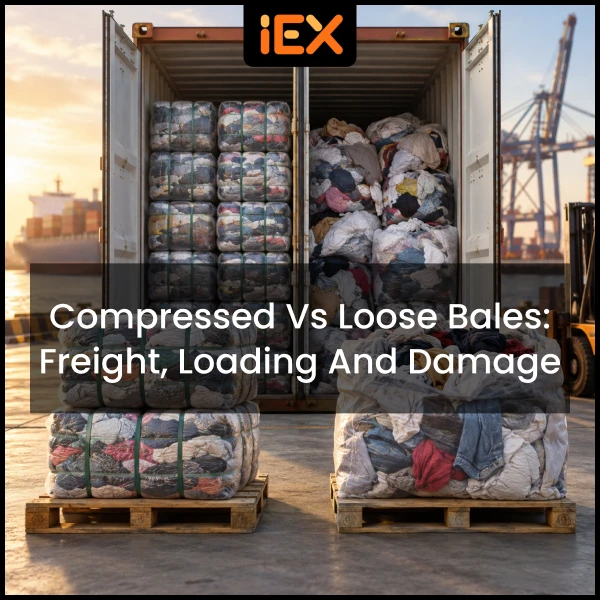
Two suppliers can quote the same price per kilogram for the same grade and still deliver very different landed costs, because one ships compressed bales and the other ships loose ones. Compression changes how much weight fits in a container, how the bales behave during loading, what the goods look like on arrival, and how easily you can inspect them. None of those differences appear on the price sheet.
This guide compares compressed and loose bales on the four things that decide the outcome: density and container maths, freight cost per kilogram, damage exposure, and inspection. It then shows how to match the format to your route and channel, and what to write in the order specification so the format you receive is the format you asked for. It does not claim that either format is better in general, because the right answer changes with the destination, the buyer type and the equipment at both ends.
Quick Takeaways
- Compression trades volume for density, so it changes whether your container hits its weight limit or its volume limit first.
- Freight is quoted per container but paid per kilogram of saleable goods, so compare formats on landed cost per kilogram.
- Compressed bales take more handling force and more stacking discipline; loose bales take more space and more container volume.
- Denser bales are harder to inspect, which raises the value of a written specification and a structured sample.
- Match the format to the route and the receiving site before you negotiate, then confirm it in the order specification.
What Compression Actually Changes in a Bale
Compression removes air. Everything downstream follows from that one physical fact.
Density, Weight and Volume
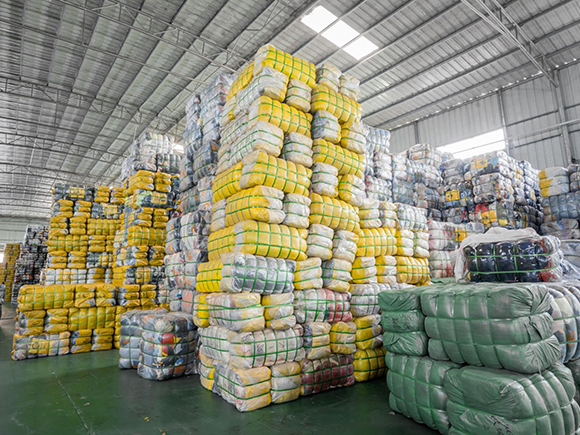
A press reduces the volume a given weight of garments occupies. The bale becomes smaller and heavier for its size, and its shape becomes more regular. That regularity is genuinely useful: rectangular bales stack predictably, they are easier to count, and they waste less of the container’s internal space.
Loose or lightly pressed bales keep more air. For the same weight, they occupy more cubic volume, which means fewer kilograms fit inside the same container unless the container is filled by weight rather than by space. The site’s guide to weight, volume and bale sizes in the used clothing trade explains how those three measures interact, and the bale weight guide covers the piece-count side of the same calculation.
What Compression Does to the Goods
Compression is a mechanical process applied to soft material, so it leaves a physical signature. Garments take a set in the direction of the press, which produces flat creases that need time or steam to relax. Delicate surfaces – coated fabrics, prints, foiled details, thin knitwear – show that signature more than heavy cotton does. Fasteners, buckles and hard trims press against neighbouring garments, and a bale that is pressed beyond the material’s tolerance can put stress on seams and zips.
None of this means compressed bales are damaged goods. It means the format has a predictable consequence that belongs in the specification: how hard the bale is pressed, how the pieces are layered before pressing, and what protection sits between the garments and the press.
On an Indetexx order those three items are part of the written specification rather than a decision taken at the packing table, and the boundary is worth stating: a confirmed pressing level and protection choice describes how the order was packed, not a promise that every crease will relax in your warehouse.
Compressed or Loose: The Container Maths
The format decision is decided by which limit your route reaches first, because a container can only be filled to whichever constraint binds.
When You Hit the Weight Limit First
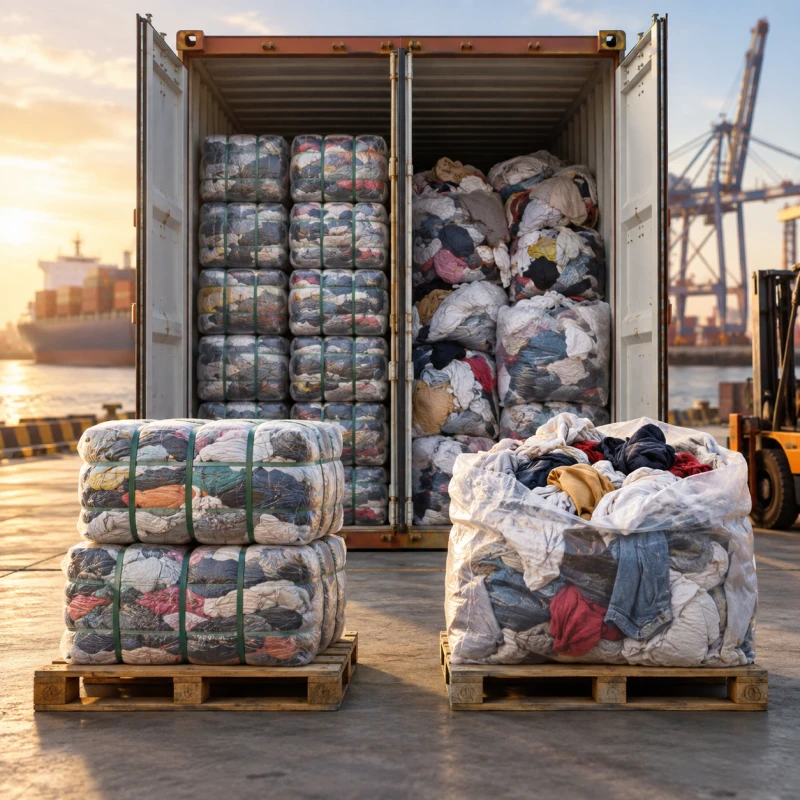
Dense bales reach the container’s legal payload before the box is full. That sounds efficient, and in freight terms it usually is: you are moving more kilograms in the same booking. The cost is that the container is not physically full, so any further weight has to come from somewhere else – usually a different container – and the last few cubic metres of space are simply lost.
When You Hit the Volume Limit First
Loose bales reach the volume limit first. The container fills to the doors before it reaches its payload, so you are paying for a container that is full of air as well as goods. When the destination route has no weight problem and the goods are bulky to begin with, this is a real cost that shows up as freight per kilogram rather than as a line on the invoice.
The practical consequence is that you cannot answer “compressed or loose” without knowing the destination, the route restriction and the receiving site’s handling equipment. A destination that unloads with a forklift and a flat floor handles dense bales well. A receiving site that unloads by hand, or one that re-sorts and re-packs before selling, may prefer a lighter and softer bale.
Freight Cost per Kilogram, Not per Container
Quotations are written per container, but the number that matters at the end of a season is the cost of moving one kilogram of saleable goods. That figure has three inputs: the freight and charges for the container, the net weight inside it, and the share of that weight you can actually sell.

Compression improves the middle input directly by fitting more weight into the booking. It can also affect the first input, because the compressed format is the one most suppliers build their container loading plan around, and it can affect the third input if the press marks goods that then need steaming or a downgrade.
This is where the site’s bale sellable percentage method becomes part of the freight decision rather than a separate quality exercise. A format that lowers freight per kilogram but raises the share of pieces needing work has not obviously saved money; you need both numbers on the same sheet, alongside the landed cost per kilogram and the container cost structure. Indetexx states the category, grade definition, bale weight and packing format for the order being shipped, which is the input that lets you run this comparison on your own numbers instead of on a supplier’s advertising claim.
Where Damage Comes From in Each Format
Damage risk is not evenly distributed, and it is not simply “compressed equals more damage”.

Compression and Stacking
Compressed bales carry their own weight well when they are stacked squarely, because the shape is regular. Stacked badly – interlocking unevenly, overhanging a row, or using a single bale as a step – the same density works against you: a dropped or burst bale spreads hard-edged pieces across the floor. The wrapper matters as much as the press, because the wrapper is what holds the bale’s shape during handling.
That is why the loaded bale weight, grade and packing format are recorded per order rather than remembered. Indetexx records those details for the shipment, so if a bale fails in handling you can identify which format and which weight was involved instead of arguing from a general impression.
Volume, Movement and Wrapper Integrity
Loose bales deform under stacking, which can shift the load during transit and rub garments against each other. They also take more handling events for the same weight, because there are more bales to move. A torn wrapper exposes the outer layer to abrasion and to moisture, and the outer layer is the first thing a buyer sees when the container is opened.
Moisture deserves separate attention in both formats, because baled textiles absorb humidity and a container crossing climate zones can produce condensation on the ceiling. Wrapper integrity and stacking practice are what protect the load, and the site’s guidance on handling and warehouse safety covers the storage side of the same problem.
Inspection and Sampling in Each Format
The denser the bale, the harder it is to see what is inside it. That single fact changes how you buy.

With loose bales, an inspector can pull pieces from different layers with reasonable effort, and a photograph shows recognisable garments. With compressed bales, the outer face is pressed flat and the interior is only reachable by opening the bale, which changes its shape permanently. Sampling has to be planned rather than improvised, and the sample position has to be recorded so the result can be compared on a repeat order.
Ask your supplier, Indetexx included, how the sample was taken before you read the photographs, because a face sample and a centre sample of the same bale can tell two different stories.
The method matters more than the volume of photographs. The remote bale inspection guide sets out how to structure a check when you cannot be at the warehouse, and the repeat-order quality guide covers what to do when the second delivery drifts from the first. For a compressed order, add one extra instruction: record where in the bale each sample came from, because the face and the centre are not the same sample.
Matching the Format to the Destination and Channel
Bulk freight economics usually favour compression, because the destination wants the lowest cost per kilogram and the receiving site can handle dense loads. Bulk resale channels, distributors and importers working to a landed-cost model typically buy compressed.
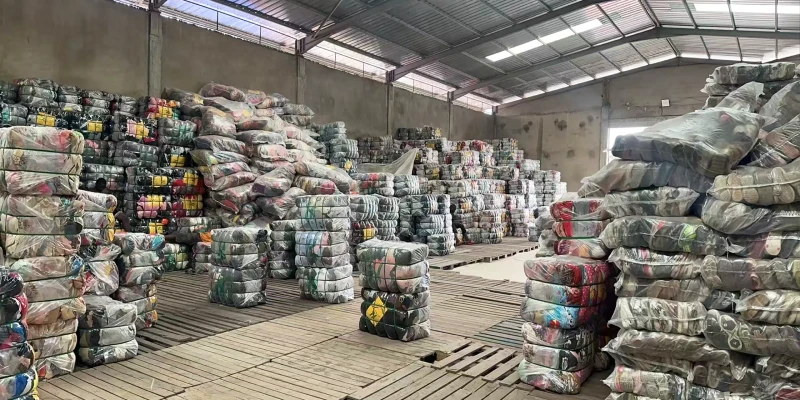
Channels that re-sort, re-package or sell by the piece often prefer a lighter format, because their warehouse staff handle the goods more often and pressed creases cost them labour before the sale. Some markets also associate a very hard press with older stock, which is a perception worth checking with your own buyers rather than assuming.
If you buy shoes or bags rather than clothing, the calculation changes again, because the goods are rigid and resist compression differently. The compressed bale sneakers guide works through that case, and the environmental comparison of compressed garment bales covers the sustainability angle rather than the freight one.
What to Write in the Order Specification
A format request only works if it is specific. Write these five items into the bale specification sheet before the order is packed.
- The target net weight per bale, and whether that weight is a target or a tolerance band.
- The pressing level in plain terms – compressed, lightly pressed or loose – and the reason for the choice.
- The wrapper and protection: what holds the bale, and what sits between the press and the garments.
- The stacking and handling method expected at the destination, including whether a forklift will be used.
- The sample positions for inspection, so a compressed bale can be checked in a comparable way on every order.
Written this way, the specification also becomes your freight input. Indetexx confirms the bale weight and packing format per order and plans 20ft and 40ft loads from it, which is what your forwarder needs for the payload calculation and the verified gross mass filing. The confirmation describes the order being shipped; it is not a standing guarantee of payload, bale count or availability for a later booking.
Frequently Asked Questions
Are compressed bales better than loose bales?
Neither is better in general. Compression fits more weight into a container and lowers freight per kilogram, but it presses the goods harder and makes inspection less direct. Loose bales are easier to inspect and gentler on delicate garments, but they cost more freight per kilogram because the container fills with volume before it reaches its payload.
Does compression damage used clothing?
Compression is a mechanical force, so it leaves marks: flat creases that need time or steam to relax, and pressure points where fasteners meet neighbouring garments. That is a consequence of the format rather than automatic damage. The controls are the pressing level, how pieces are layered before pressing, and what protection sits between the press and the garments.
How many bales fit in a 20ft or 40ft container?
It depends on the bale format, not just the container. A denser bale means fewer bales for the same weight and more weight for the same volume, so the count depends on the target bale weight and the payload limit for your route. Compare the 20ft and 40ft planning guides before fixing the count.
Can I ask for a specific bale weight?
You can specify a target weight and a tolerance band, and you should, because the bale weight drives both the container maths and the handling at the destination. Confirm the current achievable range for the category you are buying before the order is packed rather than after the bales are built.
Is it worth mixing formats in one container?
It can be, when part of the order is bulky light goods and part is dense, but mixed formats complicate the loading plan and the payload calculation. If you mix them, say so in the specification and give the forwarder one document that describes both formats and their weights.
Choose the Format From the Route, Not the Rate
Start with the route and the receiving site: what limit will the container reach first, who will unload it, and what happens to the goods afterwards. Then choose the format that fits those answers, price it as landed cost per kilogram of saleable goods, and write the format into the specification rather than leaving it to the packing table.
That order of decisions is what keeps a cheap quotation from becoming an expensive container. Ask Indetexx for the current specification for the category and destination you are planning, then give the same document to your forwarder so the loading plan, the payload figure and the freight comparison all describe the same load.
Ready to Specify Compressed or Loose Bales for Your Route?
Send the destination, product category, grade definition, target bale weight and packing preference. You will receive the current written Indetexx order details so your forwarder can build the loading plan and the freight comparison on the format you will actually receive.
- State the category, grade definition and target bale weight for this order
- State the pressing level, wrapper and stacking expectation
- Confirm current availability and commercial terms for the shipment
Or browse our bale clothing options before you choose the format