If you are trying to sell a large quantity of used clothes, the exporter is not really buying weight. They are buying what can be sorted, cleaned, packed and shipped without losing money on the share that cannot. That is why two lots of the same tonnage can be quoted very differently, and why the questions asked at intake matter more than the price per kilogram you had in mind.
This guide explains what happens when a lot is assessed, which checks decide the outcome, how bulk lots are priced when you sell, and which records make a collection traceable. It is written for collectors, charity textile operations, small sorting businesses and traders who want to place volume with an exporter.
Quick Takeaways
- Exporters buy sortable material, not tonnage. The share that has to be thrown away is the first thing that changes a price.
- Composition, moisture and contamination decide more than weight. Damp or mouldy material can turn an otherwise good lot into a rejected one.
- Unsorted lots are workable but priced as unsorted, because the buyer carries the sorting labour and the disposal cost.
- Say what the mix contains before it is collected. A described mixed lot is normal trade; a surprise in the middle of a load becomes a dispute.
- Ask for the price basis, the transport scope and the payment timing in one message, so two offers can actually be compared.
What an Exporter Is Actually Buying
An exporter takes the material and turns it into saleable bales for importers. The margin comes from the gap between what the lot costs at intake and what the sorted output sells for, after sorting labour, packing, freight and the disposal of whatever cannot be sold. Everything checked at intake is really a question about that gap.
The Three Ways Supply Usually Arrives
Most lots reach an exporter in one of three states. A single-run unsorted lot is whatever the collection point accumulated, with no category separation at all. A part-sorted lot has had the obvious waste and often the shoes pulled out. A graded lot has been separated by category and condition before it is offered, and that is the state that attracts the most predictable pricing, because the buyer’s remaining work is known.
None of the three is wrong. They are different products with different prices, and the mistake is describing a single-run lot as if it were graded.
What Gets Checked at Intake
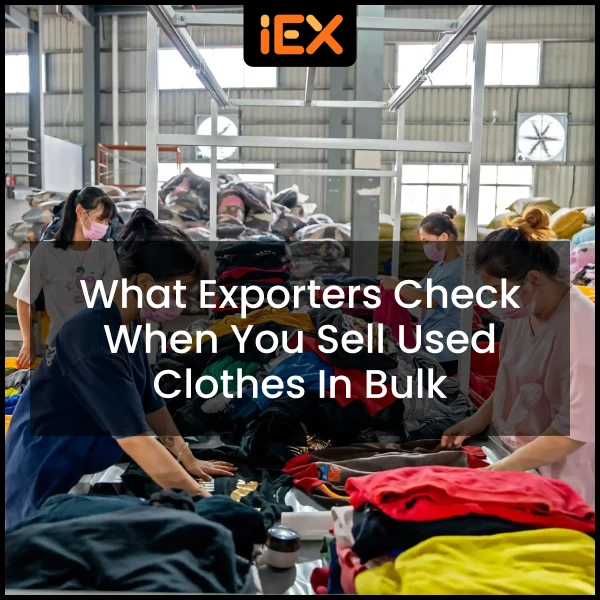
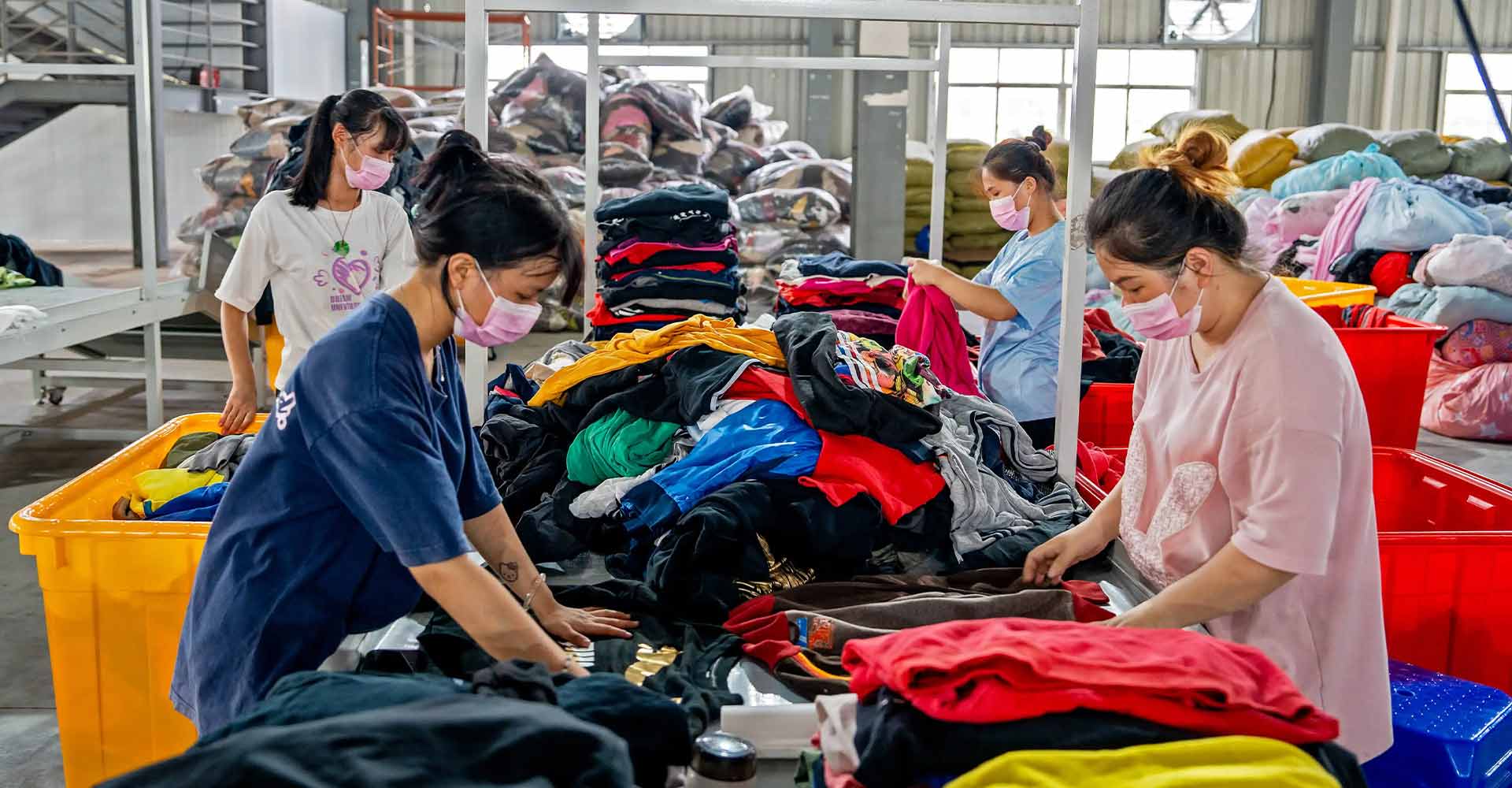
An intake assessment is quick and practical rather than technical. It looks at a small sample across the load, not one bale from the top.
Composition, Not Just Weight
The assessor wants to know what categories are present and in roughly what proportions: mixed clothing, denim, children’s wear, winter goods, shoes, bags, household textiles. Two tonnes of mixed clothing and two tonnes of heavy winter jackets behave very differently in a bale, in a container and in the destination market, so the composition changes the usable weight rather than just the description.
One habit worth building early: describe the mix in the language the buyer sorts by. Exporters classify material as Grade A, B or C, and Indetexx sorts to the order-specific category and grade an order specifies, and works to packing requirements agreed for the destination market. That is how an importer ends up comparing bales against a defined specification instead of an assumption. Ask which grade definitions apply to your lot before you quote, so your categories and the offer line up and the path from your description to a firm offer is shorter. A grade label describes how material is classified; it is not a guaranteed yield or resale result for a particular shipment.
Contamination, Moisture and Odour
This is where lots are won and lost. Wet material, mould, pest evidence, strong odour and non-textile items such as glass, metal, food waste or used hygiene products all reduce the value and can make a load unexportable, because they contaminate the rest and create problems at the destination. Storage before collection matters as much as the collection itself: material left in damp conditions for weeks will show it.
The Band Between Sellable and Waste
Every lot contains a share that will not be resold: worn out items, stained or torn garments, single shoes and broken zips. Buyers estimate that share before quoting, and it is the number that decides whether the lot is worth collecting. You do not need to achieve a perfect lot, but you do need to know roughly what share of yours falls into that band, because a buyer will find out.
The size of that band is better documented than most sellers assume. A UNCTAD-backed SMEP study of more than 244,500 garments imported into Tanzania and Uganda found about 96% was suitable for reuse and resale, and only 1.1% to 1.3% was true textile waste. Australian charity reuse data points to a similar pattern for sorted export material, at roughly 72% wearable for resale against 22% downgraded to cleaning cloths and rags. Both figures describe material that has already been sorted and packed for a destination market, not the raw collection that arrives at an intake point, so a single-run lot will sit below them. The distance between your lot and those numbers is exactly what the intake check is pricing.
What Sellers Usually Get Wrong
The recurring problems are simple. Storing material damp and then being surprised by the assessment. Mixing shoes, bags and household textiles into a clothing lot and describing it as clothing. Leaving waste in to protect the tonnage, which lowers the rate rather than raising the total. And treating the first offer as the market, when the basis behind the offer was never clarified.
There is also a paperwork mistake that costs time rather than money: approaching an exporter without knowing where the material came from, how it was collected, or what was removed before it was packed.
How Lots Are Priced When You Sell
Bulk used textiles are usually priced per kilogram or per pound at the intake point, with the rate moving with category, condition band and how much sorting is left to do. Some buyers quote a single figure for the whole lot, which is easier to compare but harder to audit. Either way, three things belong in the same conversation as the price: the basis it is quoted on, whether transport is inside the figure, and when payment is released after collection.
A lower rate with transport included can be the better offer, and a higher rate paid weeks later is often not. Comparison is easier when both offers are reduced to the same three lines, which is exactly what a written quotation should give you.
What Documentation Matters at Intake
Records are what make a lot traceable, and that expectation is hardening into a rule rather than a preference. In June 2026 the UK Environment Agency made pre-sorting a condition of export, and a container that mixes wearable and non-wearable items can be treated as waste rather than goods. The same documentation logic is spreading through the markets lots are shipped to, even where no rule uses that wording yet. Useful records are modest: the collection point and date, the estimated and weighed quantity, how the material was packed, what was removed before packing, and photographs taken at intake showing the material as it arrived.
Indetexx works with a recycling and collection programme, RECYDOC, which covers collection intake with photo-documented inspection across a nationwide network of more than 70,000 collection points. That is the limit of what it does: warehouse sorting, grading, authentication, QC and container loading are separate operations, and RECYDOC does not issue container, QC or loading documents or authenticate brands. If a supplier describes a collection record as if it were a grade certificate, that is a claim worth questioning.
For a seller, the practical benefit is simple. If you can hand an exporter a short record of where the material came from and what it looked like at intake, you spend less time answering questions and more time discussing the lot. The site’s import document checklist shows the fuller set an importer normally asks for.
Frequently Asked Questions
How do I sell used clothes in bulk to an exporter?
Approach the exporter with four facts: where the collection point is, the estimated weight, how the lot is packed, and whether it is already sorted by category. Exporters who know those four things can tell you quickly whether the lot fits what they handle, and what it would need before it does.
What do exporters check when they buy used clothes?
The checks that decide the outcome are composition, contamination and moisture, how far the lot is from being sortable, and whether the paperwork matches the goods. Weight alone is the least useful number, because two lots of the same weight can differ completely in what can be resold.
Do I need to sort used clothes before selling them in bulk?
Not always, but unsorted lots are priced as unsorted. If you can separate obvious waste, wet or mouldy items and shoes from clothing, you usually improve the price more than the sorting costs you in labour, because you have removed material the buyer has to pay to handle and dispose of.
How are bulk used clothes priced when I sell?
Most lots are priced per kilogram or per pound at the intake point, with the rate moving with category, condition band and how much sorting remains. Some buyers quote per lot instead. Ask which basis is being used, whether transport is inside the number, and when payment is released, so two offers can be compared.
Can I sell mixed clothing lots to an exporter?
Yes, and mixed lots are normal trade. What matters is knowing what the mix contains and saying so. A mixed lot described honestly is workable; a mixed lot that turns out to hide waste, damp material or non-textile items becomes a dispute, and that is the outcome to avoid.
Next Step: Prepare the Lot Before You Approach an Exporter
Before you send the lot out, do three things: keep it dry and covered, remove obvious waste and non-textile items, and write down where it came from, how much there is and how it is packed. Then ask the buyer which basis they price on and whether transport is included. A lot that arrives dry, described honestly and partly sorted is worth more than the same tonnage left as it was collected.
Buyers who want to understand the other side of this trade can read the site’s guide to clothing weight and piece counts and the bale specification sheet that an export order is normally built on.