If you are looking for used clothing suppliers in Pakistan, the first thing to understand is that the phrase covers at least three different businesses. A Landa Bazaar seller in Lahore, a grading line inside the Karachi Export Processing Zone and a garment factory selling surplus stock all answer to the same description, and only some of them can supply a foreign buyer at volume.
That distinction matters more in Pakistan than in most sourcing markets, because Pakistan is not mainly an exporter of used clothing. According to the Observatory of Economic Complexity, Pakistan imported USD 295 million of used clothing in 2024, making it the largest importer of used clothing in the world out of 214 reporting countries. Most of that material is resold inside the country. The export business sits on top of that domestic trade as a narrower, more specialised layer, and finding it is the actual work of building a shortlist.
Quick Takeaways
- Pakistan’s used clothing trade is dominated by imports for its own market: USD 295 million in 2024, the largest importing country in the world.
- Three different businesses appear under “Pakistan used clothing supplier”: domestic Landa Bazaar retailers, export-processing-zone graders and re-exporters, and garment factories with surplus stock.
- The export layer runs through the export processing zones, where units are generally required to export at least 80 percent of output and may sell up to 20 percent into Pakistan’s domestic market.
- That 80/20 arrangement is under an IMF-linked review, and trade bodies warn that removing the domestic outlet could strand large volumes. Treat the current position as something to verify, not to assume.
- Compare offers on category, grade definition, order unit, bale weight, packing and documents. A cheaper price per kilogram usually means a shorter description, not a better product.
What a “Pakistan Used Clothing Supplier” Actually Means
The search results mix retail and wholesale and give you no way to tell them apart. A directory listing, a market stall and a container-scale export operation can all rank for the same phrase. Fixing this is the first step of any serious shortlist.
Three Different Businesses Share the Name
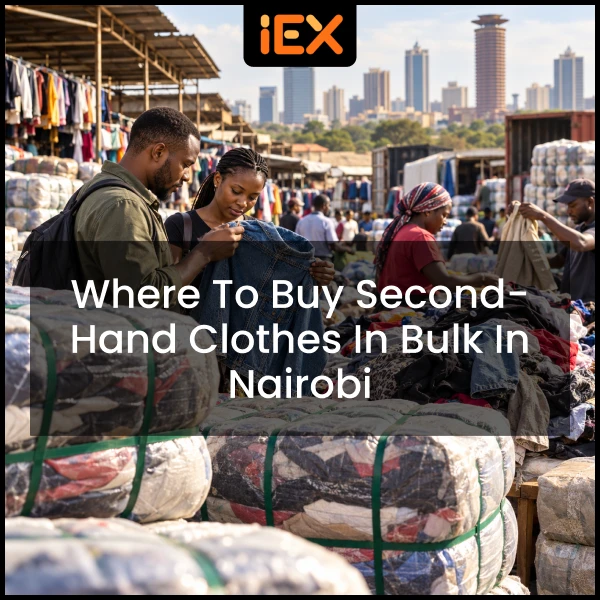
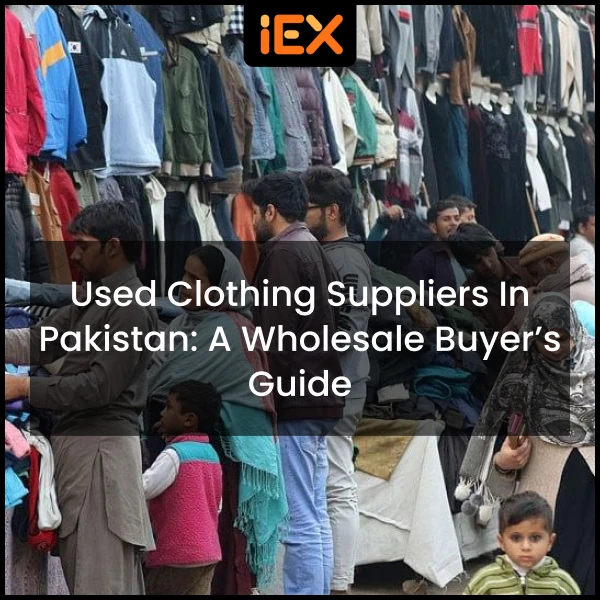
The first group is the Landa Bazaar trade. These are the second-hand markets found in cities such as Lahore, Karachi and Mirpur, where imported clothing is sold on to local shoppers and small traders. Wikipedia’s entry on Landa bazaar describes the format accurately: a flea market where secondhand imported goods are sold. Sellers here are retailers serving a domestic market. They can be excellent at what they do, but their commercial model is not export documentation and container loading.
The second group is the export-processing-zone processor. As industry coverage of the zone policy notes, operators based inside the Karachi Export Processing Zone import, sort, grade, recycle and re-export used clothing and textile materials. This is the group that is actually structured for a foreign buyer, because their business depends on exporting.
The third group is the garment factory selling surplus, deadstock or rejects from new production. That is a different product with a different cost structure, even though it is sold in bales and described with the same vocabulary.
Why the Distinction Changes the Price You Are Quoted
A domestic retail seller prices against what a local customer will pay for a pile of clothing. An export processor prices against a graded output, a weight basis and a shipping plan. The first number will often look dramatically cheaper per kilogram, and it is not a bargain. It is a different product with a different cost base.
This is where first-time buyers lose money. They collect quotes from sellers who never intended to export, then discover at the payment stage that the seller cannot issue the documents, cannot load a container, or cannot repeat the same grade next month. The cheapest quote in the inbox is often the one that was never comparable in the first place.
The Numbers Behind Pakistan’s Position
Before you build a shortlist, it helps to know what the trade actually looks like, because the scale explains both the opportunity and the risk.
| Measure | Figure | Basis |
|---|---|---|
| Used clothing imported, 2024 | USD 295 million | Observatory of Economic Complexity trade profile; world’s largest importer |
| Reported fiscal-year import volume | 1.137 million tonnes / USD 511 million | Trade reporting summarising customs data; year basis differs from the OEC figure |
| Estimated annual imported volume | About 809 kilotons | Academic overview of Pakistan’s textile waste industry |
| Used clothing share of Karachi Export Processing Zone exports | 38 percent in 2018 | Third-party sector reporting; historical figure |
| Share of zone output that may be sold domestically | Up to 20 percent under the 80/20 rule | Export processing zone rules; under IMF-linked review in 2026 |
Read the table as a scale guide, not as a price reference. The figures come from different sources and different year bases, and they measure different things: import value, import volume, and one historical share of a single zone’s exports. What they establish together is that Pakistan consumes an enormous quantity of used clothing domestically, and that the re-export layer is a fraction of that flow even though it is the part a foreign buyer can actually order.
How Much Clothing Pakistan Actually Imports
The import value has moved quickly. Trade reporting has put Pakistan’s secondhand clothing imports at roughly USD 180 million in 2021, around USD 335 million in 2023 and USD 295 million in 2024. The direction of travel is not the point; the point is that a single country absorbing several hundred million dollars of used clothing a year has a deep domestic distribution network and a large number of businesses competing in it.
That depth is why the search results are crowded. It also explains why so many “Pakistan suppliers” are optimised for domestic buyers: that is where the volume is.
What the Export Processing Zones Contribute
The export layer sits inside the zones. Operators there import, sort, grade and re-export, and the Karachi zone in particular has been described as central to the trade. In 2018, used clothing accounted for 38 percent of exports from the Karachi Export Processing Zone, which gives a sense of how significant the category was to the zone at that time.
For a buyer, the practical meaning is straightforward. If you want a container-scale order with export documentation, you are looking for a zone-based operator. If you want a few bales quickly, a domestic seller may serve you better. Those are different purchases.
The Export-Zone Route: Where Pakistan’s Supply Really Comes From
The 80/20 Rule and Why It Is Under Threat
Units in Pakistan’s export processing zones are generally required to export at least 80 percent of their production, with up to 20 percent permitted for sale into Pakistan’s domestic tariff area. That is the arrangement usually called the 80/20 rule.
In 2026 the IMF-linked reform programme put that domestic outlet under review, and the proposal to end the 20 percent allowance drew opposition from companies operating in the zones. Trade coverage has warned that removing the domestic outlet would make many established recycling operations commercially unviable and could leave as much as 480,000 metric tonnes of used textiles stranded.
What this means for you as a buyer is not a price forecast. It is a timing and continuity question. Ask the supplier directly how the current position affects their ability to take and ship your order. A supplier that answers with a specific, current explanation is operating with visibility on its own position. A supplier that answers with a headline number from a news article is guessing.
Grading and Re-Baling Before the Goods Leave
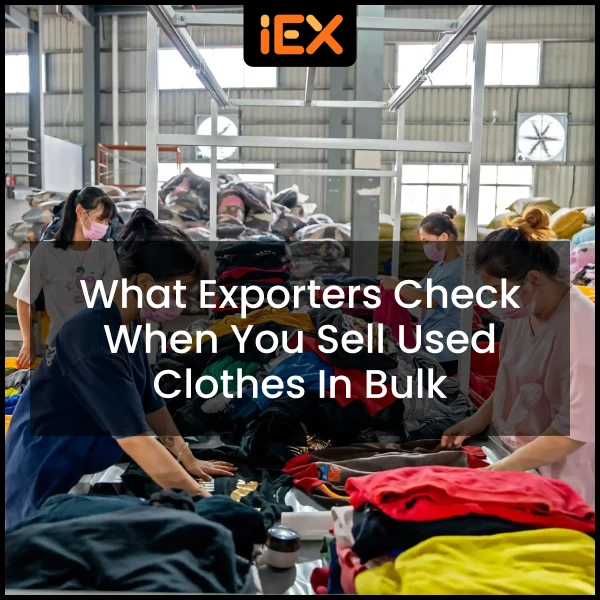
The zone route is also where grading happens. Imported material arrives compressed and mixed; the processor sorts it into categories and condition bands and then packs the output into new bales for shipment.
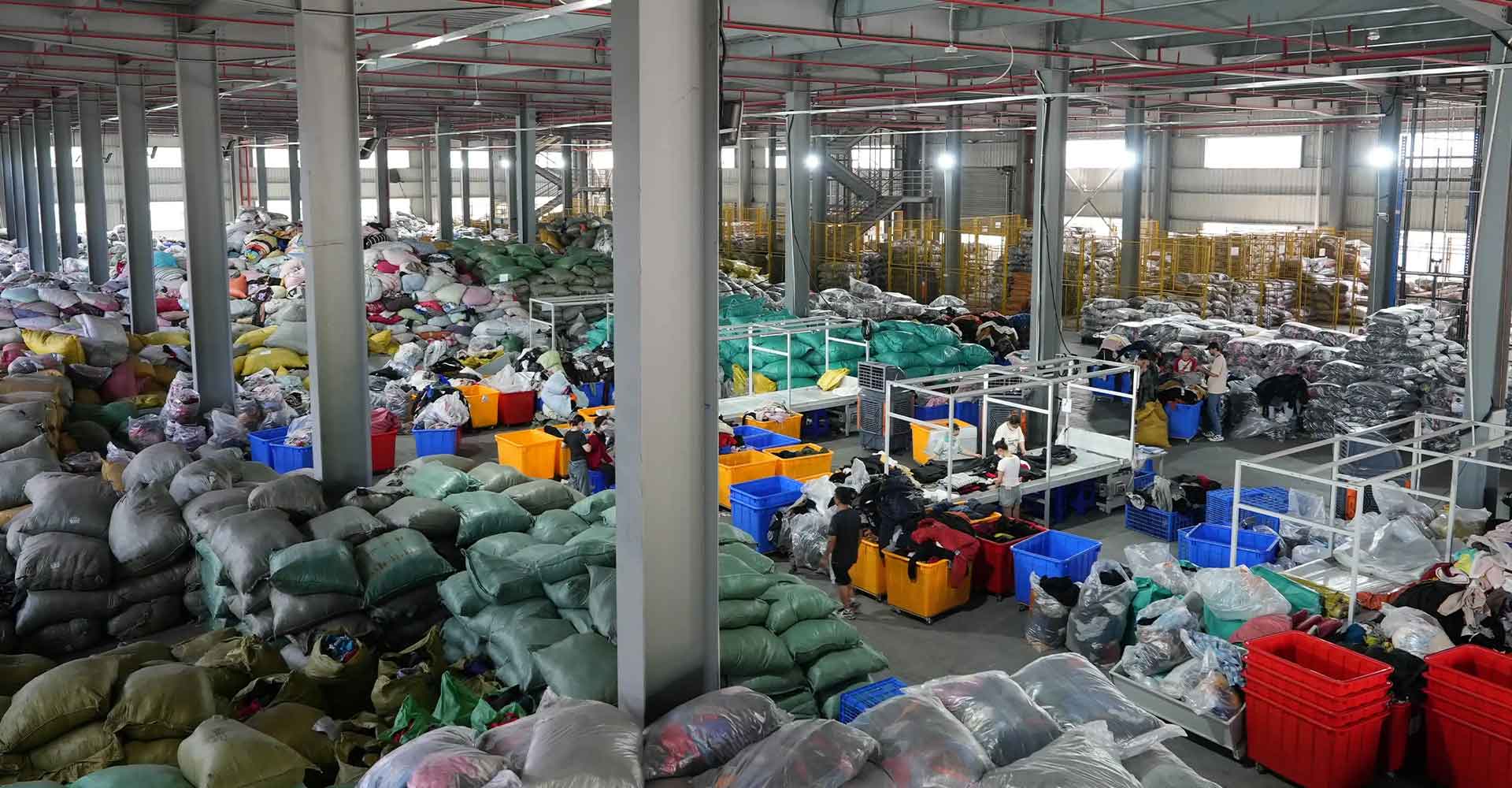
That process is what you are paying for, and it is where quotes diverge. Two Pakistani exporters quoting the same price per kilogram can be selling very different things depending on how deep the sorting went and how much was removed along the way. This is why a country-level comparison misleads and a grade-level comparison does not.
How to Read a Pakistan Supplier Offer
Once you know which type of business you are talking to, the offer becomes readable. Four fields decide whether two quotes are actually comparable.
Ask for the Category and the Grade Definition, Not the Country
“Used clothing from Pakistan” is not a specification. Ask which categories are in the lot, how the supplier defines each grade in its own words, and what the expected mix between them is. Grade language travels badly between markets: Grade A in one warehouse is not Grade A in another, and a supplier who can only give you a letter is giving you an adjective rather than a description.
The site’s bale specification sheet shows the fields that make a lot comparable. Use it as the template for your request, whoever you end up buying from.
Order Unit, Bale Weight and Packing
Next come the physical terms: whether the order unit is a bale, a lot or a container, what the bale weighs and how it is packed. A price per bale means nothing without the weight, and a price per kilogram means nothing without the packing basis.
Ask whether the weight is net or gross and whether packing is compressed or loose. Both change the freight calculation, and a difference in packing can move your landed cost further than a small difference in the headline price.
Which Documents a Supplier Can Actually Provide
Ask what documentation the supplier will issue for the shipment, and get the answer in writing before you pay a deposit. If a supplier cannot describe the documents it normally provides for an export order, that is your answer about whether it exports at all.
What a Written Specification Should Contain
Most sourcing mistakes are specification mistakes. The buyer and the seller agree on a country, a price and a rough grade label, and discover three weeks later that they were describing different things.
The Fields That Make Two Offers Comparable
Six fields do most of the work: category, grade definition, expected mix, bale weight and packing, order unit, and the documents attached to the shipment. Add the destination and the intended arrival window, and the offer stops being a description and becomes an order specification.
Indetexx works to order-specific category and Grade A / B / C definitions rather than a single universal grade scale, and the definition, bale weight and packing are fixed against the specification the buyer submits. That is not a claim about any particular shipment’s content. It is a working method: the specification is written first, and the quotation answers it. You can apply the same method to a Pakistan supplier, which is exactly what makes the two offers comparable.
What to Do When a Supplier Cannot Answer
A supplier that cannot describe its own grade definition, weight basis or documents is not being difficult; it is telling you that the deal would be defined later, by whoever interprets the words. In practice that means the risk of the first order sits entirely with you.
The response is not to negotiate harder. It is to move that supplier to a second tier and keep the ones that answered. A shortlist of two responsive suppliers is worth more than a long list of cheap ones, and the difference shows up on the first container, not the tenth.
Compare Pakistan Supply With a Prepared China Container
For most importers the real decision is not “Pakistan or China” in the abstract. It is whether a Pakistan offer and a prepared container offer are being compared at the same specification and delivered to the same place.
Reduce both to three lines: what is in the bale, what it weighs, and what the price includes. Then add what sits outside the headline figure. If the Pakistan quote stops at the loading point and the container quote includes delivery, the comparison is not wrong, it is incomplete. The site’s guide to reducing landed cost per kilogram sets out the cost lines that belong in that comparison.
Scale is the other difference. Indetexx states a 20,000 m² self-owned facility and a monthly sorting capacity of around 6,000 tons, and supplies 20ft and 40ft container options with both mixed and category-specific bales. Capacity at that level is what makes repeat grading possible across orders, and repeat grading is what a buyer is really paying for on the second and third order. It is also not a guarantee of anything about a specific shipment: brand ratio, sellable yield and exact composition still have to be agreed in writing for each order, and no supplier can promise them in advance.
The global exporters guide shows how much the supplier landscape varies between origins, and the bale clothing range shows what a specification-led offer looks like when the category is fixed before the price.
What the 2026 Trade-Zone Changes Mean for Buyers
Pakistan’s trade-zone arrangements were under review in 2026, with the change linked to the country’s IMF programme. The proposal concerns the domestic-sale allowance that keeps many zone operators commercially balanced, and the sector has pushed back publicly.
For a buyer, that creates a specific risk: a supplier’s ability to take your order may depend on a rule that is still moving. The practical response is to separate the two decisions. Build the shortlist and get the specification in writing now, because that work is valid whatever the rules do. Then take the order decision only after your own broker or the supplier’s documentation confirms the position that applies to your shipment.
That sequencing also tells you something about the supplier. A business with a clear position will answer the question directly. A business that gets vague when asked which arrangement applies to your order is giving you useful information before you have paid anything.
Frequently Asked Questions
Who are the biggest used clothing suppliers in Pakistan?
The published lists mix domestic Landa Bazaar traders, export-zone processors and garment exporters into one category, which is why they are rarely useful for an importer. Rather than ranking names, check which entity exports in its own name, what categories it grades and whether it can issue the documents your shipment needs. Those three answers separate the real shortlist from the directory.
Is Pakistan a good country to source used clothing from?
It can be, if you are buying graded export-zone output with a written specification and comparing it against a prepared container offer on the same cost basis. It is a poor fit if you are buying from a domestic resale seller and expecting export documentation. Pakistan imported USD 295 million of used clothing in 2024 as the world’s largest importer, so the domestic market is deep — and the export layer, which is what an importer actually needs, is much narrower than the search results suggest.
Can a foreign buyer buy directly from a Landa Bazaar seller?
A market seller is set up for local customers, not for preparing a container, issuing export documents or repeating a consistent grade. Some will accept a larger order, but the grading, packing and documentation burden usually lands on you. For a first shipment, a business that already exports is a safer route than a market stall with a better price.
What is the 80/20 rule in Pakistan’s export processing zones?
It is the arrangement under which zone units are generally required to export at least 80 percent of production, with up to 20 percent allowed into Pakistan’s domestic tariff area. In 2026 that domestic allowance was under review, and the sector warned that removing it would make many recycling operations unviable. Confirm the position that applies to your order rather than relying on a published summary.
What should I ask for before paying a Pakistan supplier?
Five things in writing: the exporting entity’s name, the categories in the lot, the grade definition, the bale weight and packing basis, and the documents the shipment will carry. If any of those is vague, treat the offer as unfinished rather than as a bargain.
How do I compare a Pakistan quote with a China container quote?
Put both on the same three lines — what is in the bale, what it weighs, and what the price includes — then add the costs outside the headline figure on both sides. A quote that stops at the loading point and a quote that includes delivery are measuring different things, and the difference usually decides the comparison.
Next Step: Shortlist With a Written Specification
Write one specification — category, grade definition, expected mix, bale weight, packing and destination — and send the same document to two or three Pakistan-based suppliers. The replies will separate the exporters from the retailers faster than any directory can.
If you are sourcing shoes rather than apparel, the site’s guide to sourcing used shoes from Pakistan covers the footwear side of the same market. For apparel, keep the specification as the fixed point and let the suppliers compete against it. The buyers who get consistent stock are rarely the ones who found a secret supplier; they are the ones who made every supplier answer the same question.